
Outboard Engine Mechanics Course
Get the hands-on knowledge to diagnose, repair, and maintain outboard engines like a professional marine technician. This course covers everything from two-stroke and four-stroke theory to fuel systems, ignition, lower units, and advanced diagnostics. If you work on boats or want to turn that passion into a career, this is the training that gets you there.
What you'll learn:
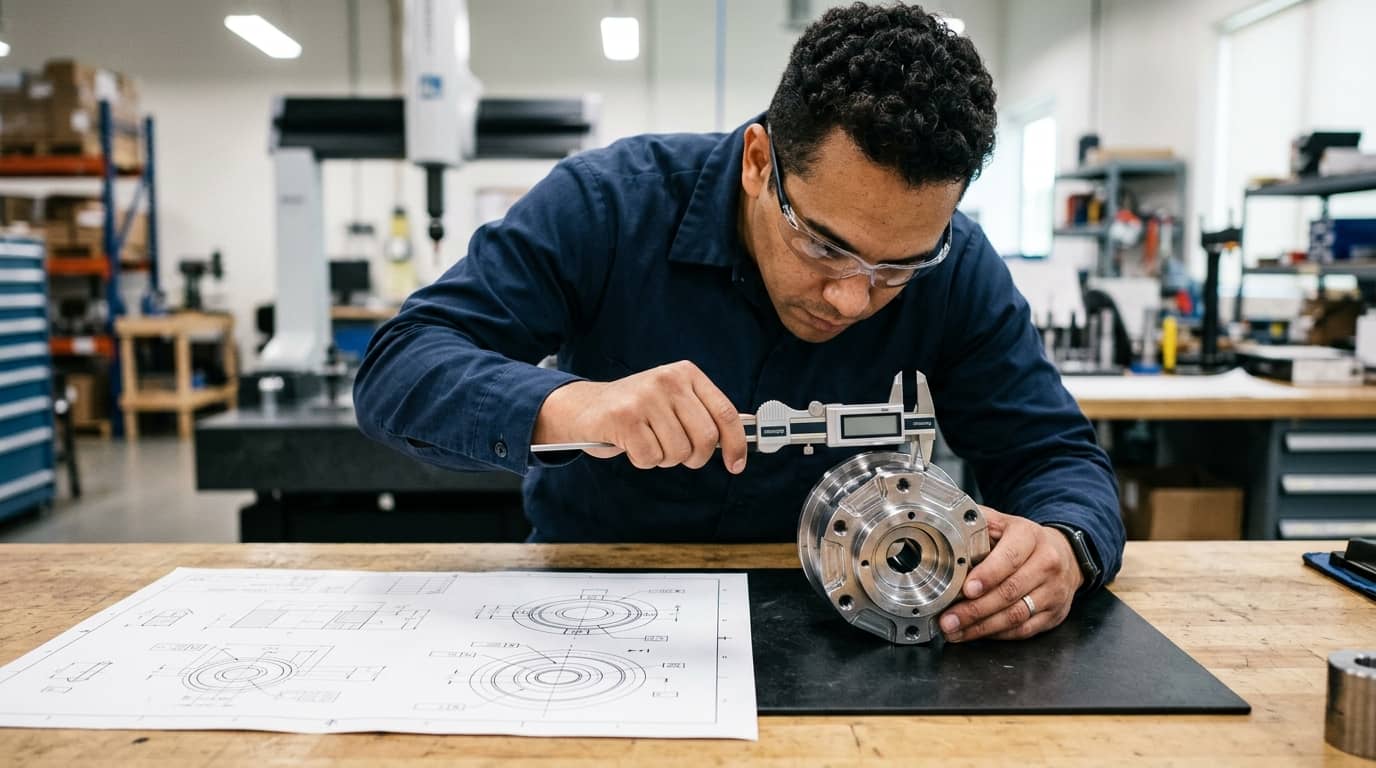
You will gain a complete understanding of how outboard engines are built, how they operate, and how to fix them when they fail. The course covers two-stroke and four-stroke engine theory, fuel delivery and injection systems, ignition and engine management, cooling circuits, and lower unit gearcase service. You will learn to use scan tools, compression testers, and precision measuring instruments to diagnose real-world faults. Electrical systems, corrosion control, trim and tilt service, and preventive maintenance are also included. By the end, you will be able to write diagnostic reports, estimate labour, and perform professional-grade repairs on a wide range of outboard engines.
How you study in practice Outboard Engine Mechanics Course
How you practise Outboard Engine Mechanics Course
For businesses looking to train their team
With Dedika for businesses, the course includes exercises and examples tailored to your own business and the way your company needs.

Course content
8 Chapters • 40 LessonsDuration between 4 and 360 hours (you decide)
Chapter 1HideHide detailsSee detailsOutboard Engine Fundamentals and Safety
Outboard Engine Fundamentals and Safety
Lesson 1 • Tools, Fasteners, and Torque Specifications
Introduces hand tools, specialty marine tools, and torque wrench use. Proper fastener identification prevents stripped threads and warranty violations.
Lesson 2 • Major Components and Assemblies
Identifies powerhead, midsection, and lower unit as the three primary assemblies. Connects component recognition to accurate diagnosis and parts ordering.
Lesson 3 • Service Manuals and Technical Documentation
Teaches navigation of OEM service manuals, wiring diagrams, and parts catalogues. Accurate documentation use is the foundation of professional-grade repairs.
Lesson 4 • Workshop Safety and Personal Protective Equipment
Covers hazard identification, PPE selection, and safe fuel handling in a marine shop. Directly supports all hands-on lab work throughout the course.
Lesson 5 • History and Types of Outboard Engines
Traces outboard engine evolution from single-cylinder to modern multi-cylinder designs. Establishes context for understanding why current designs solve earlier limitations.
Chapter 2HideHide detailsSee detailsTwo-Stroke Engine Theory and Operation
Two-Stroke Engine Theory and Operation
Lesson 1 • Crankshaft and Bearing Assessment
Covers crankshaft runout measurement, main bearing inspection, and connecting rod side play. Crankshaft condition determines whether a powerhead rebuild is economically viable.
Lesson 2 • Porting and Reed Valve Systems
Covers piston-port, reed-valve, and rotary-valve induction designs and their performance trade-offs. Reed valve condition directly affects low-speed throttle response.
Lesson 3 • Cylinder, Piston, and Ring Inspection
Teaches measurement of bore wear, piston clearance, and ring end gap using precision instruments. These measurements determine whether components can be reused or must be replaced.
Lesson 4 • Two-Stroke Lubrication Systems
Distinguishes premix, oil-injection, and direct-injection lubrication methods and their maintenance needs. Lubrication failures are the leading cause of two-stroke engine seizure.
Lesson 5 • Two-Stroke Combustion Cycle
Explains intake, compression, power, and exhaust events within a single crankshaft revolution. Understanding the cycle is prerequisite to diagnosing two-stroke performance issues.
Chapter 3HideHide detailsSee detailsFour-Stroke Engine Theory and Operation
Four-Stroke Engine Theory and Operation
Lesson 1 • Cylinder Head and Gasket Service
Teaches head removal, surface flatness measurement, and head gasket selection. Proper torque sequence prevents warping and coolant intrusion into the combustion chamber.
Lesson 2 • Four-Stroke Lubrication Circuit
Maps oil pump, pressure relief valve, galleries, and filter in the lubrication circuit. Oil pressure specification knowledge enables rapid diagnosis of bearing and pump failures.
Lesson 3 • Variable Valve Timing Systems
Introduces electronically controlled VVT systems found on modern four-stroke outboards. VVT diagnosis requires understanding both mechanical and electronic control interactions.
Lesson 4 • Valvetrain Components and Adjustment
Covers OHC and OHV configurations, camshaft timing, and valve clearance adjustment procedures. Incorrect valve clearance causes power loss and accelerated seat wear.
Lesson 5 • Four-Stroke Combustion Cycle
Details intake, compression, power, and exhaust strokes across two crankshaft revolutions. Contrasting with two-stroke theory reinforces understanding of efficiency and emissions differences.
Chapter 4HideHide detailsSee detailsFuel Systems: Carbureted and Injected
Fuel Systems: Carbureted and Injected
Lesson 1 • Direct Injection System Service
Covers high-pressure fuel rail, direct injectors, and high-pressure pump unique to DI outboards. DI systems require specialised pressure tools and strict cleanliness procedures.
Lesson 2 • Fuel System Diagnostics and Leak Testing
Applies pressure decay, vacuum, and scan-tool data to locate fuel system faults systematically. Structured diagnostic routines reduce misdiagnosis and unnecessary parts replacement.
Lesson 3 • Carburettor Theory and Rebuild
Explains float, main jet, pilot circuit, and choke operation, then details full carburettor disassembly and cleaning. Jet sizing knowledge enables correction of rich or lean conditions.
Lesson 4 • Electronic Fuel Injection Fundamentals
Introduces EFI sensors, injectors, and ECU control strategy for port-injected outboards. EFI system knowledge is required before advanced diagnostic work in later chapters.
Lesson 5 • Fuel Delivery Components
Covers primer bulbs, fuel filters, anti-siphon valves, and mechanical and electric fuel pumps. Fuel delivery faults are the most common cause of no-start and lean-run conditions.
Chapter 5HideHide detailsSee detailsIgnition Systems and Engine Management
Ignition Systems and Engine Management
Lesson 1 • Inductive and Coil-on-Plug Systems
Covers distributor-less and coil-on-plug ignition used on four-stroke outboards. Coil primary resistance and secondary kV output testing confirm coil serviceability.
Lesson 2 • Engine Control Unit and Sensor Integration
Maps ECU inputs from crank position, coolant temp, and knock sensors to ignition and fuel outputs. Sensor signal analysis with a multimeter and oscilloscope is emphasised.
Lesson 3 • Ignition System Fundamentals
Reviews spark production, primary and secondary circuits, and ignition timing principles. Foundational theory prevents misdiagnosis between ignition and fuel-related misfires.
Lesson 4 • Capacitor Discharge Ignition Systems
Details CDI module operation, trigger coil, and charge coil testing procedures. CDI systems dominate two-stroke outboards and require specific test equipment and procedures.
Lesson 5 • Timing Adjustment and Verification
Teaches static and dynamic timing procedures using timing lights and scan-tool data. Correct timing maximises power output and prevents detonation damage.
Chapter 6HideHide detailsSee detailsCooling and Exhaust Systems
Cooling and Exhaust Systems
Lesson 1 • Overheating Diagnosis and Prevention
Applies a systematic diagnostic tree to distinguish blockage, impeller, thermostat, and head gasket causes of overheating. Prevention intervals are established from manufacturer specifications.
Lesson 2 • Water Pump and Impeller Service
Covers impeller removal, housing inspection, and wear plate replacement in the lower unit. Impeller replacement is the most frequently performed cooling system service task.
Lesson 3 • Thermostat Testing and Replacement
Tests thermostat opening temperature in a water bath and verifies correct replacement specification. A stuck-closed thermostat is the second most common overheating cause.
Lesson 4 • Raw-Water Cooling Circuit Overview
Maps water intake, impeller pump, thermostat, and exhaust cooling passages in the raw-water circuit. Understanding flow path is essential for locating overheating causes efficiently.
Lesson 5 • Exhaust System and Back-Pressure
Explains through-hub, through-prop, and above-waterline exhaust routing and their effect on back-pressure. Exhaust restriction reduces power and can cause overheating in the powerhead.
Chapter 7HideHide detailsSee detailsLower Unit, Gearcase, and Propulsion
Lower Unit, Gearcase, and Propulsion
Lesson 1 • Propeller Selection and Maintenance
Explains pitch, diameter, rake, and cup effects on engine RPM, acceleration, and top speed. Correct propeller selection keeps the engine within its rated RPM range at wide-open throttle.
Lesson 2 • Gear Backlash and Shimming
Teaches dial indicator setup for measuring pinion and forward gear backlash, then shim selection to correct it. Correct backlash prevents premature gear wear and noise under load.
Lesson 3 • Lower Unit Construction and Function
Identifies driveshaft, pinion gear, forward and reverse gears, and shift mechanism within the gearcase. Component identification is prerequisite to safe disassembly and reassembly.
Lesson 4 • Gearcase Disassembly and Inspection
Details drain plug removal, gear oil condition assessment, and step-by-step gearcase disassembly. Gear oil contamination with water indicates seal failure before internal damage occurs.
Lesson 5 • Seal and Bearing Replacement
Covers propeller shaft seal, driveshaft seal, and bearing press-fit procedures using correct drivers. Improper seal installation is the primary cause of repeat gearcase water intrusion.
Chapter 8HideHide detailsSee detailsAdvanced Diagnostics and Engine Performance
Advanced Diagnostics and Engine Performance
Lesson 1 • Performance Tuning and WOT Optimization
Adjusts ignition timing, fuel trim, and propeller pitch to achieve rated wide-open-throttle RPM and fuel economy. Tuning requires integration of all prior chapter knowledge into a unified strategy.
Lesson 2 • Compression and Leak-Down Testing
Performs wet and dry compression tests and cylinder leak-down tests to locate internal engine faults. Leak-down results pinpoint whether rings, valves, or head gaskets are the source of loss.
Lesson 3 • Vibration and Noise Diagnosis
Classifies engine vibration and noise by frequency, load condition, and RPM to isolate mechanical sources. Vibration analysis prevents misdiagnosis of propulsion issues as engine faults.
Lesson 4 • Scan-Tool Data and Freeze Frame Analysis
Uses scan-tool live data streams and freeze-frame records to correlate sensor values with fault codes. Data-driven diagnosis reduces reliance on parts substitution as a diagnostic method.
Lesson 5 • Systematic Diagnostic Process
Establishes a five-step diagnostic process: verify, gather data, analyse, test, and confirm repair. A structured process reduces diagnostic time and prevents unnecessary parts replacement.
Your valid completion certificate
This course is for you:
Boat owner: wants to stop paying shop rates for routine outboard maintenance.
Career changer: seeking a skilled trade with strong demand in coastal markets.
Small-engine mechanic: ready to expand expertise into the marine service sector.
Marine apprentice: needs structured theory to complement on-the-job workshop exposure.
Fishing guide or charter operator: depends on reliable engines and handles own repairs.
Vocational student: building a technical portfolio before entering the marine industry.
What our students say
Your lessons are perfect. I purchased the one-year package and finally have the opportunity to follow various topics of interest without needing to change platforms... I'm grateful for everything you do, I've already recommended you to other people...

I like how the lessons are straight to the point and how I can change chapters and skip content I don't need.

I like the content and the way videos are presented and transcribed, which speeds up the process!

The platform is fast and simple to use. The diversity of content and complementary videos really help with learning.

Top upskilling courses




FAQ
Who is Dedika?
Is the certificate valid in Australia?
Are the courses free?
What is the course workload?
What are the courses like?
How do the courses work?
What is the duration of the courses?
What is the cost or price of the courses?
What is an EAD or online course and how does it work?
PDF Course