
Technical Inspector Training
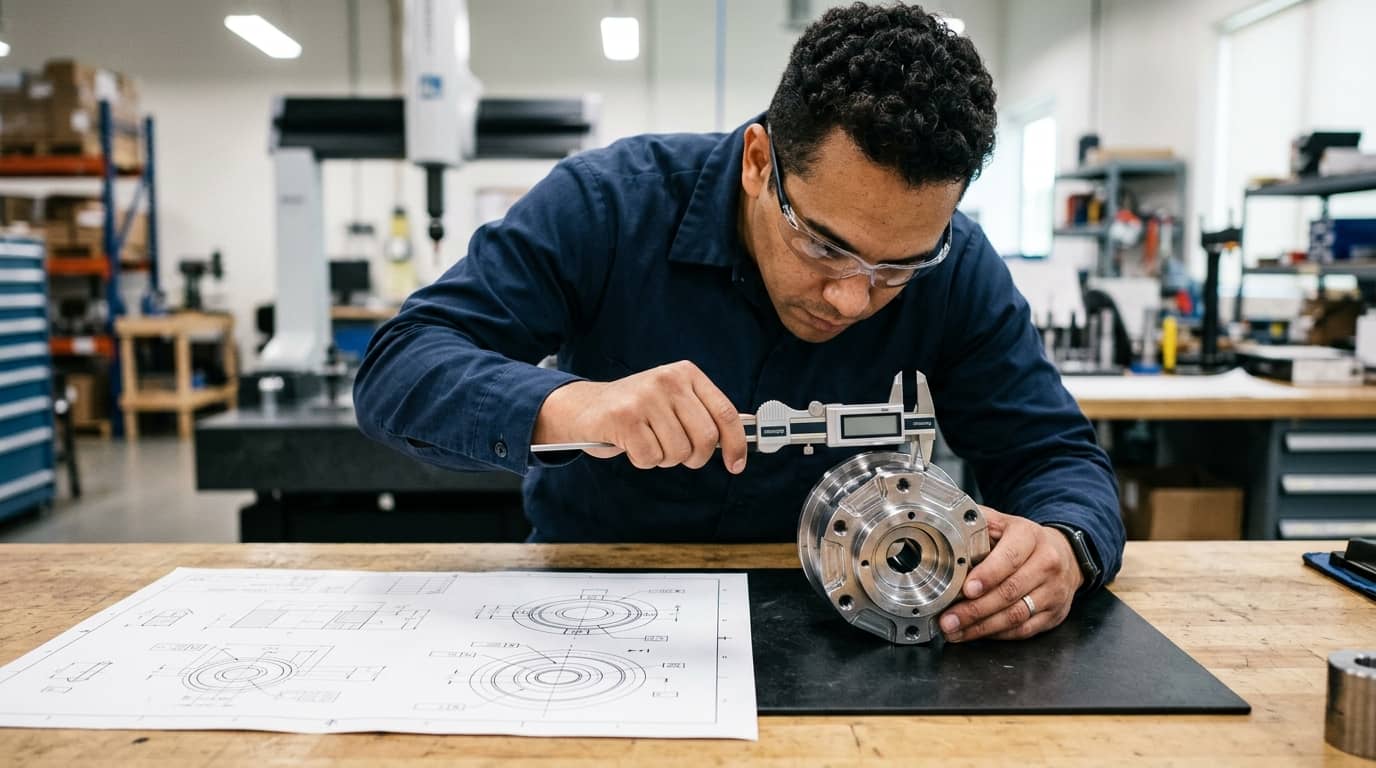
This Technical Inspector Training course gives you the practical knowledge and professional tools to perform defensible inspections across industrial, construction, and manufacturing environments. You'll master measurement science, visual examination, dimensional verification, and nonconformance management from the ground up. Whether you're entering the field or formalising years of hands-on experience, this course builds the competency employers and certification bodies demand.
What your team will master:
You will learn how to navigate regulatory frameworks, apply professional standards, and document inspection findings accurately. The course covers measurement principles, instrument calibration, visual and dimensional inspection techniques, and material integrity assessment. You will develop skills in writing nonconformance reports, conducting root cause analysis, and managing corrective actions. Inspection planning, field execution, and closeout procedures are covered in full. You will also explore quality management system integration, statistical process control, and supplier inspection programmes. Digital inspection tools, technical report writing, and certification pathways round out your training.
How your team learns in practice Technical Inspector Training
How your team practises Technical Inspector Training
Professionals from these companies study at Dedika



Course content
8 Chapters • 39 LessonsDuration between 4 and 360 hours (you decide)
Chapter 1HideHide detailsSee detailsFoundations of Technical Inspection
Foundations of Technical Inspection
Lesson 1 • Inspection Documentation Basics
Introduces core record-keeping principles, report formats, and chain-of-custody concepts. Accurate documentation underpins every inspection outcome covered later.
Lesson 2 • Inspector Ethics and Professional Conduct
Covers conflict of interest, confidentiality, and integrity obligations. Provides the ethical foundation required before field practice begins.
Lesson 3 • Regulatory and Standards Landscape
Maps the hierarchy of regulations, codes, and voluntary standards governing inspections. Enables inspectors to identify applicable requirements for any given assignment.
Lesson 4 • The Inspector's Role and Mandate
Defines the professional purpose and authority of a technical inspector within industry. Anchors all subsequent skill-building to a clear occupational identity.
Chapter 2HideHide detailsSee detailsMeasurement Science and Calibration
Measurement Science and Calibration
Lesson 1 • Calibration Principles and Procedures
Covers calibration intervals, reference standards, and adjustment procedures. Ensures inspectors can verify and maintain instrument reliability before use.
Lesson 2 • Fundamentals of Measurement
Explains units, measurement systems, and the concepts of accuracy, precision, and resolution. Provides the quantitative language used throughout all inspection activities.
Lesson 3 • Measurement Error and Uncertainty
Identifies systematic and random error sources and introduces uncertainty budgeting. Prepares inspectors to qualify measurement results with appropriate confidence.
Lesson 4 • Common Inspection Instruments
Surveys mechanical, electrical, and optical instruments used in field inspections. Connects instrument selection to the measurement requirements of specific tasks.
Lesson 5 • Instrument Care and Storage
Details handling, cleaning, and storage protocols that preserve instrument accuracy. Directly supports calibration integrity covered in the preceding section.
Chapter 3HideHide detailsSee detailsVisual and Surface Inspection Techniques
Visual and Surface Inspection Techniques
Lesson 1 • Systematic Visual Survey Methods
Introduces grid, zone, and sequential scanning strategies for complete coverage. Reduces the risk of missed defects through structured examination patterns.
Lesson 2 • Surface Defect Classification
Defines and categorises common surface discontinuities such as cracks, corrosion, and porosity. Provides a shared vocabulary for consistent defect reporting.
Lesson 3 • Principles of Visual Examination
Establishes the physics of light, contrast, and human visual perception relevant to inspection. Grounds technique selection in sensory and optical fundamentals.
Lesson 4 • Acceptance Criteria and Defect Disposition
Applies acceptance/rejection criteria to visual findings and documents disposition decisions. Bridges raw observations to actionable inspection conclusions.
Lesson 5 • Optical Aids and Remote Visual Tools
Covers magnifiers, borescopes, and video inspection systems for inaccessible areas. Extends visual capability beyond direct line-of-sight limitations.
Chapter 4HideHide detailsSee detailsDimensional and Geometric Inspection
Dimensional and Geometric Inspection
Lesson 1 • Linear and Angular Measurement
Applies calipers, micrometers, height gauges, and protractors to verify linear and angular dimensions. Connects instrument skills from Chapter 2 to drawing requirements.
Lesson 2 • Form and Position Verification
Uses surface plates, dial indicators, and CMM concepts to verify flatness, roundness, and position. Addresses the most complex GD&T requirements encountered in practice.
Lesson 3 • Geometric Dimensioning and Tolerancing
Explains GD&T symbols, datums, and feature control frames used in modern specifications. Enables accurate interpretation of tolerance requirements before measurement.
Lesson 4 • Dimensional Report Preparation
Structures dimensional data into inspection reports with clear pass/fail determinations. Reinforces documentation standards introduced in Chapter 1.
Lesson 5 • Engineering Drawing Interpretation
Reads orthographic projections, section views, and title block data on technical drawings. Provides the blueprint literacy required for all dimensional inspection work.
Chapter 5HideHide detailsSee detailsMaterial and Structural Integrity Assessment
Material and Structural Integrity Assessment
Lesson 1 • Material Properties and Identification
Reviews mechanical, thermal, and chemical properties of metals, polymers, and composites. Enables inspectors to recognise material-specific failure risks.
Lesson 2 • Risk-Based Inspection Prioritisation
Applies consequence-of-failure and probability-of-failure concepts to rank inspection priorities. Enables strategic resource allocation across complex inspection programmes.
Lesson 3 • Structural Load and Stress Concepts
Introduces tension, compression, shear, and bending as forces acting on inspected components. Provides the mechanical context needed to evaluate defect significance.
Lesson 4 • Nondestructive Testing Method Overview
Surveys ultrasonic, radiographic, magnetic particle, and liquid penetrant methods. Prepares inspectors to select and coordinate NDT activities in subsequent chapters.
Lesson 5 • Degradation and Failure Mechanisms
Covers fatigue, corrosion, creep, and wear as primary degradation pathways. Connects material knowledge to the defects observed during visual and dimensional inspection.
Chapter 6HideHide detailsSee detailsInspection Planning and Execution
Inspection Planning and Execution
Lesson 1 • Pre-Inspection Site Assessment
Evaluates site conditions, access constraints, and hazard exposure before mobilisation. Reduces delays and safety incidents during field execution.
Lesson 2 • Scope Definition and Work Breakdown
Translates client requirements and regulatory mandates into a defined inspection scope. Prevents scope creep and ensures all critical items are addressed.
Lesson 3 • Inspection Closeout and Handover
Covers final record compilation, punch list resolution, and formal handover to the client. Completes the inspection lifecycle introduced at the start of this chapter.
Lesson 4 • Inspection Plan Development
Builds a written inspection plan covering methods, hold points, and acceptance criteria. Formalises the planning process required before any field activity begins.
Lesson 5 • Field Execution and Progress Control
Manages inspection sequencing, hold point notifications, and real-time documentation. Ensures the plan is followed and deviations are captured immediately.
Chapter 7HideHide detailsSee detailsNonconformance and Corrective Action
Nonconformance and Corrective Action
Lesson 1 • Identifying and Classifying Nonconformances
Defines nonconformance categories by severity and type using a structured classification system. Ensures consistent treatment of findings across different inspectors and sites.
Lesson 2 • Corrective and Preventive Action Evaluation
Reviews proposed corrective actions for adequacy and verifies implementation effectiveness. Closes the quality loop by confirming that defects do not recur.
Lesson 3 • Writing Effective Nonconformance Reports
Structures NCR content to be objective, evidence-based, and actionable. Directly supports the documentation standards established in earlier chapters.
Lesson 4 • Root Cause Analysis Methods
Applies fishbone diagrams, five-why analysis, and fault tree methods to identify defect origins. Enables inspectors to evaluate whether proposed corrections address true causes.
Lesson 5 • Nonconformance Trend Analysis
Aggregates NCR data to identify recurring defect patterns and systemic quality issues. Elevates inspection from reactive finding to proactive quality improvement.
Chapter 8HideHide detailsSee detailsAdvanced Inspection Strategies and Quality Systems
Advanced Inspection Strategies and Quality Systems
Lesson 1 • Supplier and Vendor Inspection Programmes
Designs source inspection, receiving inspection, and supplier qualification activities. Extends inspection competency to the supply chain as a quality control boundary.
Lesson 2 • Inspection Programme Auditing
Evaluates inspection programme effectiveness through internal audits and performance metrics. Provides the tools to identify and close gaps in inspection system performance.
Lesson 3 • Continuous Improvement in Inspection
Applies Plan-Do-Check-Act and lean principles to reduce inspection waste and improve reliability. Culminates the core curriculum by embedding improvement as an ongoing practice.
Lesson 4 • Statistical Process Control for Inspectors
Applies control charts, capability indices, and sampling plans to inspection data. Enables data-driven decisions about process stability and product conformance.
Lesson 5 • Quality Management System Integration
Positions inspection within a process-based quality management framework. Shows how inspection outputs feed into organisational quality objectives.
Your valid completion certificate
This course is for you:
Trades professional: ready to transition from doing the work to inspecting it.
Quality technician: seeking a structured framework to formalise on-the-job knowledge.
Recent engineering graduate: building practical field competency alongside academic credentials.
Site supervisor: needing inspection authority to manage hold points and nonconformances independently.
Career changer: entering industrial quality roles from a safety, logistics, or military background.
Maintenance technician: aiming to expand responsibilities into formal equipment integrity assessment.
Related Courses




FAQ
Who is Dedika?
Is the certificate valid in Australia?
Are the courses free?
What is the course workload?
What are the courses like?
How do the courses work?
What is the duration of the courses?
What is the cost or price of the courses?
What is an EAD or online course and how does it work?
PDF Course