
Myofunctional Therapy Course
Master the clinical skills to assess, treat, and eliminate orofacial myofunctional disorders from the ground up. This course takes you through anatomy, diagnosis, exercise prescription, and interdisciplinary collaboration — everything you need to practice with confidence. Whether you're entering the field or expanding your scope, this is the most complete myofunctional therapy training available.
What you will learn:
You will build a thorough understanding of orofacial anatomy, physiology, and neuromuscular control as the foundation for all clinical work. You will learn to identify and classify orofacial myofunctional disorders, conduct comprehensive patient assessments, and write measurable treatment goals. The course covers evidence-based exercise techniques for tongue posture, nasal breathing, swallowing, and lip function. You will also develop skills in habit elimination, session delivery, and outcome monitoring. Advanced modules address orthodontic coordination, frenulum assessment, pediatric care, and sleep-disordered breathing. Practice management, ethics, telehealth delivery, and patient communication are included to prepare you for real-world practice.
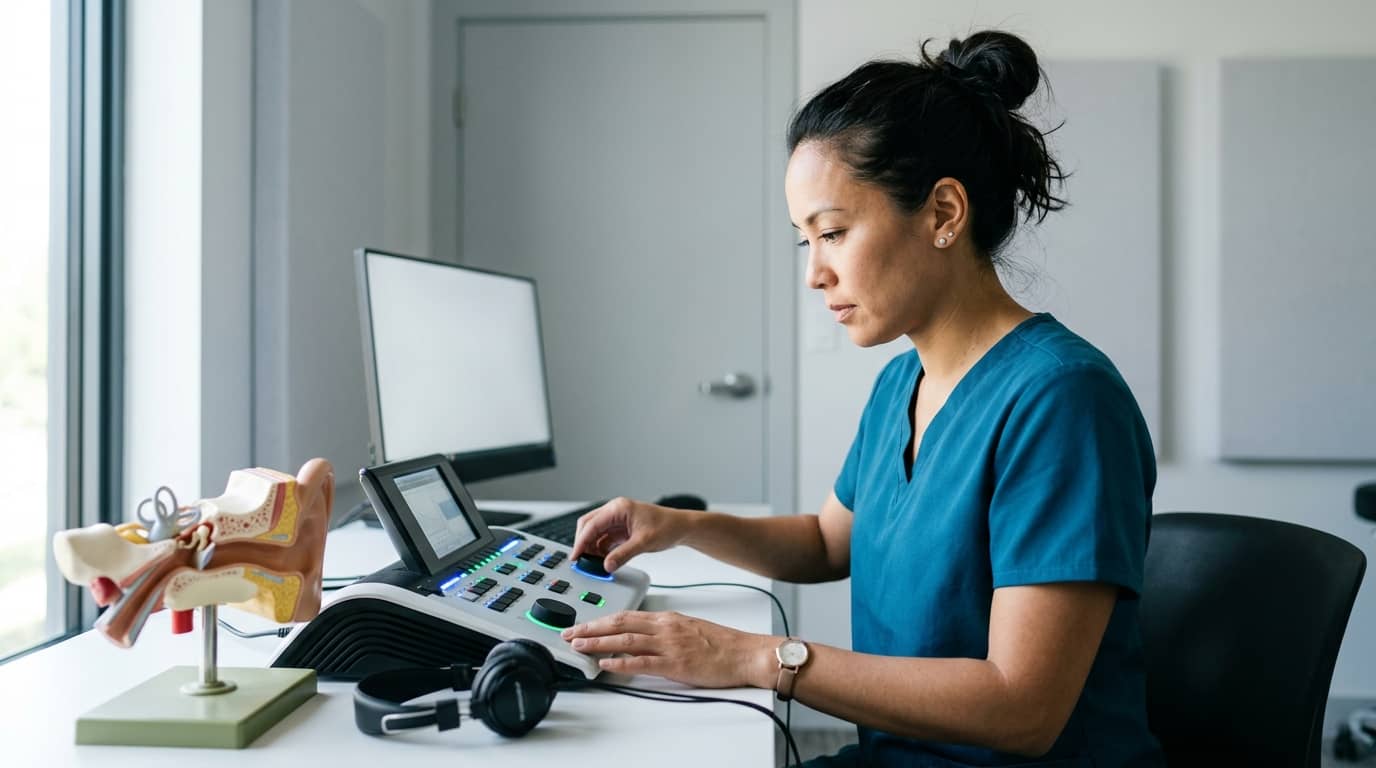
How you study in practice Myofunctional Therapy Course
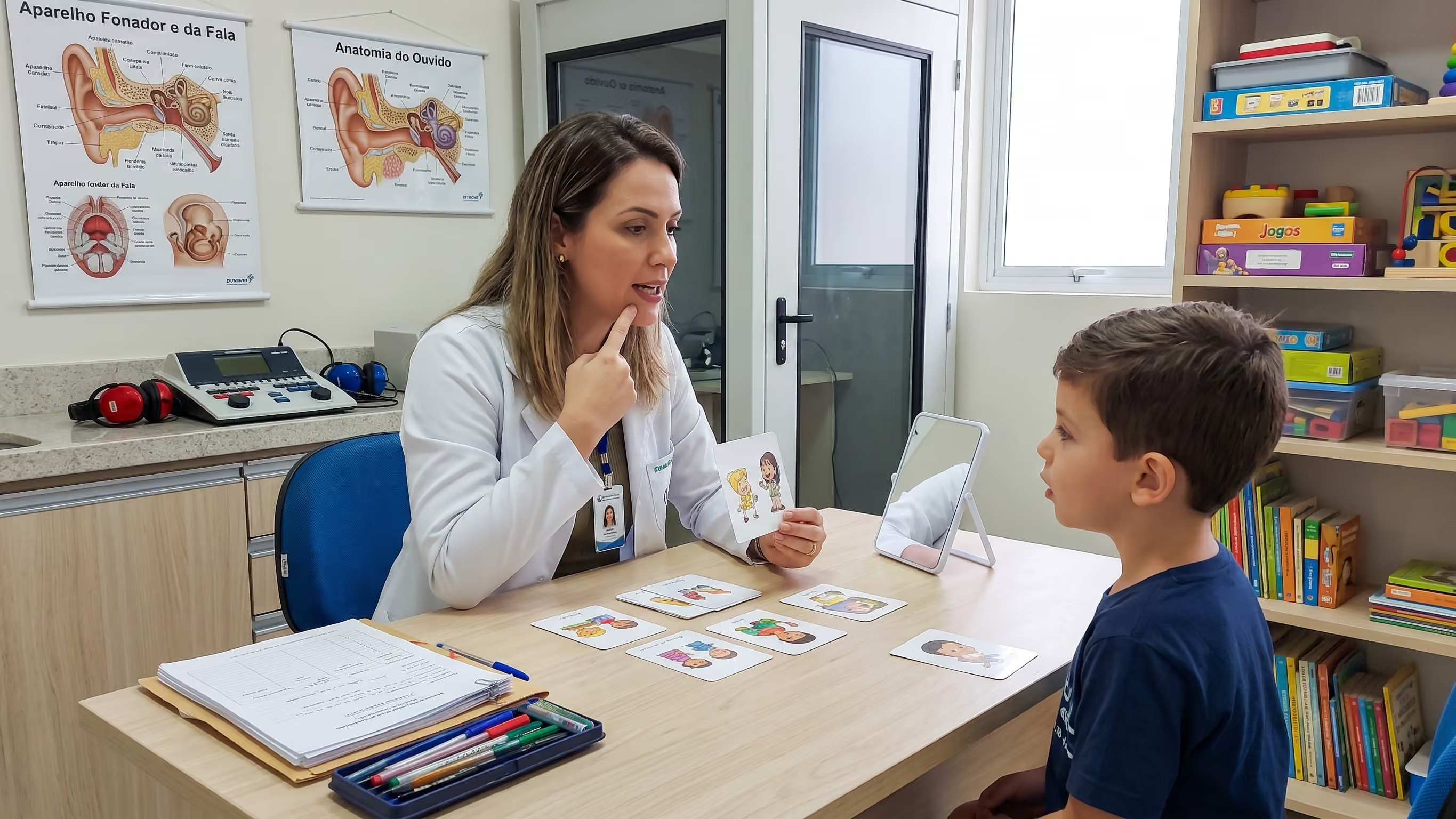
How you practise Myofunctional Therapy Course
For companies looking to train their team
With Dedika for Business, the course includes exercises and examples tailored to your own business and the way your company needs.

Course Content
8 Chapters • 39 LessonsDuration between 4 and 360 hours (you decide)
Chapter 1HideHide detailsSee detailsFoundations of Orofacial Function
Foundations of Orofacial Function
Lesson 1 • Neuromuscular Control Principles
Introduces motor learning, muscle tone, and proprioception in orofacial function. Grounds exercise prescription in neuroscience principles.
Lesson 2 • Dental and Occlusal Relationships
Describes occlusal classifications, dental arch development, and tongue-tooth interactions. Connects oral posture to orthodontic and dental outcomes.
Lesson 3 • Orofacial Anatomy Overview
Covers bones, muscles, nerves, and soft tissues of the face and oral cavity. Provides the structural baseline for all subsequent clinical reasoning.
Lesson 4 • Physiology of Oral Functions
Explains normal breathing, chewing, swallowing, and speech mechanics. Links physiological norms to clinical benchmarks used throughout the course.
Chapter 2HideHide detailsSee detailsOrofacial Myofunctional Disorders
Orofacial Myofunctional Disorders
Lesson 1 • Low Tongue Posture and Lip Incompetence
Describes resting tongue and lip posture deviations and their systemic effects. Links low tongue posture to arch narrowing and lip incompetence to oral dryness.
Lesson 2 • Oral Habits and Their Consequences
Analyzes digit sucking, pacifier use, nail biting, and lip habits. Quantifies duration and intensity thresholds that produce structural changes.
Lesson 3 • Tongue Thrust and Atypical Swallow
Examines anterior and lateral tongue thrust patterns and their clinical significance. Connects swallow deviations to dental, speech, and airway consequences.
Lesson 4 • Mouth Breathing and Airway Dysfunction
Identifies causes and consequences of chronic mouth breathing on facial growth and posture. Establishes the airway as a central variable in OMD management.
Lesson 5 • Defining Orofacial Myofunctional Disorders
Establishes clinical definitions and diagnostic criteria for OMDs. Differentiates OMDs from other oral health conditions encountered in practice.
Chapter 3HideHide detailsSee detailsComprehensive Myofunctional Assessment
Comprehensive Myofunctional Assessment
Lesson 1 • Speech and Articulation Screening
Screens for speech sound errors linked to orofacial dysfunction without replacing speech-language pathology evaluation. Identifies referral needs and treatment priorities.
Lesson 2 • Swallowing and Breathing Evaluation
Guides observation and recording of swallow patterns and breathing mode. Integrates functional testing with structural findings for a complete clinical picture.
Lesson 3 • Oral Motor Examination Techniques
Teaches hands-on evaluation of muscle tone, range of motion, and structural integrity. Builds clinical observation skills foundational to accurate diagnosis.
Lesson 4 • Case History and Intake Procedures
Structures the intake interview to capture medical, dental, and developmental history. Ensures relevant background informs clinical decision-making from the first session.
Lesson 5 • Standardized Assessment Tools and Documentation
Introduces validated rating scales, photographic records, and written reporting formats. Ensures consistent, defensible documentation across all patient encounters.
Chapter 4HideHide detailsSee detailsTreatment Planning and Goal Setting
Treatment Planning and Goal Setting
Lesson 1 • Interpreting Assessment Findings
Synthesizes data from intake, oral motor exam, and functional testing into clinical conclusions. Bridges evaluation and intervention through evidence-based interpretation.
Lesson 2 • Sequencing and Prioritizing Interventions
Establishes logical treatment sequencing based on prerequisite skills and patient readiness. Prevents premature introduction of complex exercises before foundational skills are stable.
Lesson 3 • Writing Measurable Treatment Goals
Teaches construction of specific, measurable, achievable, relevant, and time-bound goals. Aligns goals with patient needs and interdisciplinary team expectations.
Lesson 4 • Adapting Plans for Special Populations
Modifies treatment planning for pediatric, geriatric, and neurologically diverse patients. Ensures plans are realistic and ethical across varied clinical presentations.
Lesson 5 • Interdisciplinary Collaboration in Planning
Defines the myofunctional therapist's role within dental, medical, and speech teams. Establishes communication protocols that align treatment plans across disciplines.
Chapter 5HideHide detailsSee detailsCore Myofunctional Exercise Techniques
Core Myofunctional Exercise Techniques
Lesson 1 • Swallowing Retraining Techniques
Guides patients from atypical to mature swallow patterns through structured retraining sequences. Integrates tongue posture and lip seal skills into functional swallowing.
Lesson 2 • Lip and Cheek Muscle Exercises
Develops lip seal, lip strength, and cheek tone through targeted exercises. Addresses hypotonic and hypertonic patterns with differentiated techniques.
Lesson 3 • Chewing and Mastication Training
Retrains bilateral chewing patterns and jaw muscle coordination. Connects mastication efficiency to dental health and digestive function.
Lesson 4 • Tongue Posture and Strength Training
Teaches exercises to establish correct resting tongue posture and build tongue muscle strength. Forms the foundation of most OMD treatment protocols.
Lesson 5 • Nasal Breathing Retraining
Establishes habitual nasal breathing through awareness, posture, and breathing exercises. Addresses the most common prerequisite for successful OMD treatment.
Chapter 6HideHide detailsSee detailsHabit Elimination and Behavior Change
Habit Elimination and Behavior Change
Lesson 1 • Digit Sucking Cessation Protocols
Provides age-appropriate strategies for eliminating thumb and finger sucking habits. Combines awareness training, reward systems, and physical reminders.
Lesson 2 • Lip, Nail, and Object Biting Habits
Addresses stress-linked oral habits through awareness and substitution strategies. Integrates sensory and behavioral approaches for adolescent and adult patients.
Lesson 3 • Behavior Change Frameworks for Clinicians
Introduces motivational interviewing and stages-of-change models applied to habit elimination. Equips therapists with evidence-based communication strategies for patient engagement.
Lesson 4 • Maintaining Habit Cessation Long-Term
Builds relapse prevention plans and self-monitoring skills into the treatment program. Ensures habit elimination is sustained beyond the active therapy period.
Lesson 5 • Pacifier and Bottle Weaning
Guides caregivers through structured weaning from pacifiers and bottles. Addresses emotional attachment and substitution behaviors during the transition.
Chapter 7HideHide detailsSee detailsDelivering and Progressing Treatment
Delivering and Progressing Treatment
Lesson 1 • Progressing and Modifying Exercises
Establishes criteria for advancing, modifying, or regressing exercises based on patient performance. Prevents plateau and maintains therapeutic momentum throughout treatment.
Lesson 2 • Cueing and Feedback Strategies
Applies verbal, tactile, and visual cueing to shape correct exercise performance. Develops feedback delivery skills that build patient self-awareness and independence.
Lesson 3 • Monitoring Outcomes and Adjusting Plans
Uses reassessment data to evaluate progress and revise treatment plans. Closes the clinical loop between goal setting, intervention, and outcome measurement.
Lesson 4 • Home Program Design and Compliance
Creates effective home exercise programs that reinforce in-session gains. Addresses common compliance barriers with practical solutions and tracking tools.
Lesson 5 • Session Structure and Pacing
Defines the components of an effective therapy session from warm-up to home program review. Establishes consistent session architecture that supports patient learning.
Chapter 8HideHide detailsSee detailsAdvanced Clinical Applications
Advanced Clinical Applications
Lesson 1 • Pediatric and Infant Myofunctional Therapy
Adapts assessment and treatment for infants, toddlers, and school-age children. Addresses feeding difficulties, early habit intervention, and caregiver-mediated therapy.
Lesson 2 • Sleep-Disordered Breathing and Myofunctional Therapy
Applies oropharyngeal exercises to support management of snoring and mild sleep apnea. Defines scope of practice boundaries and referral pathways for sleep medicine.
Lesson 3 • Myofunctional Therapy and Orthodontics
Coordinates therapy timing with orthodontic treatment phases to maximize outcomes. Addresses relapse prevention and retention support through myofunctional intervention.
Lesson 4 • Frenulum Restrictions and Post-Frenectomy Care
Evaluates lingual and labial frenulum restrictions and prepares patients for surgical release. Delivers structured post-frenectomy rehabilitation to optimize functional outcomes.
Lesson 5 • Complex and Multidisciplinary Case Management
Manages cases involving multiple OMDs, comorbid conditions, and multiple treating providers. Develops clinical reasoning and communication skills for complex interdisciplinary scenarios.
Your valid completion certificate
This course is for you:
Dental hygienist: wants to address the muscle dysfunction behind recurring orthodontic issues.
Speech-language pathologist: seeks a structured framework for orofacial swallowing and articulation cases.
Occupational therapist: works with pediatric feeding difficulties and needs expanded oral motor skills.
Dentist or orthodontist: aims to understand the functional drivers affecting treatment stability.
Career changer: has a health background and wants to build a specialized therapy practice.
Registered nurse: supports airway and sleep patients and wants deeper orofacial clinical knowledge.
What our students say
Your classes are perfect. I purchased the one-year package and finally have the opportunity to follow various topics of interest without needing to switch platforms... I thank you for everything you do, I've already recommended you to other people...

I like how the lessons are straight to the point and how I can change chapters and skip content I don't need.

I like the content and the presentation style and video transcription, which speeds up the process!

The platform is fast, simple to use. The diversity of content and complementary videos really help with learning.

Top training programs










FAQ
Who is Dedika?
Is the certificate valid in Canada?
Are the courses free?
What is the course workload?
What are the courses like?
How do the courses work?
What is the duration of the courses?
What is the cost or price of the courses?
What is an EAD or online course and how does it work?
PDF Course