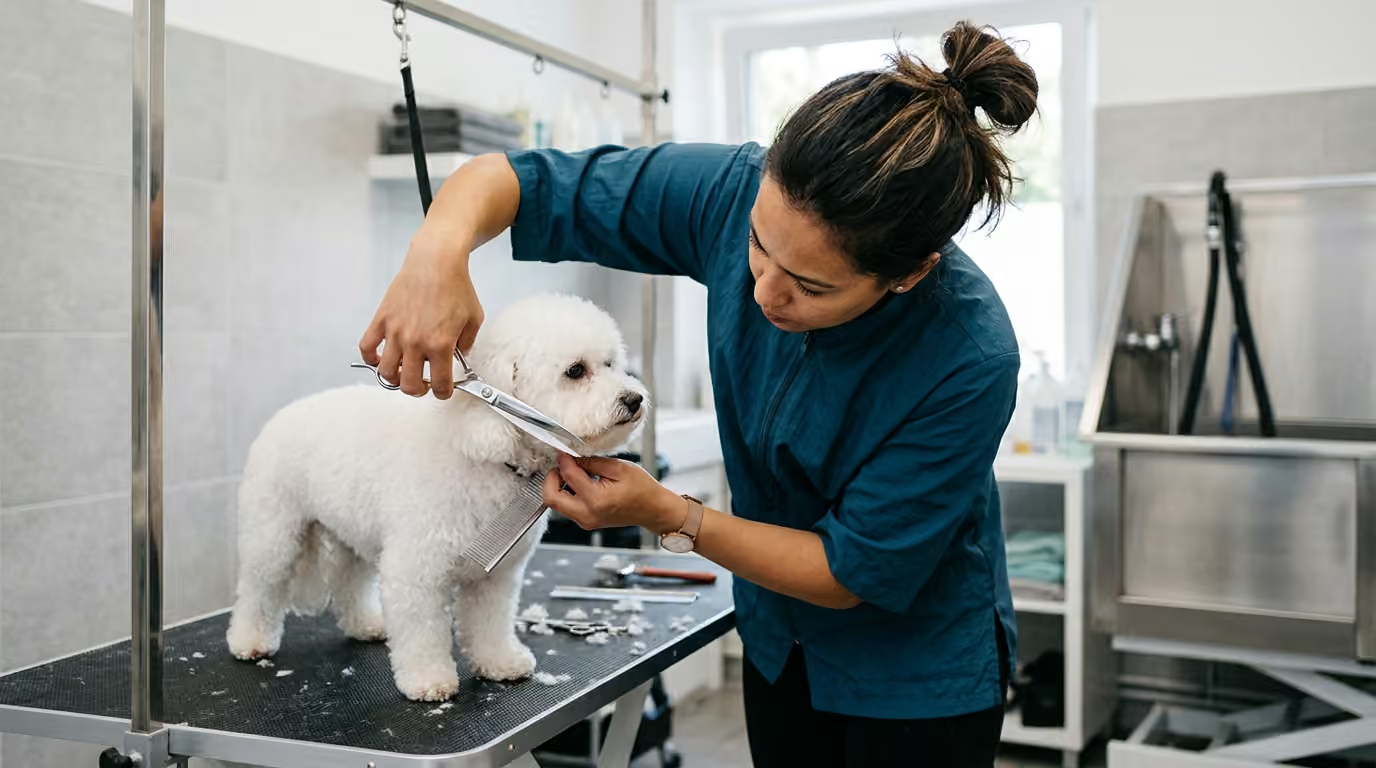
Pet Grooming Course
Turn your passion for pets into a professional grooming career with a comprehensive programme that covers everything from animal behaviour and coat science to breed-specific styling and business basics. You will gain hands-on knowledge of tools, techniques, and safety protocols used in real salons every day. Whether you are starting from scratch or sharpening your skills, this course gives you what you need to work with confidence.
What your team will master:
You will learn how to safely handle dogs and cats of all temperaments, identify every major coat type, and choose the right tools and products for each job. The course walks you through bathing, drying, nail trimming, ear cleaning, clipping, and scissoring with step-by-step instruction. You will also study breed-standard trims for the most in-demand breeds, plus creative and advanced styling techniques. On the business side, you will cover pricing, scheduling, client communication, and how to handle difficult situations professionally. By the end, you will have the technical skills and business knowledge to work in a salon or launch your own grooming operation.
How your team learns practically Pet Grooming Course
How your team practises Pet Grooming Course
Professionals from these companies study at Dedika



Course content
8 Chapters • 40 LessonsDuration between 4 and 360 hours (you decide)
Chapter 1HideHide detailsSee detailsFoundations of Pet Grooming
Foundations of Pet Grooming
Lesson 1 • Grooming Salon Safety and Sanitation
Establishes hygiene, disinfection, and hazard-prevention practices required in a professional salon. Meets health and safety standards for animal care facilities.
Lesson 2 • Anatomy Relevant to Grooming
Introduces skin, coat, ear, eye, and nail anatomy for dogs and cats. Provides the biological foundation needed to perform grooming tasks correctly.
Lesson 3 • Animal Behaviour and Body Language
Covers reading stress signals, fear responses, and calm indicators in dogs and cats. Enables safe, low-stress handling throughout all grooming procedures.
Lesson 4 • The Pet Grooming Industry Overview
Introduces the scope, career paths, and professional standards of pet grooming. Establishes context for all subsequent technical and business skills.
Lesson 5 • Safe Animal Handling Techniques
Teaches proper restraint methods for dogs and cats of varying sizes and temperaments. Directly reduces injury risk for both groomer and animal.
Chapter 2HideHide detailsSee detailsGrooming Tools and Equipment
Grooming Tools and Equipment
Lesson 1 • Brushes, Combs, and Dematting Tools
Identifies the function of slicker brushes, pin brushes, combs, and dematting rakes. Connects tool selection to coat type for effective pre-bath preparation.
Lesson 2 • Clippers and Blade Selection
Covers clipper anatomy, blade numbering systems, and speed settings for various coat textures. Proper blade selection prevents skin irritation and achieves clean cuts.
Lesson 3 • Bathing and Drying Equipment
Introduces tubs, high-velocity dryers, stand dryers, and cage dryers with safe operating procedures. Correct equipment use reduces drying time and coat damage.
Lesson 4 • Scissors and Shears
Teaches straight, curved, and thinning shear selection and safe handling techniques. Scissor work is essential for finishing and breed-specific styling.
Lesson 5 • Tool Maintenance and Blade Care
Covers cleaning, oiling, sharpening, and storing all grooming tools to extend lifespan. Maintained tools perform better and reduce risk of coat damage.
Chapter 3HideHide detailsSee detailsCoat Types and Pre-Bath Preparation
Coat Types and Pre-Bath Preparation
Lesson 1 • Pre-Bath Ear and Nail Check
Establishes the pre-bath inspection routine for ears, nails, and skin condition. Early detection of issues prevents complications during grooming.
Lesson 2 • Preparing the Animal for Bathing
Covers pre-bath manual expression of anal glands, eye protection, and ear plugging procedures. Proper preparation protects sensitive areas and improves bath efficiency.
Lesson 3 • Classifying Dog Coat Types
Defines smooth, double, wire, curly, silky, and combination coats with breed examples. Accurate classification drives every subsequent grooming decision.
Lesson 4 • Classifying Cat Coat Types
Covers short, medium, long, and hairless cat coat categories with breed-specific considerations. Feline coat knowledge prevents over-grooming and skin irritation.
Lesson 5 • Brushing and Detangling Techniques
Teaches systematic brushing sequences and safe mat removal methods for each coat type. Thorough pre-bath brushing prevents mats from tightening during bathing.
Chapter 4HideHide detailsSee detailsBathing and Drying Techniques
Bathing and Drying Techniques
Lesson 1 • Rinsing and Residue Removal
Focuses on complete shampoo and conditioner removal to prevent skin irritation and dull coats. Thorough rinsing is one of the most commonly overlooked grooming steps.
Lesson 2 • Shampoo and Conditioner Selection
Covers shampoo formulations for sensitive skin, medicated, whitening, and volumizing needs. Matching product to coat and skin condition is critical for animal health.
Lesson 3 • Bathing Procedure and Lathering
Teaches water temperature control, systematic lathering, and sensitive-area handling during bathing. Correct technique ensures thorough cleaning without stressing the animal.
Lesson 4 • Towel Drying and Fluff Drying
Covers towel absorption techniques and high-velocity and stand dryer use for different coat types. Proper drying prevents hot spots, mold, and coat damage.
Lesson 5 • Post-Bath Coat Inspection
Establishes a post-bath check for remaining mats, skin issues, and coat condition before finishing. This step ensures quality control before any clipping or scissoring begins.
Chapter 5HideHide detailsSee detailsNail, Ear, and Dental Care
Nail, Ear, and Dental Care
Lesson 1 • Recognising Health Concerns
Trains groomers to identify ear infections, nail disorders, and oral health issues requiring veterinary attention. Referral skills protect animals and build client trust.
Lesson 2 • Nail Filing and Grinding
Covers rotary grinder use for smoothing nail edges and reducing quick length gradually. Grinding is preferred for animals sensitive to clipping pressure.
Lesson 3 • Ear Cleaning Procedures
Teaches safe ear cleaning with appropriate solutions and cotton for dogs and cats. Recognising abnormal discharge or odor prevents groomer liability.
Lesson 4 • Dental Hygiene for Pets
Introduces toothbrushing technique, pet-safe toothpaste, and dental wipe use as grooming add-on services. Regular dental care reduces periodontal disease risk.
Lesson 5 • Nail Trimming Fundamentals
Teaches guillotine and scissor clipper use, quick identification, and safe trimming angles. Correct nail trimming prevents pain, posture problems, and injury.
Chapter 6HideHide detailsSee detailsClipping and Scissoring Techniques
Clipping and Scissoring Techniques
Lesson 1 • Clipper Handling and Body Mechanics
Covers correct clipper grip, wrist movement, and ergonomic posture to reduce fatigue and improve cut quality. Good body mechanics prevent repetitive strain injuries.
Lesson 2 • Finishing and Quality Control
Establishes a systematic finishing inspection for symmetry, evenness, and stray hairs before client handoff. Consistent finishing standards define professional grooming quality.
Lesson 3 • Clipping with the Grain and Against
Explains the effect of clipping direction on coat length and finish for different coat textures. Direction choice is fundamental to achieving breed-standard or custom looks.
Lesson 4 • Scissoring Fundamentals
Teaches straight-line scissoring, beveling, and blending techniques for body, legs, and head. Scissor control determines the quality of all finishing work.
Lesson 5 • Thinning Shear Applications
Covers thinning shear use for removing bulk, softening lines, and blending transitions. Thinning shears are essential for natural-looking finishes on many breeds.
Chapter 7HideHide detailsSee detailsBreed-Specific Grooming Styles
Breed-Specific Grooming Styles
Lesson 1 • Grooming Terrier Breeds
Teaches hand-stripping and clipper alternatives for wire-coated terriers and scissored trims for soft-coated breeds. Terrier grooming demands precise head and body shaping.
Lesson 2 • Cat Grooming Styles and Lion Cuts
Teaches sanitary trims, lion cuts, and maintenance grooming for long-haired and matted cats. Cat grooming requires adapted restraint and specialised blade use.
Lesson 3 • Grooming Toy and Non-Sporting Breeds
Covers Poodle, Bichon Frise, Shih Tzu, and Maltese trims requiring precise scissoring and pattern work. These breeds are among the most requested in professional salons.
Lesson 4 • Grooming Herding and Working Breeds
Addresses double-coat maintenance, deshedding, and light trimming for Border Collies, Huskies, and similar breeds. Preserving coat function is the priority for these breeds.
Lesson 5 • Grooming Sporting and Hound Breeds
Covers breed-standard trims for Cocker Spaniels, Golden Retrievers, Beagles, and similar breeds. Sporting and hound coats require specific blending and feathering techniques.
Chapter 8HideHide detailsSee detailsAdvanced Grooming and Creative Styling
Advanced Grooming and Creative Styling
Lesson 1 • Creative and Fantasy Grooming
Introduces pet-safe dyes, stenciling, and sculptural styling for creative grooming competitions and client requests. Creative grooming requires advanced scissoring and colour application skills.
Lesson 2 • Hand-Stripping Techniques
Teaches finger and stripping knife methods for maintaining correct wire coat texture on terriers and spaniels. Hand-stripping preserves coat colour and texture that clipping destroys.
Lesson 3 • Show Grooming Standards and Preparation
Covers breed standard interpretation, show ring presentation, and pre-show grooming timelines. Show grooming demands the highest level of precision and breed knowledge.
Lesson 4 • Building a Signature Grooming Style
Guides students in developing a consistent aesthetic, portfolio, and personal brand as a groomer. A recognisable style attracts loyal clients and competitive opportunities.
Lesson 5 • Spa and Add-On Services
Covers blueberry facials, pawdicures, coat treatments, and aromatherapy rinses as premium service offerings. Add-on services increase revenue and client satisfaction.
Your valid completion certificate
This course is for you:
Animal lovers ready to turn their hobby into a real profession.
Veterinary assistants wanting to expand their hands-on animal care services.
Stay-at-home parents seeking a flexible, skill-based career they can build independently.
Salon workers curious about switching into the fast-growing pet care industry.
Dog owners tired of expensive grooming bills and eager to learn themselves.
Entrepreneurs researching a low-overhead service business with steady local demand.
Related Courses


FAQs
Who is Dedika?
Is the certificate valid in India?
Are the courses free?
What is the course workload?
What are the courses like?
How do the courses work?
What is the duration of the courses?
What is the cost or price of the courses?
What is an EAD or online course and how does it work?
PDF Course