
Speech-Language Pathologist in Speech Therapy Course
This comprehensive Speech-Language Pathology course equips you with the clinical knowledge and practical skills needed to assess and treat the full spectrum of communication and swallowing disorders. From articulation and language development to dysphagia and neurogenic disorders, every major area of SLP practice is covered in depth. Build the professional competency required to work confidently across medical, educational, and rehabilitation settings.
What you will learn:
You will gain a thorough understanding of the anatomical and physiological foundations of speech, language, and swallowing. You will learn to conduct complete diagnostic evaluations using both standardised and informal assessment methods and write professional diagnostic reports. The course covers evidence-based treatment approaches for articulation disorders, developmental language disorders, fluency disorders, voice disorders, and dysphagia. You will also develop skills in augmentative and alternative communication, culturally responsive practice, and interprofessional collaboration. Clinical supervision, reflective practice, and the integration of technology and telepractice are addressed to prepare you for real-world SLP settings.
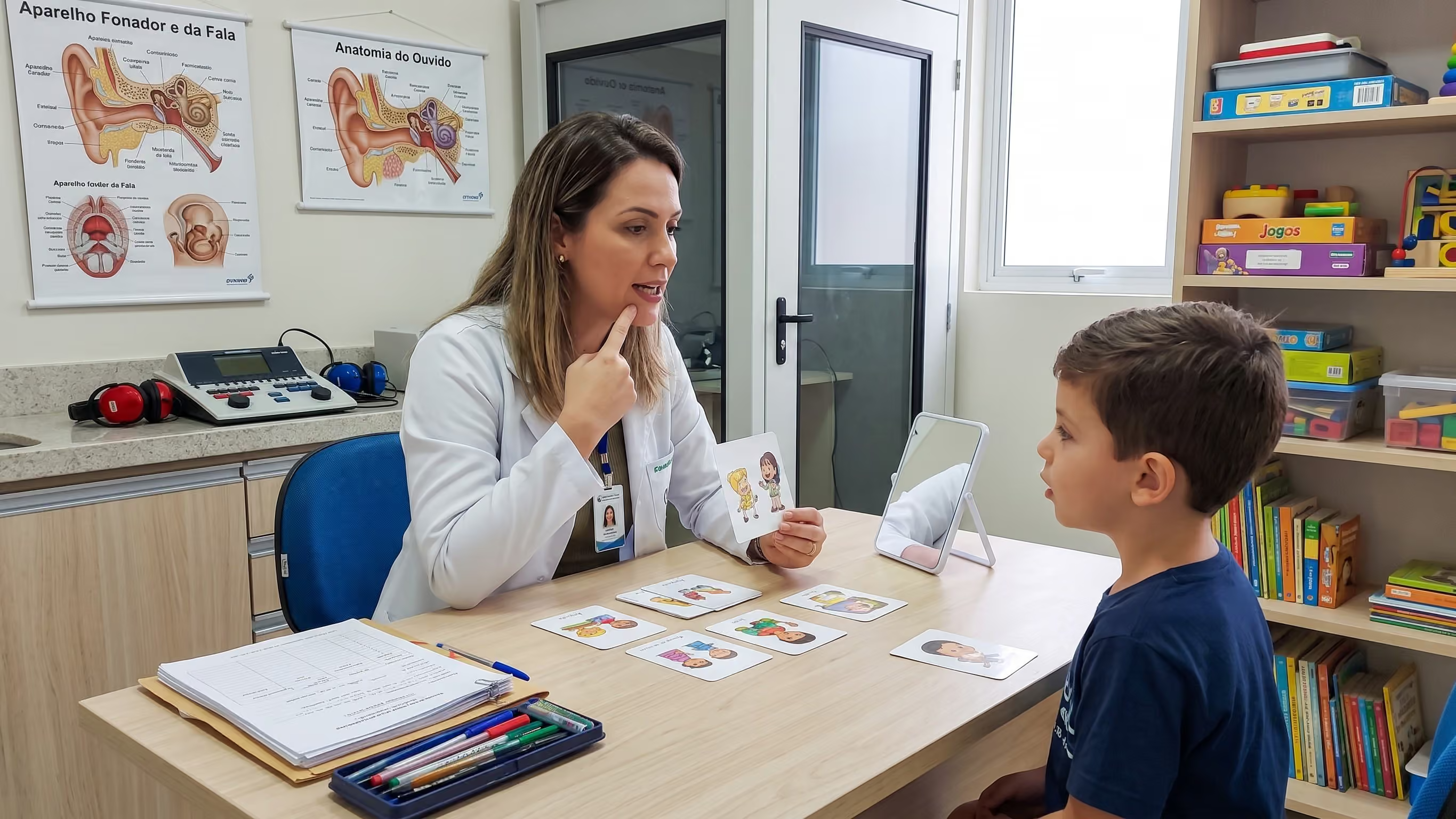
How you study practically Speech-Language Pathologist in Speech Therapy Course
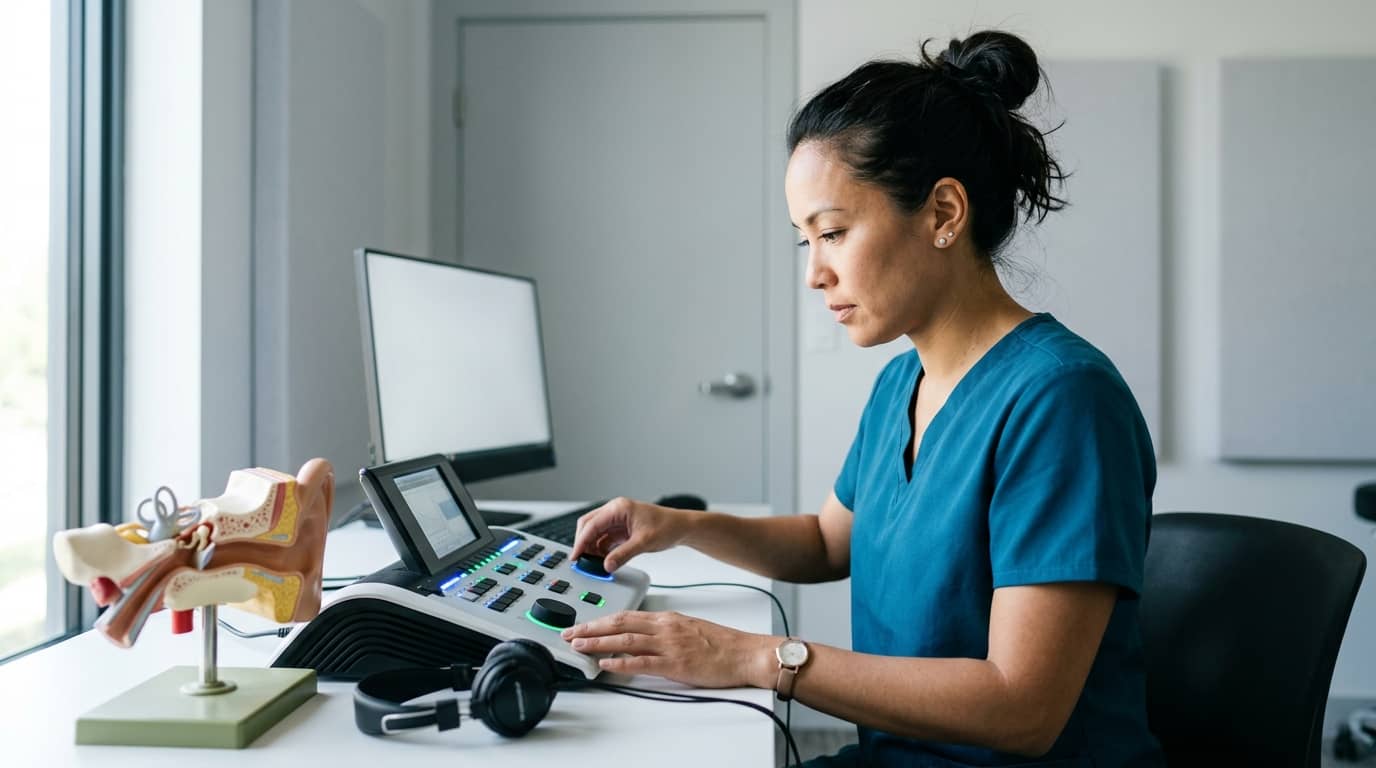
How you practise Speech-Language Pathologist in Speech Therapy Course
For companies looking to train their teams
With Dedika for businesses, the course includes exercises and examples tailored to your own business and the way your company needs.

Course content
8 Chapters • 40 LessonsDuration between 4 and 360 hours (you decide)
Chapter 1HideHide detailsSee detailsFoundations of Speech-Language Pathology
Foundations of Speech-Language Pathology
Lesson 1 • Language Development Across the Lifespan
Traces typical phonological, semantic, syntactic, and pragmatic development from infancy through adulthood. Establishes developmental norms used in clinical assessment.
Lesson 2 • Introduction to Communication Disorders
Surveys major disorder categories including articulation, fluency, voice, and language disorders. Prepares students to classify disorders encountered in later chapters.
Lesson 3 • Physiology of Normal Speech Production
Explains how breathing, voicing, resonance, and articulation integrate to produce speech. Links anatomy to functional communication processes.
Lesson 4 • Anatomy of the Speech Mechanism
Covers respiratory, phonatory, resonatory, and articulatory structures. Provides the anatomical foundation required for understanding speech disorders.
Lesson 5 • Overview of the SLP Profession
Defines SLP roles, settings, and professional responsibilities. Grounds students in the profession's identity before clinical content begins.
Chapter 2HideHide detailsSee detailsClinical Assessment Principles and Methods
Clinical Assessment Principles and Methods
Lesson 1 • Standardised Assessment Administration
Covers protocols for administering norm-referenced speech and language tests accurately. Standardised procedures ensure valid score interpretation and comparability.
Lesson 2 • Diagnostic Report Writing
Guides students through structuring, writing, and editing professional diagnostic reports. Clear reports communicate findings to families, educators, and medical teams.
Lesson 3 • Informal and Dynamic Assessment
Presents language sampling, observation, and mediated learning probes as informal tools. These methods capture abilities not reflected in standardised scores.
Lesson 4 • Case History and Interview Techniques
Teaches structured case history collection and motivational interviewing strategies. Accurate histories guide hypothesis formation and assessment selection.
Lesson 5 • Principles of Clinical Measurement
Introduces reliability, validity, sensitivity, and specificity as measurement concepts. Ensures students can critically evaluate assessment tools before using them.
Chapter 3HideHide detailsSee detailsArticulation and Phonological Disorders
Articulation and Phonological Disorders
Lesson 1 • Traditional Articulation Therapy
Teaches the sensorimotor approach for establishing, stabilizing, and generalising target sounds. Foundational techniques apply across ages and disorder types.
Lesson 2 • Phonetics and Phonological Theory
Reviews consonant and vowel classification, phonological processes, and distinctive features. This theoretical base informs error analysis and target selection.
Lesson 3 • Assessment of Speech Sound Disorders
Covers single-word tests, connected speech sampling, and stimulability probing. Comprehensive assessment data drive accurate diagnosis and treatment planning.
Lesson 4 • Phonological Intervention Approaches
Presents minimal pairs, cycles, and complexity approaches for systemic phonological change. Pattern-based methods are more efficient for children with multiple error patterns.
Lesson 5 • Motor Speech Disorders in Children
Distinguishes childhood apraxia of speech from dysarthria and phonological disorders. Accurate differential diagnosis leads to appropriate motor-based treatment selection.
Chapter 4HideHide detailsSee detailsLanguage Disorders in Children
Language Disorders in Children
Lesson 1 • Language Assessment in Children
Applies standardised tests, language samples, and curriculum-based measures to child populations. Multi-measure assessment reduces diagnostic error and informs goal writing.
Lesson 2 • Early Language Intervention
Covers naturalistic, milieu, and parent-implemented strategies for toddlers and preschoolers. Early intervention maximises developmental trajectories and family involvement.
Lesson 3 • Adolescent Language and Literacy
Targets abstract language, inferencing, and text-level literacy in secondary students. Adolescent intervention requires curriculum alignment and self-advocacy skill building.
Lesson 4 • School-Age Language Intervention
Addresses vocabulary, narrative, syntax, and discourse goals for school-age children. Language skills directly support reading, writing, and academic achievement.
Lesson 5 • Developmental Language Disorder Overview
Defines developmental language disorder, its subtypes, and co-occurring conditions. Understanding etiology and profiles guides individualized treatment planning.
Chapter 5HideHide detailsSee detailsFluency Disorders: Stuttering and Cluttering
Fluency Disorders: Stuttering and Cluttering
Lesson 1 • Psychosocial and Acceptance-Based Approaches
Integrates acceptance and commitment therapy, cognitive restructuring, and support groups into fluency treatment. Addressing avoidance and stigma improves long-term quality of life.
Lesson 2 • Stuttering Modification Therapy
Presents identification, desensitization, modification, and stabilization stages of Van Riper's approach. Modification therapy targets the moment of stuttering rather than eliminating it.
Lesson 3 • Fluency Assessment Procedures
Covers percent syllables stuttered, stuttering severity instruments, and attitude measures. Comprehensive fluency assessment captures both behavioural and affective dimensions.
Lesson 4 • Nature and Etiology of Fluency Disorders
Explains the neurological, genetic, and psychosocial factors underlying stuttering and cluttering. Understanding etiology prevents misattribution and guides treatment framing.
Lesson 5 • Fluency Shaping Techniques
Teaches prolonged speech, easy onset, and light articulatory contact to establish fluent speech. Shaping techniques modify speech motor patterns to reduce stuttering frequency.
Chapter 6HideHide detailsSee detailsVoice Disorders: Assessment and Treatment
Voice Disorders: Assessment and Treatment
Lesson 1 • Voice Disorders Classification and Etiology
Categorizes voice disorders by etiology including vocal hyperfunction, structural lesions, and neurogenic causes. Classification guides referral decisions and treatment approach selection.
Lesson 2 • Neurogenic and Special Population Voice
Addresses voice treatment for Parkinson's disease, spasmodic dysphonia, and transgender clients. Specialized populations require adapted protocols and interdisciplinary coordination.
Lesson 3 • Behavioral Voice Therapy Techniques
Presents resonant voice therapy, vocal function exercises, and confidential voice as core behavioral methods. Behavioral techniques address hyperfunctional patterns without surgical intervention.
Lesson 4 • Perceptual and Acoustic Voice Assessment
Covers GRBAS and CAPE-V perceptual scales, acoustic measures, and aerodynamic testing. Multi-dimensional assessment provides a complete picture of vocal function.
Lesson 5 • Instrumental Voice Evaluation
Introduces laryngoscopy, videostroboscopy, and electroglottography as instrumental tools. Instrumental findings confirm perceptual impressions and guide medical-SLP collaboration.
Chapter 7HideHide detailsSee detailsDysphagia: Swallowing Assessment and Treatment
Dysphagia: Swallowing Assessment and Treatment
Lesson 1 • Instrumental Swallowing Assessment
Presents videofluoroscopic swallowing study and fiberoptic endoscopic evaluation of swallowing protocols. Instrumental studies identify aspiration, residue, and biomechanical impairments.
Lesson 2 • Anatomy and Physiology of Swallowing
Reviews the oral, pharyngeal, and esophageal phases of normal swallowing and their neural control. This foundation is prerequisite to understanding swallowing pathophysiology.
Lesson 3 • Clinical Swallowing Evaluation
Covers bedside evaluation components including oral mechanism exam, trial swallows, and aspiration risk screening. Bedside findings determine the need for instrumental assessment.
Lesson 4 • Dysphagia in Special Populations
Addresses dysphagia management in pediatric, neurogenic, head and neck cancer, and ICU populations. Each population presents unique physiological and ethical management challenges.
Lesson 5 • Dysphagia Treatment Techniques
Covers compensatory strategies, rehabilitative exercises, and diet texture modification. Treatment selection is based on the underlying physiological impairment identified during assessment.
Chapter 8HideHide detailsSee detailsAcquired Neurogenic Communication Disorders
Acquired Neurogenic Communication Disorders
Lesson 1 • Dementia and Progressive Disorders
Covers communication profiles in Alzheimer's disease, primary progressive aphasia, and Parkinson's disease. Intervention focuses on maintaining function and supporting caregivers.
Lesson 2 • Aphasia Treatment Approaches
Presents impairment-based, functional, and social participation approaches to aphasia treatment. Treatment selection depends on severity, stage of recovery, and client goals.
Lesson 3 • Aphasia: Classification and Assessment
Covers aphasia syndromes, lesion correlates, and standardised and functional assessment tools. Accurate classification informs prognosis and treatment goal selection.
Lesson 4 • Cognitive-Communication Disorders
Addresses attention, memory, executive function, and social communication deficits following TBI and right hemisphere damage. Cognitive-communication goals target functional independence.
Lesson 5 • Adult Motor Speech Disorders
Differentiates acquired apraxia of speech from dysarthria subtypes and addresses treatment for each. Motor speech diagnosis requires perceptual analysis and knowledge of neurological substrates.
Your valid completion certificate
This course is for you:
Undergraduate student: building a foundation before applying to SLP graduate programmes.
SLP assistant: seeking deeper theoretical knowledge behind daily clinical support tasks.
Career changer: transitioning from education or healthcare into speech-language pathology.
Special education teacher: wanting to better understand communication disorders in students.
Healthcare aide: supporting patients with swallowing or communication challenges in clinical settings.
Curious learner: exploring whether speech-language pathology is the right professional path.
What our students say
Your lessons are perfect. I purchased the one-year package and finally have the opportunity to follow various topics of my interest without needing to change platforms... I thank you for everything you do, I've already recommended you to other people...

I like how the lessons are straight to the point and how I can change chapters and skip content I don't need.

I like the content and the way videos are presented and transcribed, which speeds up the process!

The platform is fast, simple to use. The diversity of content and complementary videos help a lot with learning.

Top training programmes







FAQ
Who is Dedika?
Is the certificate valid in Kenya?
Are the courses free?
What is the course workload?
What are the courses like?
How do the courses work?
What is the duration of the courses?
What is the cost or price of the courses?
What is an EAD or online course and how does it work?
PDF Course