
Clinical Psychology Course
Master the full scope of clinical psychology — from psychological assessment and diagnosis to evidence-based psychotherapy and crisis intervention. This comprehensive course equips you with the theoretical foundations, practical skills, and ethical grounding that define competent clinical practice. Whether you are entering the field or advancing your expertise, this is the training that serious practitioners rely on.
What you will learn:
You will build a thorough understanding of psychopathology, diagnostic classification, and differential diagnosis across the full range of mental disorders. You will develop hands-on competency in psychological testing, clinical interviewing, and integrated report writing. The course trains you in leading psychotherapy modalities, including CBT, DBT, psychodynamic therapy, and acceptance-based approaches. You will learn to assess and manage psychiatric crises, including suicidality and non-suicidal self-injury. Advanced topics cover multicultural competence, lifespan development, psychopharmacology, group therapy, and telepsychology. By the end, you will be equipped to formulate complex cases, apply evidence-based interventions, and practise with professional and ethical confidence.
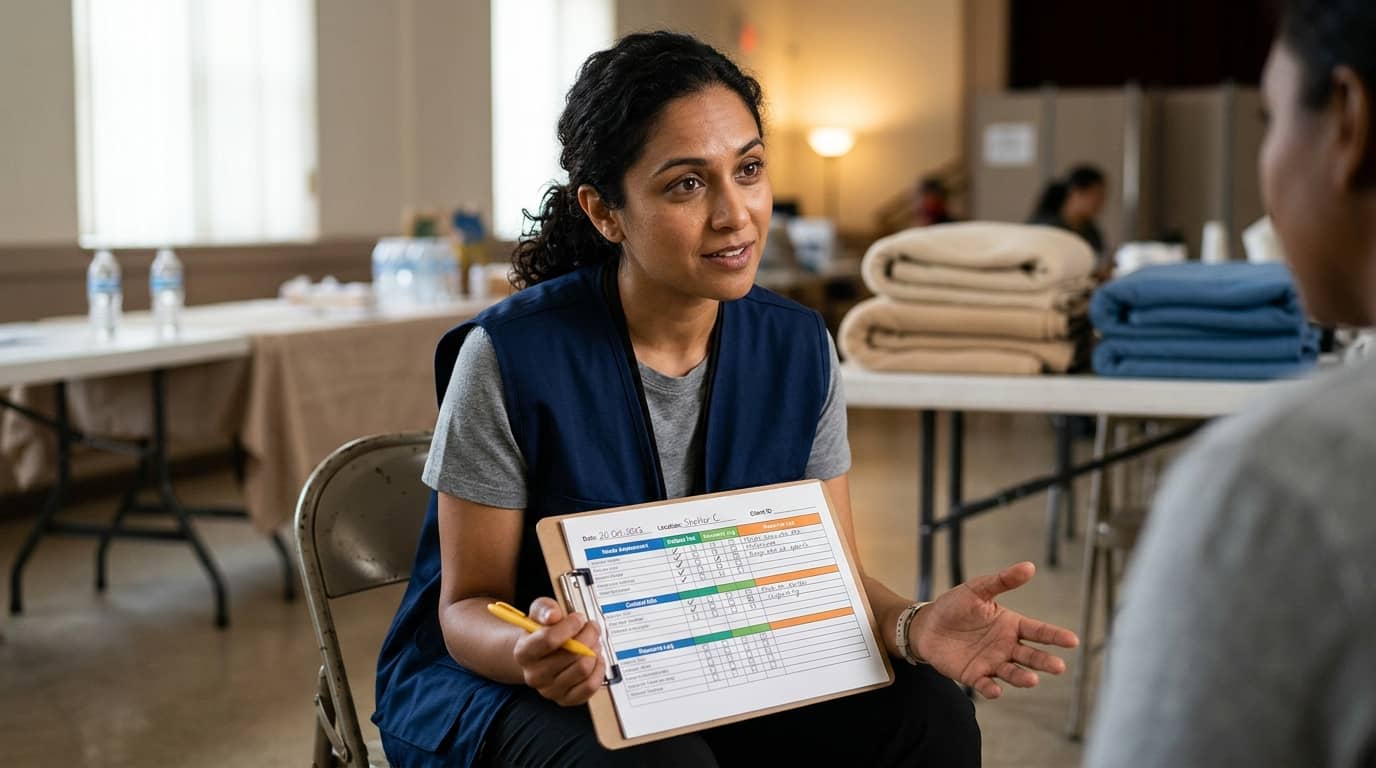
How you study in practice Clinical Psychology Course
How you practise Clinical Psychology Course
For companies looking to train their team
With Dedika for businesses, the course includes exercises and examples tailored to your own business and the specific needs of your company.

Course content
8 Chapters • 38 LessonsDuration between 4 and 360 hours (you decide)
Chapter 1HideHide detailsSee detailsFoundations of Clinical Psychology
Foundations of Clinical Psychology
Lesson 1 • Roles and Settings in Practice
Maps the range of clinical roles across hospitals, private practice, schools, and community agencies. Clarifies scope of practice relative to allied mental health professions.
Lesson 2 • Core Theoretical Models
Introduces psychodynamic, behavioural, cognitive, humanistic, and biological frameworks. Students compare assumptions and clinical implications of each model.
Lesson 3 • History and Evolution of the Field
Traces clinical psychology from early asylum care to evidence-based practice. Provides context for understanding current professional standards and treatment paradigms.
Lesson 4 • Ethics and Professional Standards
Covers informed consent, confidentiality, dual relationships, and mandatory reporting. Anchors all subsequent clinical decision-making in ethical reasoning.
Chapter 2HideHide detailsSee detailsResearch Methods and Evidence-Based Practice
Research Methods and Evidence-Based Practice
Lesson 1 • Statistical Reasoning for Clinicians
Introduces effect sizes, confidence intervals, and clinical significance. Enables practitioners to interpret statistical findings without advanced mathematics.
Lesson 2 • Integrating Evidence into Clinical Decisions
Applies evidence-based practice triad: research, clinical expertise, and patient values. Students practise shared decision-making using real case scenarios.
Lesson 3 • Scientific Foundations of Clinical Research
Covers hypothesis formation, operationalisation, and validity types. Grounds clinical reasoning in the logic of scientific inquiry.
Lesson 4 • Research Designs in Clinical Settings
Compares randomised controlled trials, single-case designs, and naturalistic studies. Students select appropriate designs for specific clinical questions.
Lesson 5 • Critically Appraising Published Literature
Teaches systematic review reading, bias identification, and evidence hierarchies. Students evaluate treatment outcome studies for clinical applicability.
Chapter 3HideHide detailsSee detailsPsychological Assessment and Testing
Psychological Assessment and Testing
Lesson 1 • Personality and Psychopathology Measures
Covers objective and projective personality instruments and symptom checklists. Students interpret profiles within diagnostic and treatment contexts.
Lesson 2 • Integrated Assessment Report Writing
Guides synthesis of multi-method data into coherent clinical reports. Students practise translating technical findings into actionable recommendations.
Lesson 3 • Principles of Psychological Measurement
Covers standardisation, norming, reliability, and validity in test construction. Establishes the psychometric foundation for all subsequent assessment work.
Lesson 4 • Cognitive and Neuropsychological Testing
Introduces intelligence, memory, attention, and executive function measures. Students learn to detect cognitive impairment and differentiate diagnostic profiles.
Lesson 5 • Clinical Interviewing Techniques
Teaches structured, semi-structured, and unstructured interview formats. Students practise rapport-building and systematic symptom inquiry.
Chapter 4HideHide detailsSee detailsPsychopathology and Diagnostic Classification
Psychopathology and Diagnostic Classification
Lesson 1 • Neurodevelopmental and Substance Use Disorders
Addresses ADHD, autism spectrum, and substance use disorder presentations across the lifespan. Students apply developmental context to diagnostic reasoning.
Lesson 2 • Differential Diagnosis and Case Formulation
Teaches systematic ruling-in and ruling-out of diagnoses using clinical data. Students construct biopsychosocial case formulations linking aetiology to presentation.
Lesson 3 • Classification Systems and Their Limitations
Compares categorical and dimensional diagnostic models and their clinical utility. Students recognise cultural and contextual factors that affect diagnosis.
Lesson 4 • Psychotic and Personality Disorders
Examines schizophrenia spectrum and cluster A, B, and C personality disorders. Students identify core features and common comorbidities.
Lesson 5 • Mood and Anxiety Spectrum Disorders
Covers depressive, bipolar, and anxiety disorder presentations, course, and aetiology. Students distinguish overlapping features for accurate differential diagnosis.
Chapter 5HideHide detailsSee detailsTherapeutic Relationship and Core Clinical Skills
Therapeutic Relationship and Core Clinical Skills
Lesson 1 • Structuring Sessions and Managing Boundaries
Covers session opening, agenda-setting, pacing, and closure techniques. Students learn to maintain therapeutic boundaries without rupturing the alliance.
Lesson 2 • Therapeutic Alliance and Its Mechanisms
Examines bond, goal, and task components of the working alliance. Students understand how alliance quality predicts treatment outcomes across modalities.
Lesson 3 • Active Listening and Empathic Communication
Trains reflective listening, validation, and accurate empathy skills. Students practice distinguishing sympathy from empathy in clinical dialogue.
Lesson 4 • Managing Countertransference and Self-Awareness
Identifies countertransference reactions and their impact on clinical judgment. Students develop reflective practice habits to sustain therapeutic objectivity.
Chapter 6HideHide detailsSee detailsMajor Psychotherapy Modalities
Major Psychotherapy Modalities
Lesson 1 • Selecting and Integrating Treatment Approaches
Guides evidence-based modality selection based on diagnosis, client factors, and goals. Students practice principled integration across theoretical orientations.
Lesson 2 • Psychodynamic and Insight-Oriented Approaches
Teaches interpretation, transference analysis, and working through defenses. Students apply short-term psychodynamic techniques to appropriate cases.
Lesson 3 • Dialectical Behaviour Therapy Skills
Covers DBT's four skill modules and biosocial theory of emotion dysregulation. Students practice skills coaching and diary card review.
Lesson 4 • Cognitive-Behavioural Therapy Techniques
Covers cognitive restructuring, behavioural activation, and exposure hierarchies. Students practice CBT case conceptualization and session structuring.
Lesson 5 • Humanistic and Acceptance-Based Therapies
Introduces person-centred, Gestalt, ACT, and mindfulness-based interventions. Students match acceptance-based strategies to avoidance-driven presentations.
Chapter 7HideHide detailsSee detailsCrisis Intervention and Risk Assessment
Crisis Intervention and Risk Assessment
Lesson 1 • Suicide Risk Assessment
Teaches structured and clinical approaches to evaluating suicidal ideation, intent, and plan. Students stratify risk levels and document assessments accurately.
Lesson 2 • Safety Planning and Means Restriction
Guides collaborative safety plan construction and lethal means counselling. Students practice safety planning conversations with simulated high-risk clients.
Lesson 3 • Non-Suicidal Self-Injury Assessment
Distinguishes NSSI from suicidal behaviour and identifies its functions. Students apply functional assessment to guide targeted intervention.
Lesson 4 • Violence Risk and Threat Assessment
Covers structured professional judgment tools and duty-to-warn obligations. Students evaluate risk factors for interpersonal violence and plan management steps.
Lesson 5 • Crisis Stabilisation and Referral
Teaches de-escalation, hospitalisation criteria, and step-down care coordination. Students practice crisis calls and warm handoff procedures.
Chapter 8HideHide detailsSee detailsAdvanced Clinical Practice and Supervision
Advanced Clinical Practice and Supervision
Lesson 1 • Professional Development and Lifelong Learning
Covers continuing education, peer consultation, and reflective practice habits. Students create individualized professional development plans for ongoing growth.
Lesson 2 • Navigating Ethical Dilemmas in Practice
Applies ethical decision-making models to ambiguous real-world scenarios. Students practice consultation-seeking and documentation under ethical uncertainty.
Lesson 3 • Clinical Supervision Models and Skills
Introduces developmental, competency-based, and reflective supervision models. Students practice giving and receiving supervisory feedback effectively.
Lesson 4 • Managing Complex and Comorbid Cases
Addresses treatment sequencing and priority-setting when multiple diagnoses co-occur. Students develop flexible formulations for clients with complex trauma and comorbidities.
Lesson 5 • Treatment-Resistant Presentations
Examines reasons for treatment non-response and strategies for re-engagement. Students revise case formulations and modify interventions for stuck cases.
Your valid completion certificate
This course is for you:
Graduate psychology students: building clinical competency before entering supervised practicum.
Social workers: expanding their mental health assessment and therapy skill set.
Counselling professionals: deepening diagnostic reasoning and evidence-based treatment knowledge.
Career changers: transitioning into mental health roles from adjacent helping professions.
Nurses and allied health workers: strengthening psychological literacy for integrated care settings.
Researchers: bridging the gap between academic training and real-world clinical application.
What our students say
Your classes are perfect. I purchased the one-year package and finally have the opportunity to follow various topics of my interest without needing to change platforms... I thank you for everything you do, I've already recommended you to other people...

I like how the lessons are straight to the point and how I can change chapters and skip content I don't need.

I like the content and the way videos are presented and transcribed, which speeds up the process!

The platform is fast, simple to use. The diversity of content and complementary videos help a lot with learning.

Top trainings

















FAQ
Who is Dedika?
Is the certificate valid in Nigeria?
Are the courses free?
What is the course workload?
What are the courses like?
How do the courses work?
What is the duration of the courses?
What is the cost or price of the courses?
What is an EAD or online course and how does it work?
PDF Course