
Oral Function Speech Therapy Course
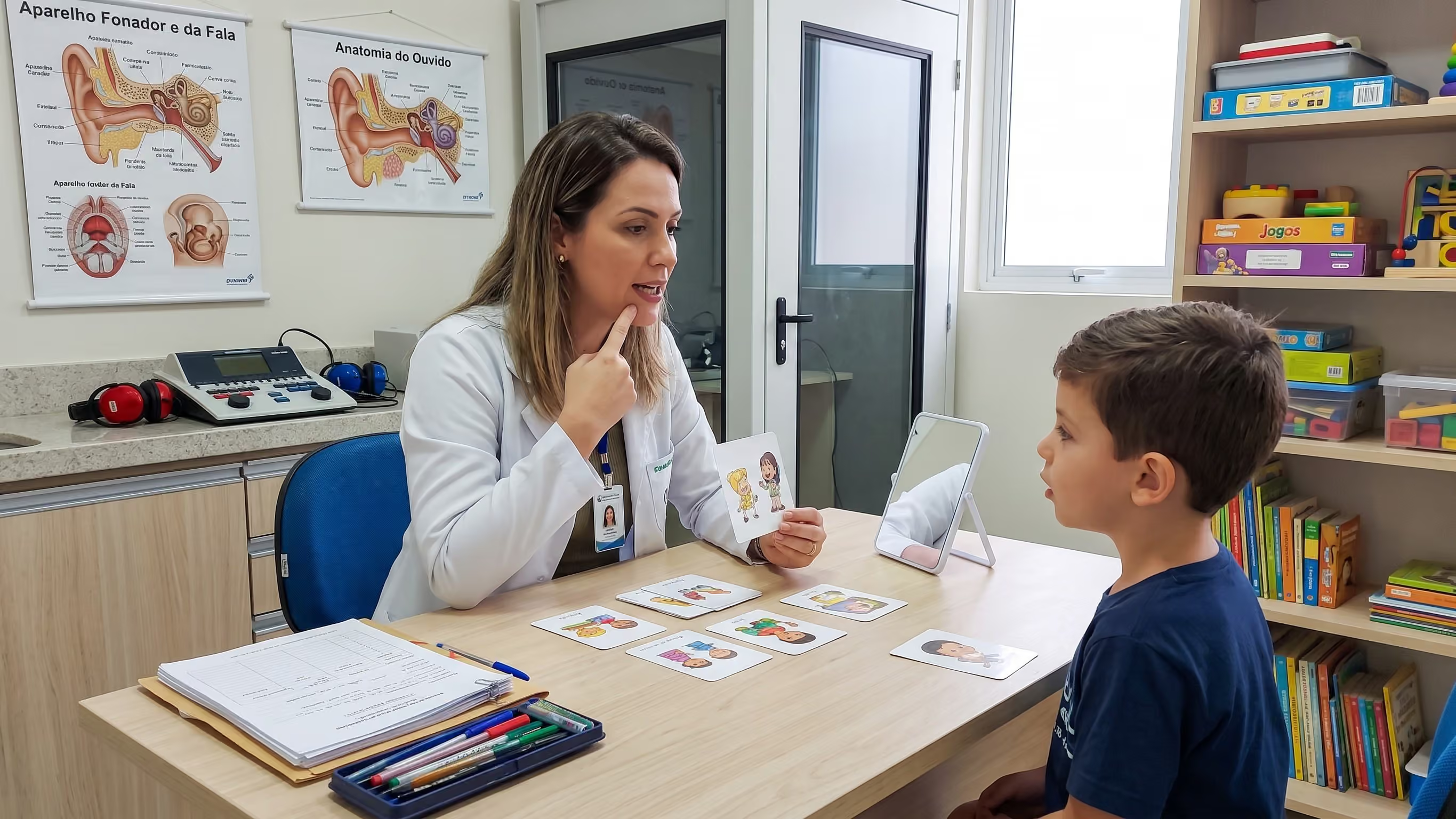
Build the clinical expertise to assess and treat oral motor disorders across the full lifespan. This course takes you from foundational anatomy and motor physiology through advanced intervention for articulation, dysphagia, dysarthria, and apraxia. Gain the practical tools and evidence-based frameworks that define high-quality speech therapy practice.
What you will learn:
This course covers the anatomy, physiology, and neuromuscular foundations of oral motor function, giving you the scientific grounding every clinical decision requires. You will learn to conduct thorough oral motor examinations, select validated assessment tools, and interpret findings across speech and feeding domains. Intervention modules address articulation therapy, dysphagia management, motor speech disorders, and sensory facilitation techniques. You will also develop skills in family-centered coaching, interprofessional collaboration, telepractice adaptation, and outcome measurement. By the end, you will be equipped to manage complex, co-occurring cases with confidence and professional accountability.
How you study in practice Oral Function Speech Therapy Course
How you practise Oral Function Speech Therapy Course
For companies looking to train their team
With Dedika for businesses, the course includes exercises and examples tailored to your own business and the specific needs of your company.

Course content
8 Chapters • 40 LessonsDuration between 4 and 360 hours (you decide)
Chapter 1HideHide detailsSee detailsFoundations of Oral Motor Function
Foundations of Oral Motor Function
Lesson 1 • Oral Function in Swallowing
Outlines the four phases of swallowing and their oral motor demands. Establishes the overlap between feeding and speech motor systems.
Lesson 2 • Physiology of Oral Movement
Explains neuromuscular control of voluntary and reflexive oral movements. Links motor physiology to observable speech and feeding behaviours.
Lesson 3 • Developmental Milestones of Oral Function
Traces normal oral motor development from infancy through adolescence. Provides the normative framework for identifying delays and disorders.
Lesson 4 • Anatomy of the Oral Mechanism
Covers lips, tongue, jaw, palate, and pharynx as functional units. Provides the structural baseline for all subsequent therapy techniques.
Lesson 5 • Oral Function in Speech Production
Describes how articulators shape airstream into speech sounds. Connects structural anatomy to phoneme-specific movement patterns.
Chapter 2HideHide detailsSee detailsAssessment of Oral Motor Skills
Assessment of Oral Motor Skills
Lesson 1 • Standardised Assessment Tools
Reviews validated instruments for measuring oral motor and articulatory function. Guides selection based on age, diagnosis, and clinical question.
Lesson 2 • Perceptual and Acoustic Analysis
Introduces listener-based and technology-assisted methods for evaluating speech output. Connects perceptual findings to underlying oral motor deficits.
Lesson 3 • Functional Feeding Assessment
Covers bedside and clinical evaluation of oral feeding competence. Integrates safety, efficiency, and nutritional adequacy into the assessment framework.
Lesson 4 • Clinical Oral Motor Examination
Teaches structured observation and palpation of oral structures at rest and in motion. Forms the core of any oral motor assessment protocol.
Lesson 5 • Interpreting and Reporting Results
Develops skills for synthesising multi-source data into a coherent clinical profile. Prepares clinicians to write goal-directed assessment reports.
Chapter 3HideHide detailsSee detailsPrinciples of Oral Motor Intervention
Principles of Oral Motor Intervention
Lesson 1 • Dosage and Intensity Parameters
Defines optimal session frequency, duration, and repetition load for oral motor training. Prevents under-treatment and overuse injury through evidence-guided dosing.
Lesson 2 • Evidence Base for Oral Motor Therapy
Critically reviews research supporting and questioning oral motor exercise approaches. Equips clinicians to make evidence-informed treatment decisions.
Lesson 3 • Goal Setting and Treatment Planning
Teaches construction of measurable, function-based therapy goals. Connects assessment findings to prioritised, hierarchical treatment objectives.
Lesson 4 • Motor Learning Principles in Therapy
Applies motor learning theory to the design of oral motor practice conditions. Optimises skill acquisition, retention, and transfer to functional communication.
Lesson 5 • Selecting and Sequencing Techniques
Provides a decision framework for matching techniques to client profiles. Ensures logical progression from facilitated to independent oral motor performance.
Chapter 4HideHide detailsSee detailsSensory Preparation and Oral Facilitation
Sensory Preparation and Oral Facilitation
Lesson 1 • Facilitation of Tongue Movement
Presents techniques to elicit, guide, and strengthen tongue elevation, lateralisation, and retraction. Builds the tongue mobility required for accurate articulation.
Lesson 2 • Oral Desensitisation Techniques
Teaches graded tactile input methods to reduce hypersensitivity in and around the mouth. Prepares clients with sensory aversion for active oral motor participation.
Lesson 3 • Jaw Facilitation and Grading
Addresses jaw stability, grading, and controlled excursion as prerequisites for speech and chewing. Integrates jaw work into broader oral motor treatment sequences.
Lesson 4 • Facilitation of Lip and Cheek Movement
Covers manual and tool-assisted techniques to elicit and shape lip and cheek activity. Directly supports bilabial and labiodental sound production goals.
Lesson 5 • Sensory Processing and Oral Function
Explains how tactile, proprioceptive, and gustatory input influence oral motor output. Establishes the sensory foundation for facilitation technique selection.
Chapter 5HideHide detailsSee detailsArticulation and Phonological Intervention
Articulation and Phonological Intervention
Lesson 1 • Differentiating Motor from Phonological Errors
Teaches diagnostic criteria to distinguish motor-based from phonologically-based speech errors. Ensures appropriate technique selection and avoids mismatched intervention.
Lesson 2 • Dynamic Motor Approaches to Articulation
Applies dynamic systems and motor programming frameworks to complex articulation disorders. Addresses movement sequencing and motor planning deficits in speech.
Lesson 3 • Traditional Articulation Therapy Techniques
Covers phoneme-specific placement, shaping, and drill methods for error sound remediation. Provides the procedural core of motor-based articulation intervention.
Lesson 4 • Phonological Approaches to Intervention
Introduces pattern-based approaches targeting multiple sounds through phonological rule change. Complements motor techniques for clients with systemic phonological disorders.
Lesson 5 • Generalisation and Carryover Strategies
Designs structured activities to transfer trained sounds into spontaneous conversational speech. Addresses the most common point of treatment failure in articulation therapy.
Chapter 6HideHide detailsSee detailsDysphagia and Oral Feeding Therapy
Dysphagia and Oral Feeding Therapy
Lesson 1 • Paediatric Oral Feeding Intervention
Addresses feeding difficulties specific to infants, toddlers, and children with complex needs. Integrates sensory, behavioural, and motor approaches for paediatric feeding therapy.
Lesson 2 • Oral Phase Dysphagia Profiles
Characterises oral phase impairments by etiology, severity, and functional impact. Provides the diagnostic foundation for targeted oral feeding intervention.
Lesson 3 • Diet Texture and Liquid Modification
Applies standardised texture and viscosity frameworks to match diet to swallowing capacity. Balances nutritional adequacy, safety, and quality of life in diet planning.
Lesson 4 • Restorative Oral Swallowing Exercises
Presents exercise-based interventions targeting strength, range, and coordination of swallowing musculature. Builds long-term functional improvement beyond compensatory strategies.
Lesson 5 • Compensatory Swallowing Strategies
Teaches postural adjustments and swallow maneuvers that immediately reduce aspiration risk. Provides short-term safety solutions while restorative therapy progresses.
Chapter 7HideHide detailsSee detailsMotor Speech Disorders: Dysarthria and Apraxia
Motor Speech Disorders: Dysarthria and Apraxia
Lesson 1 • Apraxia of Speech Treatment
Presents evidence-based motor programming approaches for acquired and childhood apraxia. Emphasizes movement sequencing, cueing hierarchies, and intensive practice.
Lesson 2 • Classification of Motor Speech Disorders
Distinguishes dysarthria subtypes and apraxia of speech by neurological basis and speech characteristics. Establishes the diagnostic framework for targeted motor speech intervention.
Lesson 3 • Dysarthria Treatment Approaches
Covers behavioural, prosthetic, and augmentative strategies for each dysarthria subtype. Matches intervention to the specific neuromuscular impairment profile.
Lesson 4 • Functional Communication and Participation
Addresses real-world communication effectiveness beyond impairment-level speech measures. Incorporates participation goals and environmental modifications into motor speech therapy.
Lesson 5 • Oral Motor Training in Dysarthria
Evaluates the role of targeted oral motor exercises within dysarthria management. Integrates strengthening and coordination tasks with functional speech practice.
Chapter 8HideHide detailsSee detailsAdvanced Clinical Practice and Outcomes
Advanced Clinical Practice and Outcomes
Lesson 1 • Reflective Practice and Clinical Reasoning
Develops metacognitive skills for ongoing self-evaluation and clinical reasoning refinement. Prepares clinicians for lifelong professional growth in oral motor therapy.
Lesson 2 • Progress Monitoring and Data Collection
Establishes systematic data collection methods to track oral motor and speech outcomes over time. Enables evidence-based decisions to continue, modify, or discontinue treatment.
Lesson 3 • Complex and Co-occurring Case Management
Addresses clients presenting with multiple overlapping oral motor, speech, and feeding diagnoses. Develops prioritisation and sequencing skills for multifaceted treatment plans.
Lesson 4 • Outcome Measurement and Accountability
Introduces standardised outcome measures and quality indicators for oral motor therapy programmes. Supports professional accountability and continuous service improvement.
Lesson 5 • Discharge Planning and Maintenance
Guides clinicians in determining readiness for discharge and designing maintenance programmes. Ensures skill retention and prevents regression after formal therapy ends.
Your valid completion certificate
This course is for you:
Speech-language pathology students: building clinical skills before entering the workforce.
Early-career SLPs: seeking structured guidance beyond what fieldwork alone provides.
Pediatric therapists: expanding expertise into feeding and swallowing disorder management.
School-based SLPs: addressing articulation and motor speech needs with greater confidence.
Rehabilitation clinicians: managing adult dysphagia and motor speech disorders more effectively.
Occupational therapists: deepening understanding of oral motor function in feeding contexts.
What our students say
Your classes are perfect. I purchased the one-year package and finally have the opportunity to follow various topics of my interest without needing to change platforms... I thank you for everything you do, I've already recommended you to other people...

I like how the lessons are straight to the point and how I can change chapters and skip content I don't need.

I like the content and the way videos are presented and transcribed, which speeds up the process!

The platform is fast, simple to use. The diversity of content and complementary videos help a lot with learning.

Top trainings




FAQ
Who is Dedika?
Is the certificate valid in Nigeria?
Are the courses free?
What is the course workload?
What are the courses like?
How do the courses work?
What is the duration of the courses?
What is the cost or price of the courses?
What is an EAD or online course and how does it work?
PDF Course