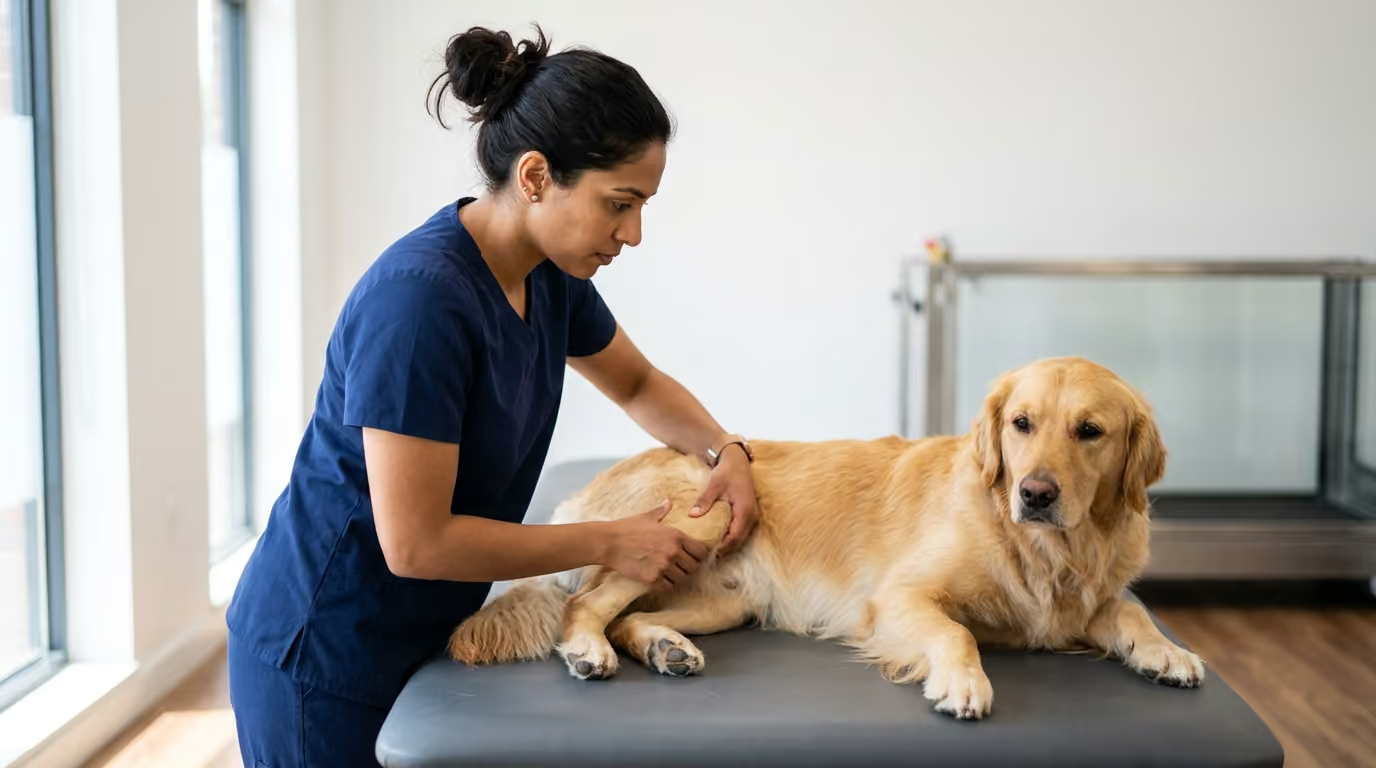
Animal Physiotherapy Course
The Animal Physiotherapy Course gives you the clinical knowledge and hands-on techniques to assess, treat, and rehabilitate companion animals, horses, and working animals. From manual therapy and therapeutic exercise to electrophysical modalities and aquatic rehabilitation, every module is built around real-world practice. Launch or advance your career in one of the fastest-growing areas of animal health care.
What you will learn:
You will build a thorough understanding of animal anatomy, biomechanics, and pathology across canine, feline, and equine patients. You will learn how to conduct complete clinical assessments, interpret gait analysis, and select validated outcome measures to track patient progress. The course covers manual therapy, therapeutic exercise prescription, hydrotherapy, and electrophysical modalities including laser, ultrasound, and TENS. You will also study pain science, geriatric and palliative care, nutrition, orthotics, and the business skills needed to run a successful practice. By the end, you will be equipped to deliver evidence-based physiotherapy that improves the quality of life of animal patients.
How you study in practice Animal Physiotherapy Course
How you practise Animal Physiotherapy Course
For companies looking to train their team
With Dedika for businesses, the course includes exercises and examples tailored to your own business and the specific needs of your company.

Course content
8 Chapters • 39 LessonsDuration between 4 and 360 hours (you decide)
Chapter 1HideHide detailsSee detailsFoundations of Animal Physiotherapy
Foundations of Animal Physiotherapy
Lesson 1 • Species Overview for Physiotherapists
Surveys the primary species treated, including companion animals, equines, and working animals. Highlights species-specific behavioural and physiological considerations.
Lesson 2 • Professional and Ethical Frameworks
Covers regulatory requirements, referral protocols, and ethical obligations. Prepares learners to practise within legal and professional boundaries.
Lesson 3 • Evidence-Based Practice Principles
Introduces critical appraisal of research and clinical reasoning models. Learners apply evidence hierarchies to treatment decision-making.
Lesson 4 • History and Scope of the Profession
Traces the evolution of animal physiotherapy from veterinary medicine to an independent discipline. Contextualises current practice within the broader animal health team.
Chapter 2HideHide detailsSee detailsApplied Animal Anatomy and Biomechanics
Applied Animal Anatomy and Biomechanics
Lesson 1 • Musculoskeletal Anatomy Essentials
Reviews bones, joints, muscles, and connective tissues relevant to physiotherapy. Provides the structural vocabulary needed for clinical documentation.
Lesson 2 • Pathological Changes in Tissue
Describes how injury, disease, and ageing alter tissue structure and function. Connects pathological anatomy to observable clinical presentations.
Lesson 3 • Neurological Anatomy for Clinicians
Covers the peripheral and central nervous systems as they relate to movement and pain. Links neuroanatomy to clinical signs observed during assessment.
Lesson 4 • Species-Specific Anatomical Differences
Compares anatomical variations between dogs, cats, and horses relevant to treatment. Prevents clinical errors arising from cross-species assumption.
Lesson 5 • Principles of Animal Biomechanics
Explains forces, levers, and gait mechanics governing animal movement. Learners analyse normal locomotion patterns as a baseline for dysfunction detection.
Chapter 3HideHide detailsSee detailsAnimal Behaviour and Handling Techniques
Animal Behaviour and Handling Techniques
Lesson 1 • Behavioural Science Fundamentals
Introduces learning theory, stress responses, and communication signals in animals. Provides the behavioural foundation for all hands-on clinical interactions.
Lesson 2 • Canine and Feline Restraint Methods
Teaches manual and positional restraint techniques for dogs and cats. Ensures therapist and animal patient safety during assessment and treatment.
Lesson 3 • Adapting Handling for Painful Patients
Modifies standard techniques for animals with acute pain, neurological deficits, or post-surgical status. Prevents iatrogenic injury during vulnerable recovery phases.
Lesson 4 • Equine Handling and Safety
Covers safe approach, groundwork, and restraint specific to horses. Addresses the unique risks of working with large, reactive animals.
Lesson 5 • Low-Stress Handling Principles
Applies fear-free and cooperative care concepts to physiotherapy settings. Reduces animal patient stress to improve treatment compliance and safety.
Chapter 4HideHide detailsSee detailsClinical Assessment and Outcome Measures
Clinical Assessment and Outcome Measures
Lesson 1 • Palpation and Manual Examination
Develops systematic palpation skills for detecting pain, swelling, and tissue changes. Integrates manual findings with observational data for differential reasoning.
Lesson 2 • Gait Analysis Techniques
Covers visual and technology-assisted gait evaluation across walk, trot, and canter. Links gait deviations to underlying musculoskeletal or neurological dysfunction.
Lesson 3 • Observational and Postural Assessment
Trains systematic visual analysis of posture, symmetry, and static weight-bearing. Identifies compensatory patterns before hands-on examination begins.
Lesson 4 • Patient History and Case Intake
Structures the collection of signalment, medical history, and owner-reported concerns. Accurate intake data directs subsequent physical examination priorities.
Lesson 5 • Outcome Measures and Functional Scoring
Introduces validated tools for tracking patient progress over time. Enables objective communication of outcomes to veterinarians and owners.
Chapter 5HideHide detailsSee detailsTherapeutic Exercise and Rehabilitation
Therapeutic Exercise and Rehabilitation
Lesson 1 • Principles of Exercise Prescription
Applies overload, specificity, and progression principles to animal rehabilitation. Establishes the framework for building safe, goal-directed exercise programmes.
Lesson 2 • Range of Motion and Flexibility Exercises
Covers passive, active-assisted, and active range of motion techniques. Maintains joint mobility and prevents contracture during recovery phases.
Lesson 3 • Strengthening and Resistance Training
Introduces progressive resistance methods using body weight, bands, and equipment. Rebuilds muscle mass and joint stability following injury or surgery.
Lesson 4 • Balance and Proprioceptive Training
Uses unstable surfaces and perturbation techniques to restore neuromuscular control. Addresses proprioceptive deficits common after orthopaedic and neurological conditions.
Lesson 5 • Functional and Sport-Specific Conditioning
Advances rehabilitation toward return-to-function or sport performance goals. Bridges clinical recovery with the demands of the animal's working or athletic role.
Chapter 6HideHide detailsSee detailsManual Therapy Techniques
Manual Therapy Techniques
Lesson 1 • Neurodynamic and Fascial Techniques
Applies neural mobilisation and fascial unwinding to address nerve-related dysfunction. Expands manual therapy scope to neurological and complex presentations.
Lesson 2 • Foundations of Animal Massage
Introduces physiological effects of massage and basic stroke techniques. Establishes safe, effective touch as the entry point for manual therapy.
Lesson 3 • Joint Mobilisation and Manipulation
Teaches graded joint mobilisation using Maitland and Mulligan concepts adapted for animals. Restores joint play and reduces pain-related movement restriction.
Lesson 4 • Soft Tissue Mobilisation Methods
Covers myofascial release, trigger point therapy, and scar tissue techniques. Addresses chronic soft tissue restrictions limiting movement and causing pain.
Lesson 5 • Clinical Reasoning in Manual Therapy
Guides selection, dosage, and progression of manual techniques based on patient response. Develops adaptive decision-making for complex or non-responding cases.
Chapter 7HideHide detailsSee detailsElectrophysical and Thermal Modalities
Electrophysical and Thermal Modalities
Lesson 1 • Therapeutic Ultrasound Application
Instructs on continuous and pulsed ultrasound for deep tissue heating and wound healing. Learners set parameters and apply ultrasound safely across tissue types.
Lesson 2 • Thermotherapy and Cryotherapy
Covers application of heat and cold for pain relief, inflammation control, and tissue preparation. Teaches safe application protocols and contraindication screening.
Lesson 3 • Principles of Physical Modalities
Explains biophysical mechanisms underlying thermal, electrical, and photonic modalities. Provides the scientific rationale for modality selection in clinical practice.
Lesson 4 • Electrotherapy: TENS and NMES
Teaches transcutaneous electrical nerve stimulation and neuromuscular electrical stimulation. Addresses pain management and muscle re-education through electrical modalities.
Lesson 5 • Photobiomodulation and Laser Therapy
Covers low-level laser and LED therapy for tissue repair and pain modulation. Learners calculate dosage and apply laser safely with appropriate protective equipment.
Chapter 8HideHide detailsSee detailsHydrotherapy and Aquatic Rehabilitation
Hydrotherapy and Aquatic Rehabilitation
Lesson 1 • Pool Swimming Rehabilitation
Teaches pool entry, swim support, and exit techniques for canine and equine patients. Addresses cardiovascular conditioning and non-weight-bearing recovery goals.
Lesson 2 • Underwater Treadmill Therapy
Covers patient introduction, water level selection, speed progression, and gait monitoring. Develops competency in the most widely used aquatic rehabilitation modality.
Lesson 3 • Hydrodynamic Principles in Rehabilitation
Explains buoyancy, resistance, hydrostatic pressure, and viscosity as therapeutic forces. Links water properties to clinical benefits for musculoskeletal and neurological patients.
Lesson 4 • Hydrotherapy Facility Management
Covers water quality standards, equipment maintenance, and infection control protocols. Ensures a safe therapeutic environment for patients and staff.
Lesson 5 • Designing Aquatic Treatment Programmes
Integrates hydrotherapy into comprehensive rehabilitation plans for specific conditions. Learners progress aquatic sessions alongside land-based therapy for optimal outcomes.
Your valid completion certificate
This course is for you:
Veterinary nurses: ready to expand into specialised rehabilitation and recovery roles.
Animal trainers: wanting clinical skills to support injured or post-surgical clients.
Equine professionals: seeking structured knowledge to address horse movement problems.
Human physiotherapists: looking to transfer their expertise into animal health practice.
Career changers: passionate about animals and pursuing a hands-on health profession.
Kennel or shelter staff: aiming to improve care quality for mobility-impaired animals.
What our students say
Your classes are perfect. I purchased the one-year package and finally have the opportunity to follow various topics of my interest without needing to change platforms... I thank you for everything you do, I've already recommended you to other people...

I like how the lessons are straight to the point and how I can change chapters and skip content I don't need.

I like the content and the way videos are presented and transcribed, which speeds up the process!

The platform is fast, simple to use. The diversity of content and complementary videos help a lot with learning.

Top trainings


FAQ
Who is Dedika?
Is the certificate valid in Nigeria?
Are the courses free?
What is the course workload?
What are the courses like?
How do the courses work?
What is the duration of the courses?
What is the cost or price of the courses?
What is an EAD or online course and how does it work?
PDF Course