
Boiler Repair Training
Get the hands-on skills to inspect, repair, and recommission industrial boilers safely and to code. This training covers everything from tube replacement and pressure vessel welding to combustion tuning and controls troubleshooting. If you work on boilers or want to, this is the course that gets you job-ready.
What you will learn:
You will build a complete skill set for boiler repair, starting with system fundamentals, safety regulations, and component identification. From there, you will move into inspection methods, non-destructive testing, tube repair, and qualified welding procedures for pressure vessels. You will learn to diagnose burner and fuel system problems, calibrate instrumentation, and test automated safety interlocks. The course also covers water treatment, refractory repair, and preventive maintenance planning. By the end, you will know how to execute the full recommissioning sequence and hand a repaired boiler back to service with confidence.
How you study in a practical way Boiler Repair Training
How you practice Boiler Repair Training
For companies who want to train their team
With Dedika for businesses, the course includes exercises and examples tailored to your own business and the way your company needs.

Course content
8 Chapters • 40 LessonsDuration between 4 and 360 hours (you decide)
Chapter 1HideHide detailsSee detailsBoiler Systems: Fundamentals and Safety
Boiler Systems: Fundamentals and Safety
Lesson 1 • Core Components and Their Functions
Identifies shells, drums, headers, tubes, burners, and controls. Understanding each part's role is prerequisite to diagnosing failures in later chapters.
Lesson 2 • Reading Boiler Documentation
Teaches interpretation of nameplate data, P&ID diagrams, and manufacturer manuals. Accurate document reading prevents misidentification of components during repair.
Lesson 3 • Boiler Operating Principles
Explains heat transfer, steam generation, and pressure-temperature relationships. These physics concepts underpin every diagnostic and repair decision made later.
Lesson 4 • Safety Regulations and Hazard Awareness
Introduces regulatory inspection requirements, pressure vessel codes, and site hazard categories. Compliance with these standards is mandatory before any repair task begins.
Lesson 5 • Boiler Types and Applications
Covers fire-tube, water-tube, and electric boiler designs and their industrial uses. Establishes the classification framework used throughout the course.
Chapter 2HideHide detailsSee detailsTools, Materials, and Workshop Practices
Tools, Materials, and Workshop Practices
Lesson 1 • Workshop Safety and Housekeeping
Establishes standards for workspace organization, chemical storage, and fire prevention. A disciplined workshop environment reduces accident risk during all repair activities.
Lesson 2 • Power Tools and Pneumatic Equipment
Introduces grinders, drills, and pneumatic tube expanders used in repair operations. Students practice safe setup and operation before applying tools to boiler components.
Lesson 3 • Measurement and Testing Instruments
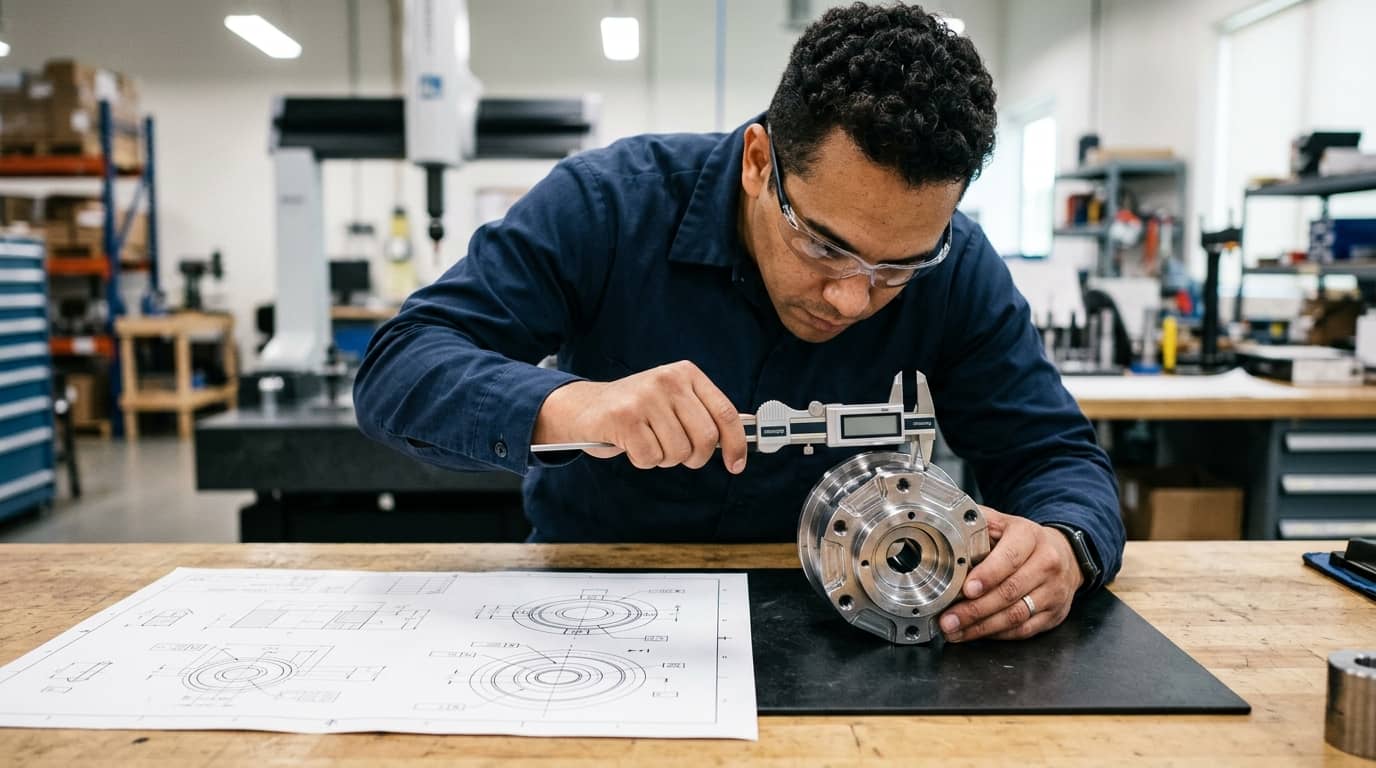
Teaches use of calipers, micrometers, ultrasonic thickness gauges, and pressure gauges. Accurate measurement is the basis for all repair acceptance criteria.
Lesson 4 • Hand Tools for Boiler Work
Covers wrenches, chisels, tube cutters, and scrapers specific to boiler maintenance. Proper tool selection prevents component damage and personal injury.
Lesson 5 • Boiler Repair Materials
Identifies approved metals, gasket materials, refractory compounds, and sealants. Material compatibility with operating pressure and temperature prevents premature failure.
Chapter 3HideHide detailsSee detailsBoiler Inspection and Condition Assessment
Boiler Inspection and Condition Assessment
Lesson 1 • Pre-Inspection Preparation
Covers shutdown, isolation, venting, and confined-space entry procedures before inspection begins. Skipping any step creates life-threatening conditions inside the vessel.
Lesson 2 • Corrosion and Scale Identification
Identifies pitting, general corrosion, oxygen attack, and scale deposits by appearance. Correct identification determines the appropriate repair or treatment method.
Lesson 3 • Visual Inspection Techniques
Teaches systematic surface examination of tubes, welds, refractory, and fittings. Visual findings direct subsequent non-destructive testing priorities.
Lesson 4 • Condition Reporting and Repair Planning
Structures findings into prioritized repair orders with acceptance criteria and timelines. A clear report ensures repair teams address critical defects first.
Lesson 5 • Non-Destructive Testing Methods
Introduces ultrasonic, magnetic particle, dye penetrant, and radiographic testing. Each method targets specific defect types and material conditions.
Chapter 4HideHide detailsSee detailsTube Repair and Replacement
Tube Repair and Replacement
Lesson 1 • New Tube Installation and Testing
Guides full tube replacement from fit-up through hydrostatic testing to confirm integrity. Each step follows applicable pressure vessel fabrication standards.
Lesson 2 • Tube Rolling and Expanding
Teaches roller expander setup, torque control, and degree-of-expansion measurement. Proper rolling creates a leak-free mechanical joint without over-thinning the tube wall.
Lesson 3 • Tube Plugging Procedures
Covers tapered and mechanical plug installation as a temporary or permanent repair option. Plugging restores pressure containment while limiting boiler capacity.
Lesson 4 • Tube Failure Modes and Root Causes
Analyzes overheating, corrosion, erosion, and fatigue as primary tube failure mechanisms. Root-cause identification prevents recurrence after repair.
Lesson 5 • Tube Cutting and Removal
Demonstrates safe tube cutting, collar removal, and tube sheet cleaning before new tube installation. Clean tube sheet holes are essential for a sound replacement joint.
Chapter 5HideHide detailsSee detailsWelding and Pressure Vessel Repair
Welding and Pressure Vessel Repair
Lesson 1 • Post-Weld Inspection and Acceptance
Applies visual, radiographic, and ultrasonic examination to completed welds against code acceptance criteria. Documented acceptance is required before returning the boiler to service.
Lesson 2 • Weld Defect Identification and Repair
Identifies porosity, undercut, lack of fusion, and cracks using visual and NDT methods. Each defect type requires a specific excavation and re-weld approach.
Lesson 3 • Welding Procedure Specifications
Explains how to read, qualify, and follow a welding procedure specification for pressure work. Deviating from a qualified procedure invalidates the repair.
Lesson 4 • Welding Processes for Boiler Repair
Compares SMAW, GTAW, and FCAW processes for suitability on boiler steels. Process selection affects heat input, distortion, and code compliance.
Lesson 5 • Preheat, Interpass, and Post-Weld Treatment
Covers preheat temperature requirements, interpass temperature limits, and post-weld heat treatment. Thermal control prevents hydrogen cracking and residual stress failures.
Chapter 6HideHide detailsSee detailsBurner, Combustion, and Fuel System Repair
Burner, Combustion, and Fuel System Repair
Lesson 1 • Combustion Fundamentals Review
Revisits stoichiometry, excess air, and flame characteristics as the basis for burner diagnostics. Combustion theory directly explains most burner performance problems.
Lesson 2 • Fuel Train Components and Repair
Identifies gas and oil fuel train components including valves, regulators, strainers, and actuators. Fuel train integrity is critical to safe burner operation and leak prevention.
Lesson 3 • Combustion Tuning and Emissions Reduction
Uses flue gas analyzers to optimize excess air, CO, and NOx levels after burner repair. Proper tuning reduces fuel cost and meets environmental emission limits.
Lesson 4 • Burner Assembly Inspection and Cleaning
Covers nozzle inspection, diffuser cleaning, igniter testing, and flame scanner verification. Clean, aligned burner components are prerequisite to accurate combustion tuning.
Lesson 5 • Combustion Controls and Safety Interlocks
Tests and calibrates flame safeguard controls, high-limit switches, and low-water cutoffs. Faulty interlocks are a leading cause of catastrophic boiler incidents.
Chapter 7HideHide detailsSee detailsControls, Instrumentation, and Automation Repair
Controls, Instrumentation, and Automation Repair
Lesson 1 • Water Level Control and Feedwater Systems
Diagnoses and repairs float controls, differential pressure level transmitters, and feedwater regulators. Reliable level control prevents low-water damage and carryover.
Lesson 2 • Programmable Controller Troubleshooting
Applies ladder logic reading and fault code interpretation to diagnose PLC-based boiler controllers. Students isolate faults to the module level without replacing functional components.
Lesson 3 • Boiler Control System Architecture
Maps the relationship between sensors, controllers, final control elements, and safety systems. Understanding architecture is essential before isolating a faulty control component.
Lesson 4 • Pressure and Temperature Sensor Repair
Covers calibration, replacement, and impulse line maintenance for pressure transmitters and thermocouples. Inaccurate sensors cause incorrect control responses and safety trips.
Lesson 5 • Safety System Functional Testing
Performs end-to-end functional tests of all safety interlocks and verifies correct shutdown sequences. Documented test results are required by regulatory inspection authorities.
Chapter 8HideHide detailsSee detailsBoiler Recommissioning and Return to Service
Boiler Recommissioning and Return to Service
Lesson 1 • Chemical Cleaning and Boil-Out
Removes mill scale, oil, and construction debris through alkaline boil-out before first steam production. Skipping this step contaminates steam and damages downstream equipment.
Lesson 2 • Initial Firing and Warm-Up Sequence
Guides controlled first-fire from cold start through rated pressure using a defined warm-up rate. Thermal shock from rapid heating causes refractory cracking and joint leaks.
Lesson 3 • Hydrostatic and Pneumatic Pressure Testing
Conducts pressure tests at required multiples of design pressure to confirm weld and joint integrity. Test parameters and results must be recorded on the official repair record.
Lesson 4 • Post-Repair Inspection Checklist
Verifies that all repair work is complete, documented, and cleared of tools and debris before any pressure is applied. A missed item at this stage can cause immediate failure.
Lesson 5 • Performance Verification and Handover
Confirms rated capacity, efficiency, and safety system response at full load before client handover. Handover documentation transfers operational responsibility to the owner.
Your valid completion certificate
This course is for you:
Maintenance technicians ready to specialize in industrial boiler systems.
Pipefitters seeking to expand their credentials into pressure vessel repair.
Facility engineers responsible for keeping boiler rooms running reliably.
Military veterans with mechanical backgrounds transitioning to civilian trades.
Career changers drawn to high-demand skilled trades with strong wages.
Junior boiler operators aiming to move into hands-on repair roles.
What our students say
Your classes are perfect. I purchased the one-year package and finally have the opportunity to follow various topics of my interest without needing to change platforms... I thank you for everything you do, I've already recommended you to other people...

I like how the lessons are straight to the point and how I can switch chapters and skip content I don't need.

I like the content and the way videos are presented and transcribed, which speeds up the process!

The platform is fast, simple to use. The diversity of content and complementary videos really help with learning.

Top trainings



FAQs
Who is Dedika?
Is the certificate valid in the Philippines?
Are the courses free?
What is the course workload?
What are the courses like?
How do the courses work?
What is the duration of the courses?
What is the cost or price of the courses?
What is an EAD or online course and how does it work?
PDF Course