
Caterpillar Engine Maintenance and Diagnostics Course
Get the hands-on skills to diagnose, service, and overhaul Caterpillar diesel engines with confidence. This course covers everything from fuel systems and turbochargers to electronic controls and full engine rebuilds. If you work on heavy equipment, this training puts factory-level knowledge directly in your hands.
What you will learn:
You will learn how Caterpillar engine systems are built and how every major assembly works together. The course covers fuel system inspection, common rail service, air induction, turbocharger testing, and cooling system diagnostics. You will use precision instruments, read service schematics, and navigate Caterpillar's electronic service documentation. Electronic diagnostics training includes ECM architecture, J1939 data link troubleshooting, and sensor calibration using factory software. The final section walks you through a complete engine overhaul, from disassembly and component inspection to reassembly and performance verification.
How you study in a practical way Caterpillar Engine Maintenance and Diagnostics Course
How you practice Caterpillar Engine Maintenance and Diagnostics Course
For companies who want to train their team
With Dedika for businesses, the course includes exercises and examples tailored to your own business and the way your company needs.

Course content
8 Chapters • 40 LessonsDuration between 4 and 360 hours (you decide)
Chapter 1HideHide detailsSee detailsCaterpillar Engine Systems Overview
Caterpillar Engine Systems Overview
Lesson 1 • Four-Stroke Diesel Operating Cycle
Explains intake, compression, power, and exhaust strokes in diesel engines. Connects thermodynamic principles to observable engine behavior during diagnostics.
Lesson 2 • Fluid and Lubrication Circuits
Maps coolant, oil, and fuel pathways through the engine block and external lines. Understanding flow paths is prerequisite to leak and pressure diagnostics.
Lesson 3 • Safety and Shop Practices
Establishes lockout/tagout, PPE selection, and hazardous fluid handling protocols. Safe habits introduced here are enforced in every subsequent hands-on chapter.
Lesson 4 • Major Engine Assemblies and Layout
Introduces cylinder block, head, crankshaft, and valve train as integrated assemblies. Provides spatial orientation essential for all subsequent disassembly tasks.
Lesson 5 • Engine Identification and Nomenclature
Covers model designation codes, serial number locations, and specification plates. Establishes the naming conventions used throughout the entire course.
Chapter 2HideHide detailsSee detailsTools, Instruments, and Service Documentation
Tools, Instruments, and Service Documentation
Lesson 1 • Caterpillar Service Information System
Navigates the electronic service information platform to locate manuals, parts books, and service letters. Efficient document retrieval reduces diagnostic time significantly.
Lesson 2 • Work Order and Documentation Practices
Establishes standards for recording measurements, parts used, and repair findings. Accurate documentation supports warranty claims and future diagnostic reference.
Lesson 3 • Hand Tools and Torque Equipment
Covers wrenches, sockets, pullers, and torque wrenches specific to Caterpillar fastener standards. Proper tool selection prevents fastener damage and ensures correct clamping force.
Lesson 4 • Schematic Reading and Wiring Diagrams
Interprets hydraulic, pneumatic, and electrical schematics used in Caterpillar documentation. Schematic literacy is required for all fluid and electronic diagnostic chapters.
Lesson 5 • Precision Measurement Instruments
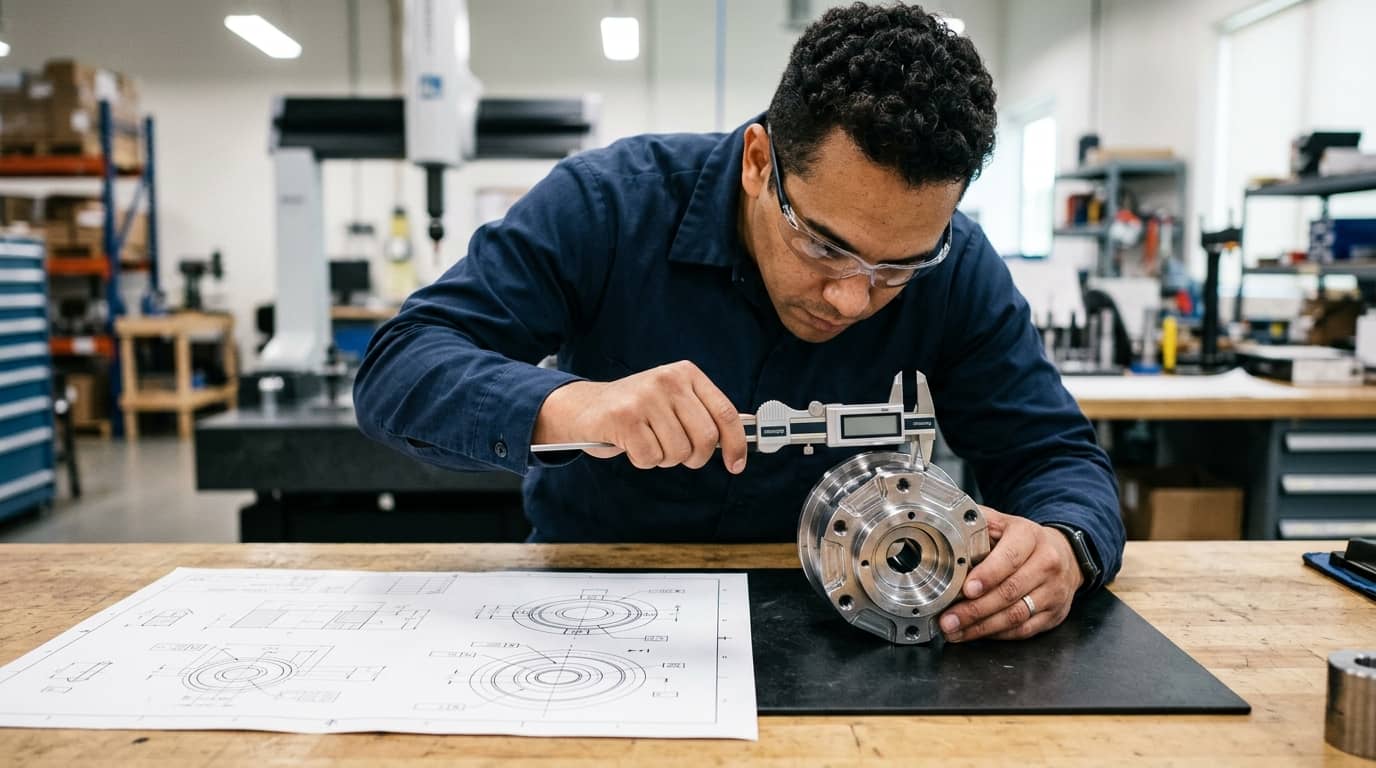
Teaches use of micrometers, dial indicators, bore gauges, and feeler gauges. Accurate measurement is the foundation of all clearance and wear assessments.
Chapter 3HideHide detailsSee detailsFuel System Inspection and Service
Fuel System Inspection and Service
Lesson 1 • Electronic Unit Injector Fundamentals
Explains solenoid-controlled injector operation, driver circuits, and injection timing control. Bridges mechanical fuel knowledge to electronic control system diagnostics.
Lesson 2 • Mechanical Unit Injector Service
Covers removal, cleaning, testing, and reinstallation of mechanical unit injectors. Correct injector calibration directly affects power output and fuel economy.
Lesson 3 • Fuel System Leak and Contamination Diagnosis
Uses pressure decay, dye testing, and fuel sampling to locate leaks and contamination sources. Contamination diagnosis prevents repeat injector failures after service.
Lesson 4 • Fuel System Components and Flow Path
Identifies tanks, transfer pumps, filters, and injection components in the complete fuel circuit. Component knowledge is prerequisite to systematic fuel fault isolation.
Lesson 5 • Common Rail Fuel System Service
Addresses high-pressure rail, pressure relief valves, and piezoelectric injectors used in newer engines. High-pressure safety protocols are emphasized throughout this section.
Chapter 4HideHide detailsSee detailsAir Induction and Exhaust Systems
Air Induction and Exhaust Systems
Lesson 1 • Aftertreatment System Fundamentals
Introduces diesel particulate filters, selective catalytic reduction, and diesel oxidation catalysts. Aftertreatment knowledge is required for emissions-compliant engine service.
Lesson 2 • Air Induction System Components
Identifies air cleaners, pre-cleaners, inlet piping, and restriction indicators in the induction path. Restriction awareness prevents turbocharger and engine damage from starved airflow.
Lesson 3 • Charge Air Cooler Testing and Service
Teaches pressure testing, leak detection, and cleaning of charge air coolers. Cooler efficiency affects charge density and combustion quality in turbocharged engines.
Lesson 4 • Turbocharger Operation and Inspection
Covers compressor and turbine wheel inspection, bearing clearance measurement, and wastegate testing. Turbocharger condition directly determines boost pressure and engine power.
Lesson 5 • Exhaust Manifold and Piping Inspection
Addresses manifold crack detection, gasket condition, and exhaust restriction measurement. Exhaust leaks and restrictions degrade turbocharger efficiency and engine performance.
Chapter 5HideHide detailsSee detailsCooling System Maintenance and Testing
Cooling System Maintenance and Testing
Lesson 1 • Pressure Testing and Leak Diagnosis
Uses pressure testers and combustion gas detectors to locate external and internal coolant leaks. Internal leaks indicate head gasket or liner seal failure requiring immediate action.
Lesson 2 • Coolant Quality and Chemical Testing
Tests coolant concentration, pH, nitrite level, and contamination using field test kits. Coolant chemistry directly affects liner pitting, corrosion, and seal longevity.
Lesson 3 • Cooling System Architecture
Maps radiator, water pump, thermostat, and coolant lines as an integrated thermal circuit. System-level understanding is required before component-level testing begins.
Lesson 4 • Radiator and Heat Exchanger Service
Addresses radiator flow testing, core cleaning, and oil cooler inspection for plugging or leaks. Heat exchanger condition affects both engine and transmission thermal management.
Lesson 5 • Thermostat and Water Pump Service
Covers thermostat bench testing, water pump removal, and seal replacement procedures. These components are the most common causes of cooling system performance complaints.
Chapter 6HideHide detailsSee detailsLubrication System Diagnostics and Service
Lubrication System Diagnostics and Service
Lesson 1 • Oil Pump Inspection and Service
Covers gear-type and gerotor pump removal, clearance measurement, and wear assessment. Pump condition determines the engine's ability to maintain adequate bearing film thickness.
Lesson 2 • Used Oil Analysis and Wear Trending
Interprets spectrometric oil analysis reports for wear metals, contaminants, and additive depletion. Trending analysis enables predictive maintenance before failure occurs.
Lesson 3 • Engine Oil Selection and Specifications
Covers viscosity grades, API and ACEA classifications, and Caterpillar oil specifications. Correct oil selection is the first line of defense against premature wear.
Lesson 4 • Oil Pressure Testing and Diagnosis
Uses mechanical gauges and electronic sensors to measure oil pressure at idle and rated speed. Pressure deviations indicate pump wear, relief valve faults, or bearing clearance issues.
Lesson 5 • Oil Filter and Bypass System Service
Addresses full-flow and bypass filter replacement, filter housing inspection, and bypass valve testing. Filter bypass faults allow unfiltered oil to circulate and accelerate wear.
Chapter 7HideHide detailsSee detailsElectronic Control System Diagnostics
Electronic Control System Diagnostics
Lesson 1 • Fault Code Retrieval and Interpretation
Uses Caterpillar Electronic Technician software to retrieve active, logged, and pending fault codes. Correct code interpretation directs technicians to the root cause, not just the symptom.
Lesson 2 • Electronic Control Module Architecture
Explains ECM inputs, outputs, power supply, and ground circuits in Caterpillar control systems. ECM architecture knowledge is prerequisite to all sensor and actuator diagnostics.
Lesson 3 • Data Link and Communication Diagnostics
Diagnoses J1939 CAN data link faults, termination resistors, and module communication errors. Data link integrity is essential for multi-module engine and machine control systems.
Lesson 4 • Sensor Testing and Calibration
Tests speed, temperature, pressure, and position sensors using multimeters and breakout harnesses. Sensor accuracy directly determines ECM control decisions and fault code generation.
Lesson 5 • Actuator Testing and Driver Circuits
Tests solenoids, relays, and electronic actuators using Electronic Technician override functions. Actuator testing confirms whether faults originate in the ECM, wiring, or the device itself.
Chapter 8HideHide detailsSee detailsEngine Overhaul and Performance Verification
Engine Overhaul and Performance Verification
Lesson 1 • Crankshaft and Bearing Assembly
Covers crankshaft installation, bearing crush measurement, and main cap torque sequences. Correct bearing clearance and crush ensure adequate oil film and prevent spun bearings.
Lesson 2 • Cylinder Head Reconditioning
Addresses valve grinding, seat reconditioning, head surface flatness, and pressure testing. Head reconditioning restores combustion sealing and valve train geometry to specification.
Lesson 3 • Engine Run-In and Performance Testing
Executes controlled break-in procedures, oil pressure verification, and dynamometer or loaded performance testing. Performance testing confirms the overhaul meets power and efficiency specifications.
Lesson 4 • Engine Disassembly and Component Inspection
Covers systematic disassembly sequence, component marking, and inspection for wear and damage. Organized disassembly prevents reassembly errors and ensures no components are overlooked.
Lesson 5 • Block Reconditioning and Liner Installation
Covers block deck flatness, liner bore measurement, liner installation, and protrusion setting. Correct liner protrusion is critical to head gasket sealing and liner retention.
Your valid completion certificate
This course is for you:
Diesel technician: wants to master Caterpillar-specific systems beyond general training.
Fleet maintenance mechanic: needs structured diagnostics skills for heavy equipment uptime.
Equipment operator: seeks deeper mechanical knowledge to support field troubleshooting.
Career changer from automotive: ready to move into higher-paying heavy equipment service.
Apprentice technician: building a strong foundation before entering a dealership environment.
Independent shop owner: expanding service offerings to include Caterpillar engine work.
What our students say
Your classes are perfect. I purchased the one-year package and finally have the opportunity to follow various topics of my interest without needing to change platforms... I thank you for everything you do, I've already recommended you to other people...

I like how the lessons are straight to the point and how I can switch chapters and skip content I don't need.

I like the content and the way videos are presented and transcribed, which speeds up the process!

The platform is fast, simple to use. The diversity of content and complementary videos really help with learning.

Top trainings



FAQs
Who is Dedika?
Is the certificate valid in the Philippines?
Are the courses free?
What is the course workload?
What are the courses like?
How do the courses work?
What is the duration of the courses?
What is the cost or price of the courses?
What is an EAD or online course and how does it work?
PDF Course