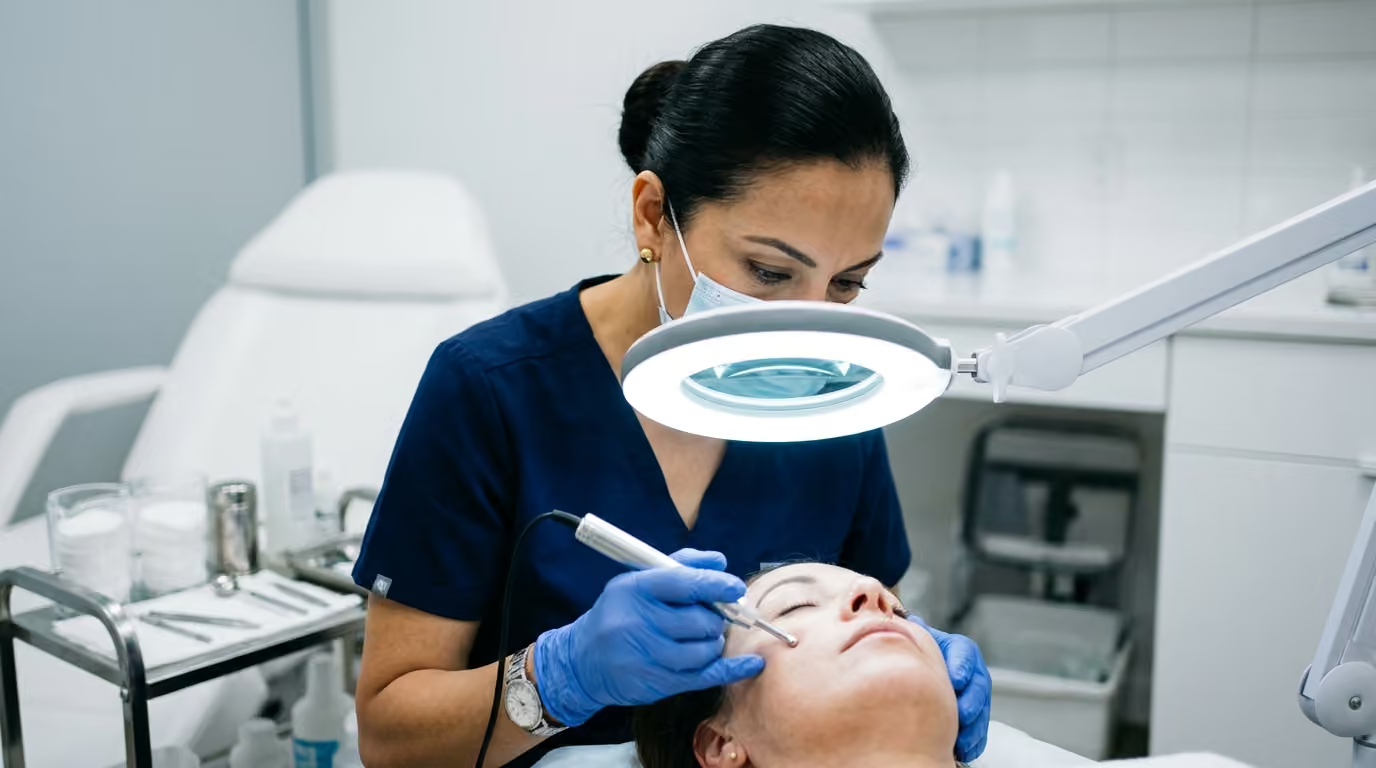
Medical Esthetics Course
Master the full scope of medical esthetics, from advanced skin analysis and chemical peels to energy-based devices and minimally invasive treatments. This course blends clinical science with hands-on technique to prepare you for real-world practice in medical spas, dermatology offices, and beyond. Build the skills that today's top employers demand.
What you will learn:
You will gain a thorough understanding of skin biology, infection control, and clinical safety standards that form the foundation of professional medical esthetics. You will learn to perform chemical peels, microneedling, dermaplaning, and facial treatments on diverse skin types. The course covers energy-based technologies including laser, radiofrequency, ultrasound, and LED therapy. You will also develop advanced consultation skills, treatment planning methods, and the ability to care for special populations including oncology clients. Business operations, digital marketing, and client communication are included to prepare you for every aspect of a successful esthetics career.
How you study in a practical way Medical Esthetics Course
How you practice Medical Esthetics Course
For companies who want to train their team
With Dedika for businesses, the course includes exercises and examples tailored to your own business and the way your company needs.

Course content
8 Chapters • 36 LessonsDuration between 4 and 360 hours (you decide)
Chapter 1HideHide detailsSee detailsFoundations of Medical Esthetics
Foundations of Medical Esthetics
Lesson 1 • Professional Scope and Ethics
Defines the medical esthetician's role within a clinical team and ethical obligations. Sets behavioral standards applied in every subsequent clinical module.
Lesson 2 • Skin Anatomy and Physiology
Covers layers, appendages, and cellular functions of the skin. Provides the biological framework needed to understand every treatment in the course.
Lesson 3 • Skin Typing and Assessment
Introduces classification systems and assessment tools for diverse skin types. Accurate typing guides safe treatment selection throughout the program.
Lesson 4 • Regulatory and Safety Framework
Outlines licensing requirements, health regulations, and product safety standards. Ensures compliant practice before any hands-on technique is introduced.
Chapter 2HideHide detailsSee detailsInfection Control and Sterilization
Infection Control and Sterilization
Lesson 1 • Microbiology Essentials for Estheticians
Reviews pathogens relevant to skin care and their transmission routes. Contextualizes why specific control measures are mandatory in clinical esthetics.
Lesson 2 • Clinical Environment Setup
Covers room preparation, waste management, and linen handling for a sterile workspace. Directly supports safe execution of all hands-on treatments ahead.
Lesson 3 • Disinfection and Sterilization Methods
Distinguishes disinfection levels and sterilization modalities for tools and surfaces. Prepares students to select the correct method for each instrument category.
Lesson 4 • Hand Hygiene and Personal Protective Equipment
Teaches correct handwashing, sanitizing, and PPE selection for esthetic procedures. Forms the first line of defense against cross-contamination.
Chapter 3HideHide detailsSee detailsAdvanced Skin Analysis and Consultation
Advanced Skin Analysis and Consultation
Lesson 1 • Diagnostic Technology in Skin Analysis
Introduces magnification lamps, Woods lamps, and digital imaging systems. Builds competency in selecting and operating tools for objective skin assessment.
Lesson 2 • Common Skin Conditions and Pathologies
Identifies treatable conditions and contraindicated pathologies encountered in clinical practice. Enables safe differentiation between esthetic concerns and medical referrals.
Lesson 3 • Structured Client Consultation
Teaches a systematic intake process including health history, lifestyle factors, and goal setting. Produces a complete client profile that drives individualized treatment planning.
Lesson 4 • Treatment Planning and Goal Setting
Translates analysis findings into prioritized, phased treatment plans with measurable outcomes. Connects diagnostic skills to the clinical decision-making used in all core chapters ahead.
Chapter 4HideHide detailsSee detailsClinical Skin Care Treatments
Clinical Skin Care Treatments
Lesson 1 • Mask Therapy and Treatment Protocols
Covers selection and application of clay, hydrating, and corrective masks within full treatment protocols. Integrates all prior clinical skills into a complete service sequence.
Lesson 2 • Professional Cleansing and Exfoliation
Teaches multi-step cleansing protocols and mechanical exfoliation techniques. Establishes the preparatory skills required before any advanced treatment is applied.
Lesson 3 • Facial Massage and Lymphatic Drainage
Introduces classic facial massage movements and manual lymphatic drainage strokes. Develops hands-on dexterity and understanding of circulatory benefits in skin care.
Lesson 4 • Extractions and Comedone Removal
Covers manual and lancet-assisted extraction techniques with aseptic protocols. Builds precision skills critical for acne-focused and corrective treatment services.
Chapter 5HideHide detailsSee detailsChemical Exfoliation and Peels
Chemical Exfoliation and Peels
Lesson 1 • Chemistry of Exfoliating Acids
Explains AHA, BHA, and PHA chemistry, pH, and mechanism of action. Provides the scientific basis for all peel selection and application decisions.
Lesson 2 • Medium-Depth Peel Protocols
Covers TCA and Jessner combination peels, frosting levels, and post-peel management. Advances students to higher-risk procedures requiring precise clinical judgment.
Lesson 3 • Peel Contraindications and Client Selection
Establishes screening criteria for safe peel candidacy across skin types and health conditions. Ensures students apply clinical judgment before every peel service.
Lesson 4 • Peel Complications and Management
Identifies adverse reactions including hyperpigmentation, scarring, and infection post-peel. Equips students to prevent, recognize, and manage complications in clinical practice.
Lesson 5 • Superficial Peel Application
Teaches step-by-step application of glycolic, lactic, and salicylic peels at superficial depth. Builds foundational peel technique before progressing to stronger formulations.
Chapter 6HideHide detailsSee detailsEnergy-Based and Device Treatments
Energy-Based and Device Treatments
Lesson 1 • Laser and Intense Pulsed Light Therapy
Covers laser physics, IPL technology, and clinical applications for pigmentation and vascular concerns. Builds competency in pre-treatment assessment and safe parameter selection.
Lesson 2 • Principles of Energy-Based Devices
Explains electromagnetic spectrum, thermal vs. non-thermal effects, and tissue interaction. Provides the physics foundation required to operate all devices covered in this chapter.
Lesson 3 • Radiofrequency and Ultrasound Treatments
Teaches monopolar, bipolar, and focused ultrasound technologies for skin tightening and lifting. Develops safe technique for collagen-stimulating energy treatments.
Lesson 4 • Microcurrent and LED Photobiomodulation
Introduces microcurrent muscle re-education and LED wavelength-specific cellular effects. Expands the student's non-invasive treatment toolkit for rejuvenation and healing.
Lesson 5 • Device Treatment Safety and Contraindications
Consolidates contraindication screening, adverse event recognition, and emergency protocols for all devices. Ensures students prioritize patient safety across every energy-based service.
Chapter 7HideHide detailsSee detailsInjectable-Adjacent and Minimally Invasive Treatments
Injectable-Adjacent and Minimally Invasive Treatments
Lesson 1 • Microneedling Principles and Technique
Explains collagen induction therapy mechanisms and manual vs. device-assisted needling protocols. Builds competency in depth selection, pass technique, and aseptic execution.
Lesson 2 • Complications and Emergency Response
Identifies serious adverse events including vascular occlusion and infection in minimally invasive procedures. Prepares students to respond appropriately and escalate to supervising physicians.
Lesson 3 • Pre- and Post-Injectable Skin Preparation
Covers skin preparation, topical anesthesia, and post-procedure care supporting injectable services. Positions the esthetician as a key clinical team member in injectable workflows.
Lesson 4 • Dermaplaning and Physical Resurfacing
Teaches scalpel-blade dermaplaning technique for vellus hair and surface cell removal. Develops precision blade control and safe protocol execution on varied skin types.
Lesson 5 • Platelet-Rich Plasma Supportive Care
Introduces PRP biology and the esthetician's role in pre- and post-PRP skin management. Expands collaborative skills for regenerative treatment protocols.
Chapter 8HideHide detailsSee detailsOncology Esthetics and Special Populations
Oncology Esthetics and Special Populations
Lesson 1 • Chronic Conditions and Medically Complex Clients
Reviews esthetic implications of diabetes, autoimmune disorders, and cardiovascular conditions. Prepares students to screen and adapt treatments for clients with complex health histories.
Lesson 2 • Aging Skin and Geriatric Considerations
Addresses intrinsic and extrinsic aging changes and their impact on treatment tolerance. Guides appropriate protocol modification for mature and fragile skin.
Lesson 3 • Psychological and Holistic Client Care
Integrates body image, mental health awareness, and trauma-informed care into clinical practice. Elevates the student's ability to support the whole client beyond physical treatment.
Lesson 4 • Oncology Esthetics Fundamentals
Covers treatment modifications required for clients undergoing or recovering from cancer therapy. Establishes the safety framework for working with immunocompromised and radiation-affected skin.
Lesson 5 • Skin of Color Clinical Considerations
Addresses unique risks, treatment modifications, and product selection for melanin-rich skin types. Ensures equitable, safe care across all Fitzpatrick skin types.
Your valid completion certificate
This course is for you:
Licensed esthetician: ready to move into clinical and medical settings.
Cosmetology graduate: seeking a specialized path beyond salon-based services.
Health care professional: wanting to add esthetic services to their existing practice.
Career changer: drawn to skin care after working in wellness or patient care.
Spa therapist: aiming to upgrade skills and attract a medically focused clientele.
Esthetics student: building a strong clinical foundation from the very start.
What our students say
Your classes are perfect. I purchased the one-year package and finally have the opportunity to follow various topics of my interest without needing to change platforms... I thank you for everything you do, I've already recommended you to other people...

I like how the lessons are straight to the point and how I can switch chapters and skip content I don't need.

I like the content and the way videos are presented and transcribed, which speeds up the process!

The platform is fast, simple to use. The diversity of content and complementary videos really help with learning.

Top trainings


FAQs
Who is Dedika?
Is the certificate valid in the Philippines?
Are the courses free?
What is the course workload?
What are the courses like?
How do the courses work?
What is the duration of the courses?
What is the cost or price of the courses?
What is an EAD or online course and how does it work?
PDF Course