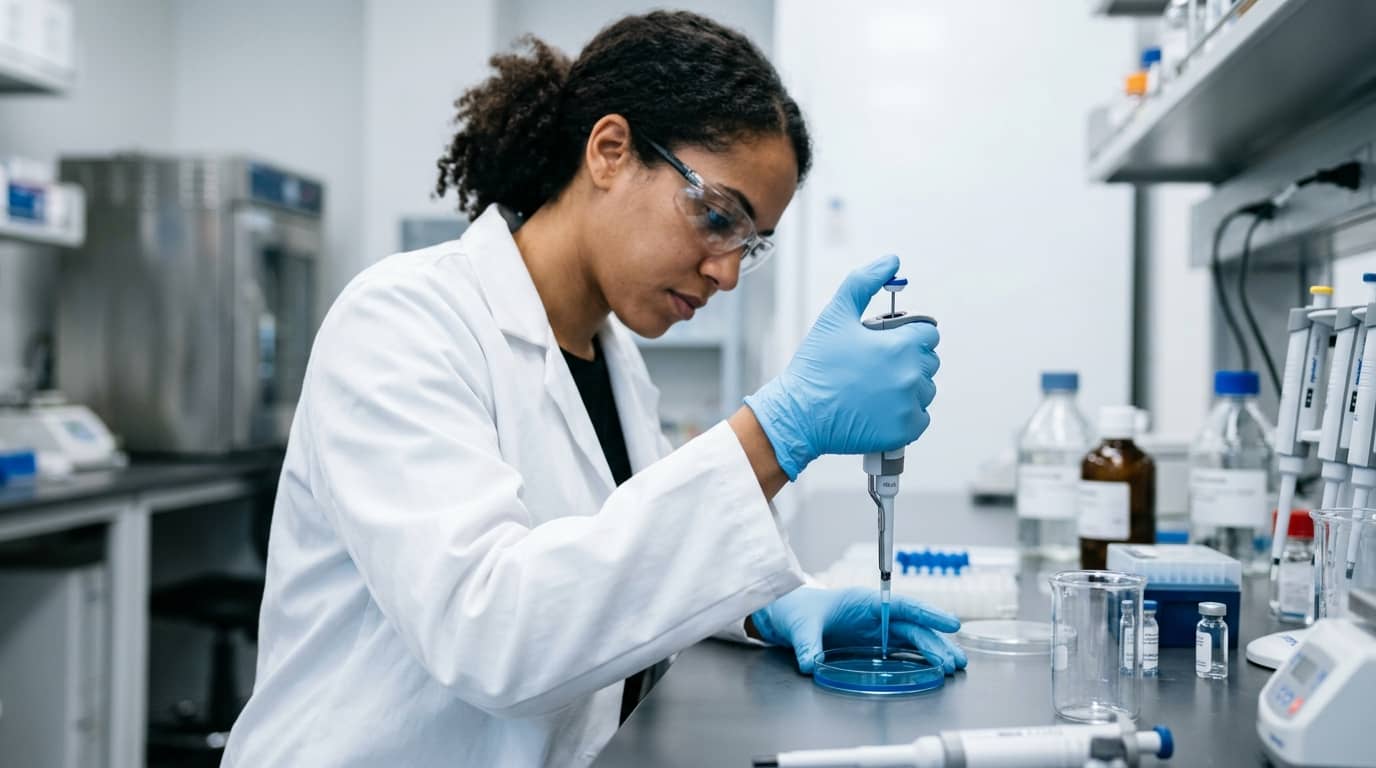
Microbiologist Course
Master the full spectrum of microbiology — from cell structure and microbial genetics to clinical diagnostics and industrial applications. This comprehensive course equips you with the laboratory skills, scientific knowledge, and professional competencies demanded by today's healthcare, research, and biotechnology sectors.
What you will learn:
This course covers microbial physiology, genetics, and diversity alongside hands-on laboratory techniques including staining, culture methods, and microscopy. You will study infectious disease mechanisms, host-pathogen interactions, and infection control principles used in clinical settings. Antimicrobial agents, resistance genetics, and stewardship programs are examined in depth. Applied topics include food safety, environmental microbiology, and industrial fermentation. Supplementary modules address virology, mycology, microbiome research, and bioinformatics tools. You will also develop scientific writing, experimental design, and career planning skills essential for professional practice.
How you study in a practical way Microbiologist Course
How you practice Microbiologist Course
For companies who want to train their team
With Dedika for businesses, the course includes exercises and examples tailored to your own business and the way your company needs.

Course content
8 Chapters • 39 LessonsDuration between 4 and 360 hours (you decide)
Chapter 1HideHide detailsSee detailsFoundations of Microbiology
Foundations of Microbiology
Lesson 1 • Microbial Cell Structure
Compares prokaryotic and eukaryotic cell architecture at the molecular level. Provides structural vocabulary needed for all subsequent laboratory and clinical topics.
Lesson 2 • Microbial Diversity Overview
Surveys bacteria, archaea, fungi, protozoa, algae, and viruses as distinct groups. Connects structural diversity to ecological roles and pathogenic potential.
Lesson 3 • Classification and Taxonomy
Introduces the three-domain system and binomial nomenclature for naming organisms. Enables accurate identification and communication across microbiology disciplines.
Lesson 4 • History and Scope of Microbiology
Traces key discoveries from early microscopy to modern genomics. Establishes context for why microbiology underpins medicine, food safety, and environmental science.
Chapter 2HideHide detailsSee detailsMicrobial Physiology and Metabolism
Microbial Physiology and Metabolism
Lesson 1 • Metabolic Regulation
Explains enzyme induction, repression, feedback inhibition, and global regulatory networks. Connects regulatory mechanisms to antimicrobial resistance and biotechnology.
Lesson 2 • Biosynthesis and Anabolism
Examines how microbes build proteins, lipids, nucleic acids, and polysaccharides. Grounds understanding of antibiotic targets and metabolic engineering.
Lesson 3 • Energy Generation Pathways
Covers glycolysis, fermentation, aerobic respiration, and anaerobic respiration in microbes. Links metabolic pathways to industrial fermentation and clinical diagnostics.
Lesson 4 • Microbial Growth Kinetics
Defines growth phases, generation time, and mathematical models of population dynamics. Prepares students to design and interpret growth curve experiments.
Lesson 5 • Environmental Factors Affecting Growth
Analyzes how temperature, pH, osmolarity, and oxygen influence microbial activity. Directly applicable to culture optimization and food preservation strategies.
Chapter 3HideHide detailsSee detailsMicrobial Genetics and Genomics
Microbial Genetics and Genomics
Lesson 1 • Microbial Genomics and Bioinformatics
Introduces whole-genome sequencing, annotation, and comparative genomics workflows. Equips students to interpret genomic data for identification and epidemiological studies.
Lesson 2 • DNA Replication and Repair
Details the molecular machinery of prokaryotic and eukaryotic DNA replication and repair pathways. Establishes the genetic fidelity concepts underlying mutation and evolution.
Lesson 3 • Transcription and Translation
Covers RNA polymerase function, mRNA processing, and ribosomal protein synthesis in microbes. Provides the molecular basis for understanding antibiotic mechanisms of action.
Lesson 4 • Horizontal Gene Transfer
Explains transformation, transduction, and conjugation as mechanisms of genetic exchange. Directly relevant to the spread of antibiotic resistance genes in clinical settings.
Lesson 5 • Mutation and Mutagenesis
Classifies spontaneous and induced mutations and their phenotypic consequences. Connects mutation rates to pathogen evolution and laboratory strain development.
Chapter 4HideHide detailsSee detailsMicrobiology Laboratory Techniques
Microbiology Laboratory Techniques
Lesson 1 • Aseptic Technique and Biosafety
Establishes sterile working practices and biosafety level classifications for handling microorganisms. Forms the safety foundation for all subsequent laboratory work.
Lesson 2 • Microscopy Techniques
Trains students in brightfield, phase-contrast, fluorescence, and electron microscopy operation. Connects optical principles to practical specimen examination and documentation.
Lesson 3 • Staining Methods
Teaches Gram staining, acid-fast staining, endospore staining, and negative staining procedures. Directly supports organism identification and clinical specimen analysis.
Lesson 4 • Enumeration and Quantification
Applies plate count, turbidimetry, direct microscopic count, and flow cytometry methods. Provides quantitative skills essential for research, QC, and clinical microbiology.
Lesson 5 • Culture Media Preparation
Covers formulation, preparation, and quality control of liquid and solid culture media. Enables selection of appropriate media for isolation and identification tasks.
Chapter 5HideHide detailsSee detailsMicrobial Identification and Diagnostics
Microbial Identification and Diagnostics
Lesson 1 • Biochemical Identification Methods
Uses enzyme activity, fermentation profiles, and metabolic tests to differentiate microbial species. Builds systematic identification skills applicable to clinical and food microbiology.
Lesson 2 • Immunological Diagnostic Techniques
Covers antigen-antibody reactions, ELISA, immunofluorescence, and lateral flow assays. Connects serological principles to rapid point-of-care and laboratory diagnostics.
Lesson 3 • Molecular Diagnostic Methods
Applies PCR, real-time PCR, and nucleic acid hybridization for pathogen detection and typing. Provides the molecular toolkit central to modern clinical and environmental diagnostics.
Lesson 4 • Antimicrobial Susceptibility Testing
Teaches disk diffusion, broth microdilution, and gradient strip methods for resistance profiling. Directly supports clinical treatment decisions and antimicrobial stewardship programs.
Lesson 5 • Specimen Collection and Processing
Establishes correct collection, transport, and pre-analytical processing of clinical and environmental specimens. Ensures diagnostic accuracy by minimizing pre-analytical errors.
Chapter 6HideHide detailsSee detailsInfectious Disease Microbiology
Infectious Disease Microbiology
Lesson 1 • Host-Pathogen Interactions
Examines colonization, invasion, and immune evasion strategies used by bacterial, viral, and fungal pathogens. Provides the conceptual framework for understanding disease progression.
Lesson 2 • Infection Prevention and Control
Covers standard precautions, isolation categories, hand hygiene, and environmental decontamination. Directly applicable to healthcare-associated infection prevention programs.
Lesson 3 • Innate and Adaptive Immunity
Reviews physical barriers, phagocytosis, complement, and lymphocyte-mediated responses to infection. Connects immunological mechanisms to vaccine design and immunocompromised patient care.
Lesson 4 • Epidemiology of Infectious Disease
Applies incidence, prevalence, transmission routes, and outbreak investigation methods. Equips students to contribute to surveillance and public health response efforts.
Lesson 5 • Virulence Factors and Toxins
Classifies exotoxins, endotoxins, enzymes, and structural virulence factors by mechanism. Links specific virulence factors to clinical disease manifestations and treatment targets.
Chapter 7HideHide detailsSee detailsAntimicrobial Agents and Resistance
Antimicrobial Agents and Resistance
Lesson 1 • Resistance Genetics and Spread
Traces how resistance genes arise, transfer via mobile elements, and disseminate globally. Builds on horizontal gene transfer concepts to explain multidrug-resistant outbreak dynamics.
Lesson 2 • Antimicrobial Stewardship Programs
Defines stewardship goals, core interventions, metrics, and multidisciplinary team roles. Prepares students to participate in institutional programs that optimize antibiotic use.
Lesson 3 • Mechanisms of Antimicrobial Resistance
Explains enzymatic inactivation, target modification, efflux pumps, and reduced permeability as resistance strategies. Connects molecular mechanisms to clinical resistance phenotypes.
Lesson 4 • Antifungal and Antiviral Agents
Reviews azoles, polyenes, echinocandins, and major antiviral drug classes with their targets. Extends antimicrobial knowledge beyond bacteria to fungal and viral pathogens.
Lesson 5 • Antibiotic Classes and Mechanisms
Categorizes antibiotics by target: cell wall, protein synthesis, nucleic acid, and membrane. Provides the pharmacological foundation for selecting and evaluating antimicrobial therapy.
Chapter 8HideHide detailsSee detailsApplied and Industrial Microbiology
Applied and Industrial Microbiology
Lesson 1 • Environmental Microbiology
Examines microbial roles in nutrient cycling, bioremediation, water quality, and soil health. Applies ecological principles to environmental monitoring and remediation project design.
Lesson 2 • Industrial Fermentation Processes
Designs batch, fed-batch, and continuous fermentation systems for microbial product manufacture. Integrates physiology and engineering principles for scale-up and process optimization.
Lesson 3 • Quality Assurance in Microbiology Labs
Establishes accreditation standards, proficiency testing, internal audits, and documentation practices. Ensures students can maintain compliant, audit-ready laboratory operations.
Lesson 4 • Food and Beverage Microbiology
Covers spoilage organisms, foodborne pathogens, fermentation processes, and food safety standards. Connects microbial ecology to quality assurance and regulatory compliance in food production.
Lesson 5 • Microbial Biotechnology Products
Surveys recombinant proteins, enzymes, biofuels, and bioplastics produced by engineered microbes. Connects genetic engineering skills to commercial and pharmaceutical manufacturing.
Your valid completion certificate
This course is for you:
Biology graduate: seeking structured entry into a specialized microbiology career path.
Healthcare technician: wanting deeper scientific grounding behind daily diagnostic procedures.
Food safety inspector: needing microbial testing knowledge to strengthen regulatory work.
Career changer: transitioning from an unrelated field into life sciences or biotechnology.
Environmental scientist: expanding expertise to include microbial monitoring and remediation skills.
Pharmacy professional: building foundational knowledge of antimicrobial agents and resistance mechanisms.
What our students say
Your classes are perfect. I purchased the one-year package and finally have the opportunity to follow various topics of my interest without needing to change platforms... I thank you for everything you do, I've already recommended you to other people...

I like how the lessons are straight to the point and how I can switch chapters and skip content I don't need.

I like the content and the way videos are presented and transcribed, which speeds up the process!

The platform is fast, simple to use. The diversity of content and complementary videos really help with learning.

Top trainings


FAQs
Who is Dedika?
Is the certificate valid in the Philippines?
Are the courses free?
What is the course workload?
What are the courses like?
How do the courses work?
What is the duration of the courses?
What is the cost or price of the courses?
What is an EAD or online course and how does it work?
PDF Course