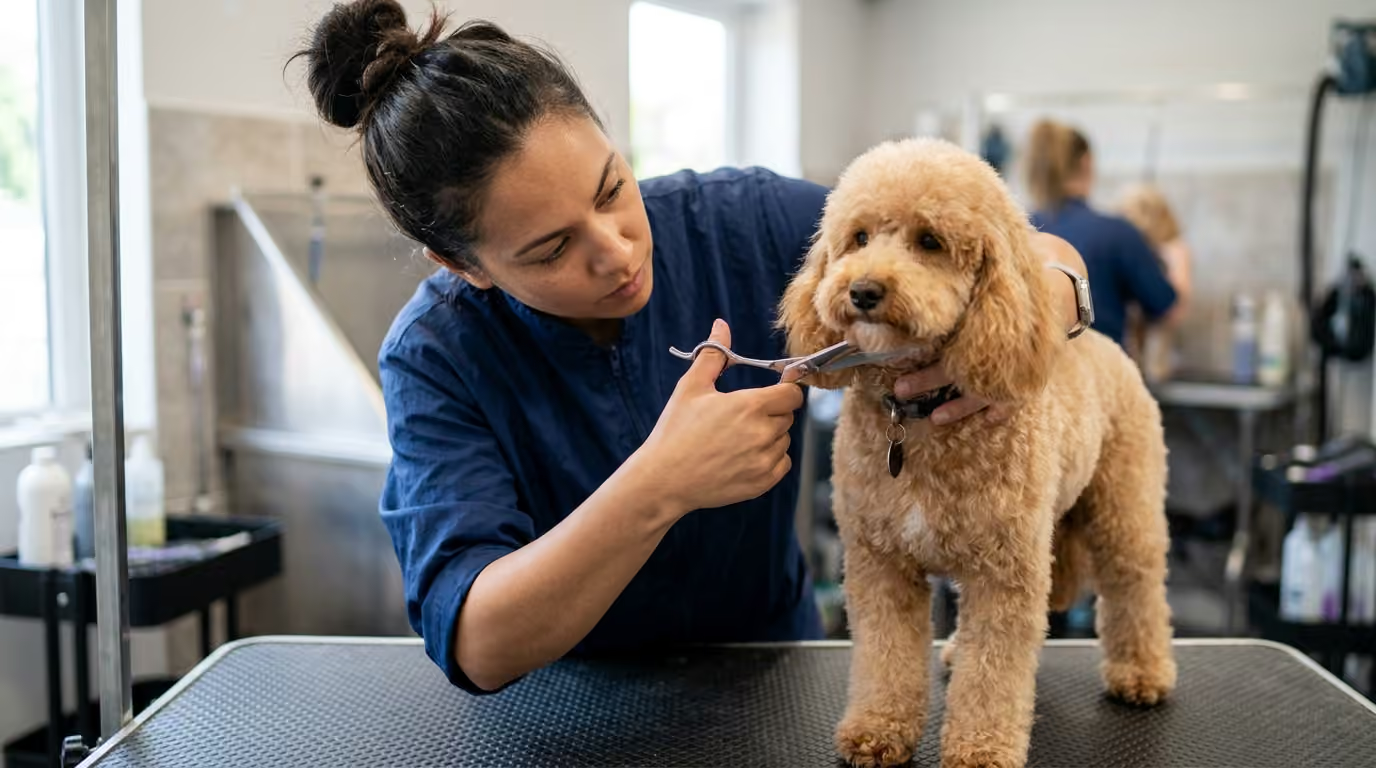
Groomer Training
Turn your passion for pets into a professional grooming career with a complete, hands-on training programme covering everything from basic animal handling to advanced breed styling. You will master bathing, clipping, scissoring, nail care, and cat grooming while learning how to run a profitable grooming business. This course gives you the practical skills employers and clients expect from a certified professional groomer.
What you will learn:
You will start with grooming fundamentals, including tool selection, workplace safety, and animal behaviour, then progress through bathing and drying techniques, dematting, and coat maintenance for every coat type. You will learn breed-specific styling for dogs and cats, nail trimming and paw care, and how to handle senior, special needs, and anxious animals safely. The business and marketing modules teach you how to price your services, book clients, and grow your reputation. By the end, you will have the technical skills and business knowledge to work in a salon, go mobile, or launch your own grooming operation.
How you study in practice Groomer Training
How you practise Groomer Training
For companies looking to train their teams
With Dedika for Businesses, the course includes exercises and examples tailored to your own business and the specific needs of your company.

Course content
8 Chapters • 39 LessonsDuration between 4 and 360 hours (you decide)
Chapter 1HideHide detailsSee detailsIntroduction to Professional Pet Grooming
Introduction to Professional Pet Grooming
Lesson 1 • The Grooming Industry Overview
Covers career paths, salon types, and industry standards in professional grooming. Establishes context for all subsequent technical and business skills.
Lesson 2 • Workplace Safety and Sanitation
Establishes hygiene, disinfection, and accident-prevention standards for the grooming environment. Safe workplaces protect both animals and groomers.
Lesson 3 • Client Communication Essentials
Teaches intake consultations, expectation setting, and professional vocabulary with pet owners. Strong communication reduces complaints and builds client loyalty.
Lesson 4 • Basic Animal Behaviour Fundamentals
Introduces stress signals, body language, and fear responses in dogs and cats. Recognising behaviour prevents bites and improves handling outcomes.
Lesson 5 • Grooming Tools and Equipment
Identifies and explains the function of clippers, scissors, brushes, and tables. Proper tool selection directly impacts grooming quality and animal safety.
Chapter 2HideHide detailsSee detailsCanine Coat Types and Skin Health
Canine Coat Types and Skin Health
Lesson 1 • Common Skin Conditions in Dogs
Identifies allergies, hot spots, parasites, and fungal infections visible during grooming. Groomers learn when to refer clients to a veterinarian.
Lesson 2 • Canine Skin Anatomy and Health
Covers skin layers, sebaceous glands, and the role of pH balance in coat health. Understanding skin anatomy guides product selection and grooming frequency.
Lesson 3 • Classifying Canine Coat Types
Defines smooth, double, wire, curly, and silky coat categories with breed examples. Coat classification drives every subsequent grooming decision.
Lesson 4 • Shampoos, Conditioners, and Treatments
Compares medicated, hypoallergenic, whitening, and conditioning products by coat need. Correct product use enhances coat quality and prevents skin irritation.
Lesson 5 • Nutrition and Coat Quality Connection
Explains how diet, hydration, and supplements affect coat lustre and shedding. Groomers use this knowledge to advise clients on coat maintenance between visits.
Chapter 3HideHide detailsSee detailsBathing and Drying Techniques
Bathing and Drying Techniques
Lesson 1 • Ear Cleaning and Anal Gland Expression
Covers safe ear cleaning, hair removal from ear canals, and external anal gland expression. These services are standard grooming add-ons requiring precise technique.
Lesson 2 • Bathing Procedures by Coat Type
Applies correct water temperature, shampoo dilution, and massage technique per coat category. Systematic bathing ensures full product penetration and thorough rinsing.
Lesson 3 • Pre-Bath Preparation and Assessment
Covers pre-bath brushing, mat removal, and health checks before water contact. Thorough preparation prevents coat damage and reduces bathing time.
Lesson 4 • Towel Drying and Fluff Drying
Demonstrates towel absorption, high-velocity drying, and fluff-drying for volume and straightness. Drying method selection affects the final groom appearance significantly.
Lesson 5 • Conditioner and Treatment Application
Teaches leave-in vs. rinse-out conditioner use and targeted treatment for damaged coats. Proper conditioning reduces static, breakage, and post-groom matting.
Chapter 4HideHide detailsSee detailsBrushing, Dematting, and Coat Maintenance
Brushing, Dematting, and Coat Maintenance
Lesson 1 • Deshedding Treatments and Tools
Applies deshedding shampoos, undercoat rakes, and high-velocity drying to reduce shedding. Effective deshedding improves coat health and client satisfaction.
Lesson 2 • Dematting Methods and Tools
Covers dematting sprays, mat splitters, and hand-separation techniques for varying mat severity. Groomers balance mat removal with minimising pain and coat loss.
Lesson 3 • Coat Maintenance Scheduling
Establishes grooming frequency recommendations based on coat type, lifestyle, and breed. Scheduling guidance helps clients maintain coats between professional visits.
Lesson 4 • Line Brushing Technique
Teaches the section-by-section line brushing method for thorough coat penetration. Line brushing is the foundation of all professional finishing work.
Chapter 5HideHide detailsSee detailsNail Care and Paw Maintenance
Nail Care and Paw Maintenance
Lesson 1 • Nail Anatomy and Growth Patterns
Explains the quick, nail wall, and growth rate differences across breeds and colours. Anatomical knowledge prevents quick strikes and guides trimming depth.
Lesson 2 • Nail Trimming Techniques
Demonstrates scissor-cut and guillotine clipper methods for dogs and cats. Correct angle and pressure prevent splitting and reduce animal stress.
Lesson 3 • Quick Strike Management
Teaches styptic powder application, pressure techniques, and client communication after a quick strike. Prompt response minimizes bleeding and maintains client trust.
Lesson 4 • Nail Grinding and Finishing
Covers rotary grinder use for smoothing sharp edges and shortening dark nails gradually. Grinding reduces post-trim scratching and is preferred for anxious dogs.
Lesson 5 • Paw Pad and Interdigital Care
Addresses pad moisturizing, hair trimming between toes, and detecting interdigital cysts. Paw maintenance prevents cracking, matting, and infection between visits.
Chapter 6HideHide detailsSee detailsClipping and Scissoring Fundamentals
Clipping and Scissoring Fundamentals
Lesson 1 • Clipper Operation and Blade Selection
Covers clipper mechanics, blade numbering, and heat management during extended use. Correct blade selection determines coat length and finish quality.
Lesson 2 • Scissor Handling and Safety
Establishes correct scissor grip, finger placement, and safe positioning around moving animals. Proper technique prevents injury and produces precise cuts.
Lesson 3 • Clipping Direction and Technique
Teaches with-the-grain and against-the-grain clipping for different finish lengths. Consistent direction and pressure produce smooth, even results without lines.
Lesson 4 • Basic Breed Pattern Introduction
Introduces standard patterns for popular breeds including the puppy cut and sporting trim. Pattern knowledge provides a framework for breed-specific styling in later chapters.
Lesson 5 • Blending and Transition Lines
Applies thinning shears and comb techniques to eliminate harsh lines between clipper lengths. Seamless blending is the hallmark of professional-quality grooming.
Chapter 7HideHide detailsSee detailsBreed-Specific Styling and Finishing
Breed-Specific Styling and Finishing
Lesson 1 • Reading and Applying Breed Standards
Interprets breed standard descriptions for head, body, and leg styling requirements. Standards provide the benchmark for show-quality and pet-quality groom decisions.
Lesson 2 • Terrier and Wire Coat Styling
Covers hand-stripping, rolling the coat, and clipper alternatives for wire-coated terriers. Correct technique preserves coat texture and color in terrier breeds.
Lesson 3 • Finishing Touches and Presentation
Covers cologne, bows, bandanas, and final coat inspection for client presentation. Professional finishing elevates perceived value and reinforces client retention.
Lesson 4 • Spaniel and Setter Styling
Teaches feathering, ear fringe, and body blending for silky-coated sporting breeds. Layering and thinning techniques create the flowing silhouette characteristic of spaniels.
Lesson 5 • Poodle and Doodle Styling
Applies continental, puppy, and modified patterns to poodles and doodle-type coats. Curly coat management and topknot shaping are central skills in this section.
Chapter 8HideHide detailsSee detailsCat Grooming Techniques
Cat Grooming Techniques
Lesson 1 • Feline Handling and Restraint
Teaches scruffing, towel wrapping, and low-stress positioning for cats during grooming. Safe restraint prevents injury to both the cat and the groomer.
Lesson 2 • Cat Bathing Procedures
Applies cat-safe shampoos, controlled water flow, and rapid drying to minimize feline stress. Bathing technique for cats differs significantly from canine bathing protocols.
Lesson 3 • Feline Coat Types and Brushing
Identifies short, semi-long, and long feline coat categories and appropriate brushing tools. Regular brushing prevents hairballs and reduces matting in long-coated cats.
Lesson 4 • Feline Nail Trimming
Demonstrates safe nail trimming for cats using proper extension and clipper technique. Cat nails retract, requiring specific extension methods before trimming.
Lesson 5 • Lion Cut and Sanitary Trims
Executes the lion cut pattern and sanitary area trims for long-coated cats. These services address hygiene needs and are among the most requested feline grooms.
Your valid completion certificate
This course is for you:
Animal lovers ready to turn pet care into a paying profession.
Veterinary assistants wanting to expand their hands-on animal service skills.
Stay-at-home parents seeking a flexible, rewarding career working with animals.
Salon employees curious about adding pet grooming to their service offerings.
Recent graduates exploring skilled trades with strong local job market demand.
Entrepreneurs planning to open or manage their own pet care business.
What our students say
Your lessons are perfect. I purchased the one-year package and finally have the opportunity to follow various topics of my interest without needing to change platforms... I'm grateful for everything you do, I've already recommended you to other people...

I like how the lessons are straight to the point and how I can change chapters and skip content I don't need.

I like the content and the way videos are presented and transcribed, which speeds up the process!

The platform is fast, simple to use. The diversity of content and complementary videos help a lot with learning.

Top trainings


FAQs
Who is Dedika?
Is the certificate valid in Pakistan?
Are the courses free?
What is the course workload?
What are the courses like?
How do the courses work?
What is the duration of the courses?
What is the cost or price of the courses?
What is an EAD or online course and how does it work?
PDF Course