
Mechanical Maintenance Course
Get the hands-on mechanical maintenance skills that industrial employers actually need on the floor. This course covers everything from bearings and shaft alignment to hydraulic systems and predictive maintenance — built for technicians who want to do the job right. Stop guessing and start fixing with confidence.
What your team will master:
You will learn how to safely inspect, maintain, and repair the mechanical systems found in real industrial facilities. The course covers fasteners, seals, bearings, lubrication, power transmission components, and fluid power circuits. You will develop shaft alignment skills using both dial indicators and laser systems, and apply preventive and predictive maintenance strategies to reduce equipment failures. Advanced topics include root cause analysis, overhaul planning, precision measurement, and CMMS data entry. Supplementary modules address electrical awareness, rigging safety, welding basics, and emerging maintenance technologies. By the end, you will have the technical knowledge and practical skills to perform at a professional level in any industrial maintenance role.
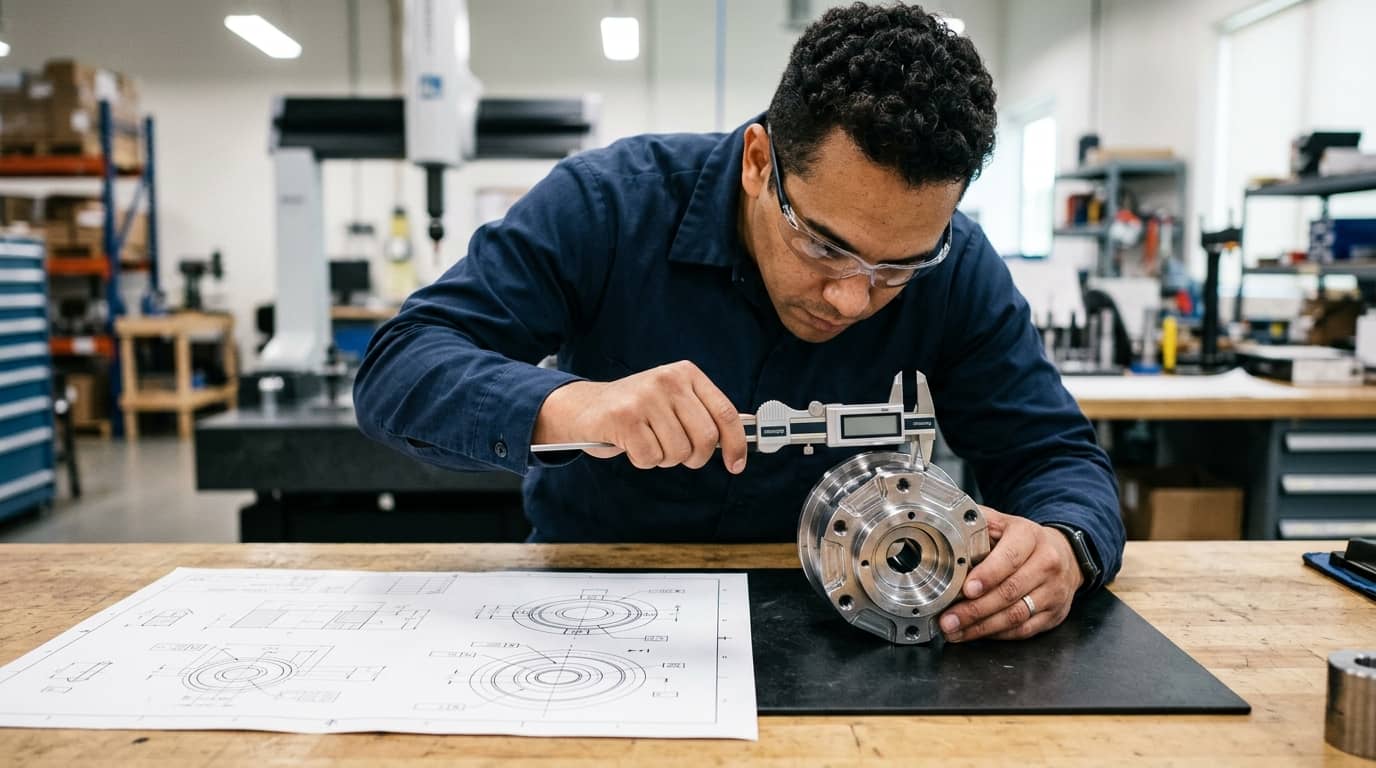
How your team learns in practice Mechanical Maintenance Course
How your team practices Mechanical Maintenance Course
Professionals from these companies study at Dedika



Course content
8 Chapters • 39 LessonsDuration between 4 and 360 hours (you decide)
Chapter 1HideHide detailsSee detailsFoundations of Mechanical Maintenance
Foundations of Mechanical Maintenance
Lesson 1 • Reading Technical Documentation
Covers interpretation of engineering drawings, parts manuals, and work orders. Technicians who read documentation accurately reduce errors and downtime.
Lesson 2 • Workplace Safety Fundamentals
Establishes hazard recognition, personal protective equipment selection, and lockout/tagout procedures. Safe work habits are the non-negotiable baseline for all maintenance tasks.
Lesson 3 • Hand Tools and Measuring Instruments
Covers proper selection, use, and care of hand tools and precision measuring devices. Correct tool use prevents equipment damage and ensures accurate measurements.
Lesson 4 • The Mechanical Technician's Role
Defines responsibilities, career paths, and performance expectations for maintenance technicians. Establishes the professional context that frames all subsequent technical learning.
Lesson 5 • Core Mechanical Terminology
Introduces standard vocabulary for mechanical components, forces, and motion. Precise terminology enables accurate communication with engineers, supervisors, and vendors.
Chapter 2HideHide detailsSee detailsFasteners, Seals, and Mechanical Joints
Fasteners, Seals, and Mechanical Joints
Lesson 1 • Dynamic Seals and Packing
Addresses lip seals, O-rings, and mechanical packing used in rotating and reciprocating equipment. Proper seal installation eliminates leaks and extends component life.
Lesson 2 • Threaded Fastener Systems
Covers bolt grades, thread standards, and torque specifications for threaded connections. Proper fastener selection prevents joint failure and equipment damage.
Lesson 3 • Gaskets and Static Seals
Explains gasket materials, compression requirements, and surface finish standards for leak-free joints. Correct gasket installation is critical for pressure and fluid containment.
Lesson 4 • Keys, Splines, and Couplings
Covers keyed and splined shaft connections and rigid versus flexible couplings. These connections transmit torque and must be correctly fitted to prevent premature wear.
Chapter 3HideHide detailsSee detailsBearings and Lubrication Systems
Bearings and Lubrication Systems
Lesson 1 • Lubrication Fundamentals
Explains viscosity, lubricant types, and the film formation that prevents metal-to-metal contact. Selecting the right lubricant is the single largest factor in bearing longevity.
Lesson 2 • Bearing Installation and Removal
Covers interference fit methods, heating techniques, and puller use for safe bearing handling. Correct installation preserves bearing geometry and rated service life.
Lesson 3 • Bearing Types and Load Ratings
Identifies rolling-element and plain bearing types, load directions, and dynamic load ratings. Matching bearing type to application load prevents premature failure.
Lesson 4 • Lubrication Application and Management
Covers manual and automatic lubrication methods, re-greasing intervals, and oil analysis programs. Systematic lubrication management reduces unplanned downtime significantly.
Lesson 5 • Bearing Failure Analysis
Teaches recognition of spalling, brinelling, fretting, and electrical erosion damage patterns. Accurate failure analysis prevents recurrence and guides corrective action.
Chapter 4HideHide detailsSee detailsShaft Alignment and Balancing
Shaft Alignment and Balancing
Lesson 1 • Rotor Balancing Principles
Covers static and dynamic imbalance, influence coefficients, and trial weight placement. Balancing eliminates vibration forces that accelerate bearing and structural fatigue.
Lesson 2 • Alignment Theory and Tolerances
Explains parallel and angular misalignment, their effects on bearings and seals, and acceptable tolerance ranges. Understanding alignment theory is prerequisite to all alignment procedures.
Lesson 3 • Thermal Growth and Pipe Strain
Addresses thermal expansion offsets and pipe-induced forces that shift alignment during operation. Compensating for these factors ensures alignment is maintained at running temperature.
Lesson 4 • Straightedge and Dial Indicator Alignment
Covers rim-and-face and reverse-dial indicator methods for coupling alignment. These foundational techniques build the manual skill base for laser alignment work.
Lesson 5 • Laser Alignment Systems
Introduces laser alignment hardware, software interpretation, and live move guidance. Laser systems improve accuracy and reduce alignment time compared to manual methods.
Chapter 5HideHide detailsSee detailsPower Transmission Components
Power Transmission Components
Lesson 1 • V-Belt and Synchronous Belt Drives
Covers belt cross-sections, sheave alignment, tension measurement, and replacement intervals. Correct belt tension and alignment maximize power efficiency and belt service life.
Lesson 2 • Gear Types and Inspection
Identifies spur, helical, bevel, and worm gear geometries and their failure modes. Gear inspection skills enable early detection of pitting, scoring, and tooth breakage.
Lesson 3 • Clutches and Brakes
Addresses friction clutch adjustment, brake lining inspection, and actuator maintenance. Properly maintained clutches and brakes ensure safe and precise machine control.
Lesson 4 • Chain Drive Systems
Explains roller chain standards, sprocket wear, elongation measurement, and lubrication requirements. Chain drives require precise elongation monitoring to prevent sprocket damage.
Lesson 5 • Gearbox Maintenance and Overhaul
Covers gearbox disassembly, inspection, bearing replacement, and oil management. Systematic overhaul procedures restore gearbox performance and prevent catastrophic failure.
Chapter 6HideHide detailsSee detailsHydraulic and Pneumatic Systems
Hydraulic and Pneumatic Systems
Lesson 1 • Reading Fluid Power Diagrams
Teaches ISO symbol interpretation and circuit tracing for hydraulic and pneumatic schematics. Accurate schematic reading is essential for systematic fault isolation.
Lesson 2 • Hydraulic and Pneumatic Troubleshooting
Applies pressure testing, flow measurement, and symptom analysis to isolate fluid power faults. Structured diagnostic methods reduce mean time to repair in fluid power systems.
Lesson 3 • Pneumatic Circuit Components
Covers compressors, FRL units, directional valves, and pneumatic actuators. Pneumatic systems require clean, dry, regulated air for reliable operation.
Lesson 4 • Hydraulic Circuit Components
Identifies pumps, valves, actuators, accumulators, and filtration components in hydraulic systems. Component recognition is prerequisite to accurate circuit diagnosis and repair.
Lesson 5 • Fluid Power Principles
Establishes Pascal's law, flow rate, pressure, and work relationships in fluid power circuits. These principles underpin every diagnostic and maintenance decision in fluid power systems.
Chapter 7HideHide detailsSee detailsPreventive and Predictive Maintenance
Preventive and Predictive Maintenance
Lesson 1 • Thermographic Inspection
Covers infrared camera operation, emissivity settings, and thermal anomaly interpretation. Thermography identifies overheating in bearings, electrical connections, and refractory without contact.
Lesson 2 • Vibration Analysis Fundamentals
Introduces vibration measurement, frequency spectra, and fault signatures for common mechanical defects. Vibration data enables detection of imbalance, misalignment, and bearing faults before failure.
Lesson 3 • Preventive Maintenance Planning
Covers task identification, frequency setting, and work order creation for PM programs. A structured PM plan is the foundation of equipment reliability management.
Lesson 4 • Maintenance Records and KPI Tracking
Covers work history documentation, MTBF calculation, and maintenance cost tracking. Accurate records enable data-driven decisions that continuously improve equipment reliability.
Lesson 5 • Oil Analysis and Wear Debris Monitoring
Explains sampling procedures, laboratory test parameters, and wear metal trend analysis. Oil analysis provides early warning of internal component degradation before symptoms appear.
Chapter 8HideHide detailsSee detailsAdvanced Troubleshooting and Overhaul
Advanced Troubleshooting and Overhaul
Lesson 1 • Overhaul Planning and Execution
Addresses scope definition, parts procurement, task sequencing, and resource scheduling for major overhauls. Thorough planning minimizes overhaul duration and return-to-service risk.
Lesson 2 • Commissioning and Acceptance Testing
Covers run-in procedures, performance baseline recording, and acceptance criteria verification after overhaul. Structured commissioning confirms that repaired equipment meets operational requirements.
Lesson 3 • Precision Measurement in Overhaul
Applies bore gauges, dial indicators, and surface plates to verify clearances and fits during overhaul. Precision measurement confirms that reassembled components meet design specifications.
Lesson 4 • Root Cause Analysis Methods
Covers five-why analysis, fishbone diagrams, and fault tree construction for mechanical failures. Identifying root causes prevents recurrence and reduces total maintenance cost.
Lesson 5 • Continuous Improvement in Maintenance
Introduces reliability-centered maintenance logic, failure mode prioritization, and improvement project management. Continuous improvement transforms maintenance from a cost center into a reliability asset.
Your valid completion certificate
This course is for you:
Entry-level plant worker: eager to move into a skilled maintenance technician position.
Career changer: transitioning from construction, automotive, or military mechanical backgrounds.
Maintenance helper: ready to take on independent repair tasks with greater technical confidence.
Production operator: wanting to understand the equipment they run every single shift.
Facilities technician: maintaining commercial or institutional equipment and seeking industrial-level depth.
Apprentice mechanic: supplementing on-the-job experience with structured, comprehensive technical knowledge.
Related Courses




FAQ
Who is Dedika?
Is the certificate valid in the United States?
Are the courses free?
What is the course workload?
What are the courses like?
How do the courses work?
What is the duration of the courses?
What is the cost or price of the courses?
What is an EAD or online course and how does it work?
PDF Course