
Piping Engineer Course
Master every discipline of piping engineering, from fluid mechanics and material selection to stress analysis and project execution. This course covers the full scope of what industry demands from a competent piping engineer, including codes, layout design, inspection, and advanced digital tools. Whether you're entering the field or advancing your career, this is the most complete piping engineering program available.
What your team will master:
You will build a thorough understanding of piping codes and standards, pressure and temperature design calculations, and material specification development. The course covers hydraulic analysis, equipment layout, pipe routing, and 3D modeling workflows used on real industrial projects. You will learn how to perform pipe stress analysis, design flexible systems, and evaluate piping integrity using non-destructive examination methods. Advanced topics include vibration analysis, multiphase flow, relief system design, and digital twin applications. By the end, you will be equipped to contribute to every phase of a piping project, from FEED through construction and commissioning.
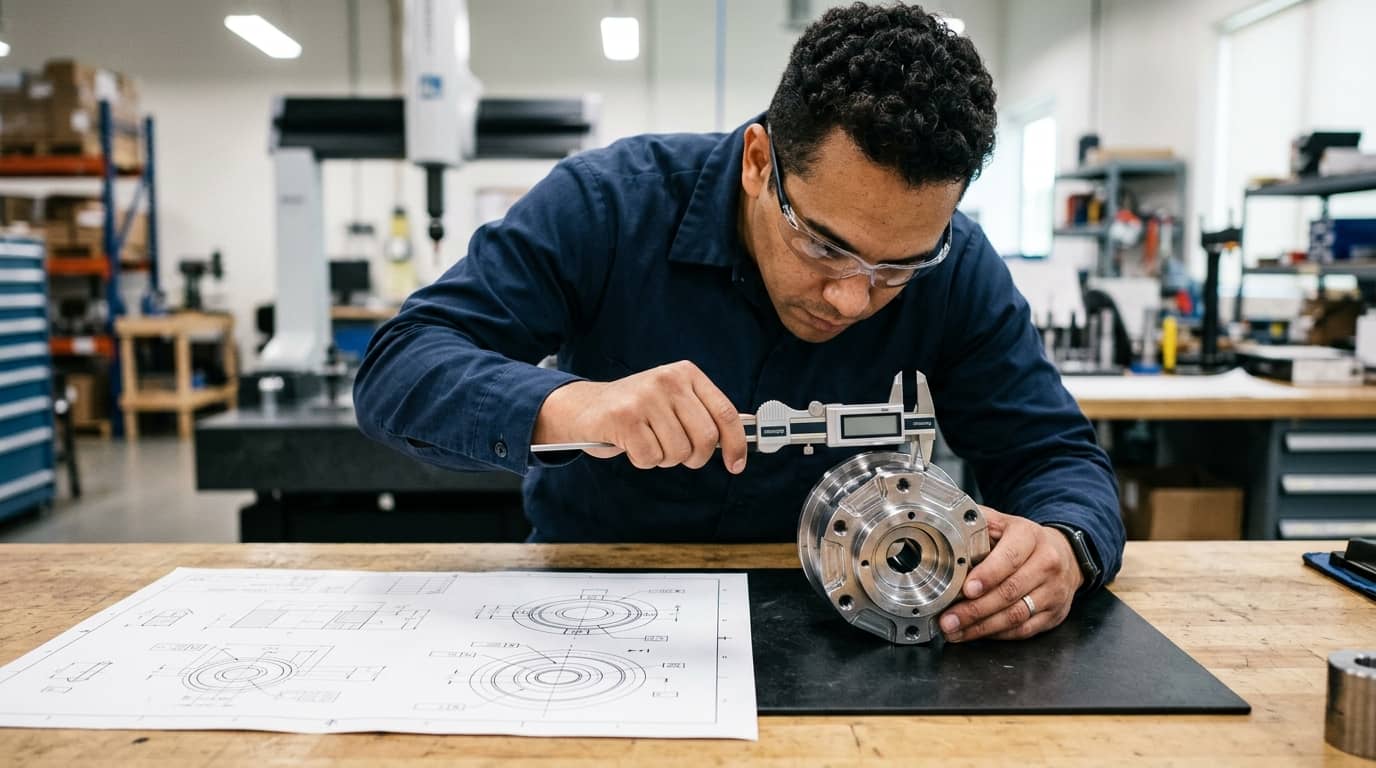
How your team learns in practice Piping Engineer Course
How your team practices Piping Engineer Course
Professionals from these companies study at Dedika



Course content
8 Chapters • 38 LessonsDuration between 4 and 360 hours (you decide)
Chapter 1HideHide detailsSee detailsFoundations of Piping Engineering
Foundations of Piping Engineering
Lesson 1 • Core Piping Terminology and Concepts
Defines essential vocabulary: pipe vs. tube, nominal bore, schedule, and pressure class. Accurate terminology is required for all subsequent technical work in this course.
Lesson 2 • Piping Engineering Documentation
Covers the full document set produced by a piping engineer, from P&IDs to isometrics. Understanding document hierarchy prevents errors in design and construction phases.
Lesson 3 • Piping Codes and Standards Framework
Explains the hierarchy of international piping codes, standards, and owner specifications. Students learn to identify which standard governs design, fabrication, and inspection for a given service.
Lesson 4 • Piping Industry Overview and Roles
Introduces the scope of piping engineering across oil, gas, power, and chemical plants. Establishes how piping engineers interact with process, structural, and instrumentation disciplines.
Chapter 2HideHide detailsSee detailsPiping Materials and Components
Piping Materials and Components
Lesson 1 • Piping Specialties and Inline Items
Addresses strainers, sight glasses, expansion joints, and inline instruments as piping components. These items must be accounted for in stress analysis and layout design.
Lesson 2 • Pipe Fittings and Connections
Covers elbows, tees, reducers, flanges, and threaded connections with their dimensional standards. Proper fitting selection directly affects pressure integrity and layout efficiency.
Lesson 3 • Valve Types and Selection Criteria
Explains gate, globe, ball, butterfly, check, and control valve functions and end connections. Correct valve selection ensures operability, isolation, and flow control in every service.
Lesson 4 • Piping Material Specifications
Teaches how to read and write a piping material class or specification sheet. Material classes standardize component selection across an entire project.
Lesson 5 • Pipe Materials and Metallurgy Basics
Surveys carbon steel, alloy steel, stainless steel, and non-metallic pipe materials. Links material properties to service conditions such as high temperature, corrosion, and cryogenic duty.
Chapter 3HideHide detailsSee detailsFluid Mechanics for Piping Engineers
Fluid Mechanics for Piping Engineers
Lesson 1 • Fundamental Fluid Properties and Flow Regimes
Reviews density, viscosity, vapor pressure, and Reynolds number as inputs to piping calculations. Distinguishing laminar from turbulent flow determines which friction correlations apply.
Lesson 2 • Pump and Compressor System Hydraulics
Covers system curves, pump curves, and operating point determination for liquid and gas systems. Engineers use this knowledge to verify equipment selection and detect instability.
Lesson 3 • Transient Flow and Water Hammer
Explains pressure surge generation, wave speed, and mitigation strategies for liquid systems. Unmitigated water hammer causes pipe failures and valve damage.
Lesson 4 • Pressure Drop and Pipe Sizing
Applies the Darcy-Weisbach equation and Moody chart to calculate friction losses in straight pipe and fittings. Accurate pressure drop determines pump and compressor sizing.
Chapter 4HideHide detailsSee detailsPiping Layout and Plot Plan Design
Piping Layout and Plot Plan Design
Lesson 1 • Equipment Nozzle Orientation and Connections
Addresses nozzle orientation for vessels, heat exchangers, pumps, and compressors to optimize pipe routing. Incorrect nozzle orientation forces costly pipe loops and high stress loads.
Lesson 2 • Plot Plan Development Principles
Covers equipment spacing, hazardous area zoning, and prevailing wind orientation for plot plan design. A well-organized plot plan reduces pipe lengths and construction costs.
Lesson 3 • 3D Modeling and Layout Review
Introduces 3D plant design software workflows and clash detection for piping layout verification. Model-based reviews replace costly physical mock-ups and reduce field rework.
Lesson 4 • Pipe Routing Fundamentals
Establishes rules for routing pipes on pipe racks, sleepers, and underground to minimize stress and cost. Routing decisions made early prevent costly rework during detailed design.
Lesson 5 • Operability, Maintenance, and Safety in Layout
Integrates operator access, valve reach, instrument visibility, and emergency egress into layout decisions. Layouts that ignore operability create long-term safety and productivity problems.
Chapter 5HideHide detailsSee detailsPiping Design for Pressure and Temperature
Piping Design for Pressure and Temperature
Lesson 1 • Internal Pressure Design Calculations
Applies hoop stress equations to calculate minimum required wall thickness for straight pipe. This calculation is the basis for all pipe schedule and material selections.
Lesson 2 • High-Temperature and Creep Considerations
Addresses material strength reduction at elevated temperatures and creep damage accumulation. High-temperature piping requires special material grades and inspection intervals.
Lesson 3 • Branch Connections and Reinforcement
Covers area replacement method and reinforcing pad design for branch connections under pressure. Unreinforced branches are a common source of pressure boundary failures.
Lesson 4 • Low-Temperature and Cryogenic Piping
Explains ductile-to-brittle transition, impact testing requirements, and insulation for cold service. Brittle fracture is the primary failure mode in cryogenic piping.
Lesson 5 • External Pressure and Vacuum Design
Covers collapse pressure calculations and stiffening ring design for vacuum and external pressure service. External pressure failure is sudden and catastrophic without proper design.
Chapter 6HideHide detailsSee detailsPiping Stress Analysis Fundamentals
Piping Stress Analysis Fundamentals
Lesson 1 • Flexibility and Expansion Loop Design
Teaches how to provide thermal flexibility through loops, offsets, and expansion joints. Adequate flexibility prevents fatigue failure and excessive nozzle loads.
Lesson 2 • Stress Analysis Software Application
Demonstrates building a pipe stress model, applying loads, and interpreting output reports. Software proficiency enables engineers to analyze complex systems efficiently.
Lesson 3 • Sources of Pipe Stress and Loading
Identifies sustained, thermal, occasional, and dynamic loads acting on piping systems. Classifying loads correctly is the first step in any stress analysis workflow.
Lesson 4 • Code Stress Equations and Allowables
Applies code-defined stress equations for sustained, displacement, and occasional load cases. Comparing calculated stresses to allowables determines system acceptability.
Lesson 5 • Pipe Supports: Types and Selection
Covers rigid supports, spring hangers, guides, anchors, and snubbers and their roles in controlling pipe movement. Support selection directly affects stress distribution and equipment nozzle loads.
Chapter 7HideHide detailsSee detailsPiping Inspection, Testing, and Integrity
Piping Inspection, Testing, and Integrity
Lesson 1 • Corrosion Mechanisms and Monitoring
Identifies internal and external corrosion mechanisms relevant to process piping and their monitoring methods. Early corrosion detection prevents unplanned shutdowns and safety incidents.
Lesson 2 • Fitness-for-Service and Remaining Life
Applies fitness-for-service assessment levels to evaluate corroded or damaged piping for continued operation. This analysis supports run-repair-replace decisions and maintenance planning.
Lesson 3 • Pressure Testing Procedures
Covers hydrostatic, pneumatic, and leak testing procedures including test pressure calculation and safety precautions. Pressure testing is the final verification of pressure boundary integrity.
Lesson 4 • Weld Quality and Acceptance Criteria
Defines weld defect types, code acceptance criteria, and weld procedure qualification requirements. Weld quality directly determines the pressure integrity of the entire piping system.
Lesson 5 • Non-Destructive Examination Methods
Surveys radiographic, ultrasonic, magnetic particle, liquid penetrant, and visual examination techniques. Selecting the correct NDE method depends on weld type, material, and defect orientation.
Chapter 8HideHide detailsSee detailsAdvanced Piping Engineering and Project Execution
Advanced Piping Engineering and Project Execution
Lesson 1 • FEED and Detailed Design Workflows
Maps the piping engineering deliverables, review gates, and interdisciplinary interfaces across FEED and detailed design phases. Understanding phase transitions prevents scope gaps and rework.
Lesson 2 • Construction Support and Commissioning
Defines the piping engineer's role during fabrication, erection, pre-commissioning, and startup activities. Active construction support reduces field queries and ensures design intent is achieved.
Lesson 3 • Vibration Analysis and Acoustic Fatigue
Addresses flow-induced vibration, mechanical resonance, and acoustic fatigue in high-velocity gas lines. Vibration failures are a leading cause of small-bore piping leaks in operating plants.
Lesson 4 • Slug Flow and Multiphase Piping Design
Covers slug flow regimes, slug force calculation, and structural response for multiphase pipelines and risers. Slug forces must be included in both stress analysis and support design.
Lesson 5 • Piping Engineering Management and QA
Covers man-hour estimation, schedule development, quality assurance plans, and vendor document review for piping packages. Engineering management skills determine project delivery success.
Your valid completion certificate
This course is for you:
Recent engineering graduates seeking a structured entry into industrial piping roles.
Mechanical engineers transitioning from product design into plant or process engineering.
Process engineers who want deeper fluency in piping systems and design deliverables.
Instrumentation or structural engineers expanding their interdisciplinary coordination skills.
Mid-career piping drafters ready to step into a full engineering responsibility role.
Construction supervisors building the technical foundation to move into design engineering.
Related Courses




FAQ
Who is Dedika?
Is the certificate valid in the United States?
Are the courses free?
What is the course workload?
What are the courses like?
How do the courses work?
What is the duration of the courses?
What is the cost or price of the courses?
What is an EAD or online course and how does it work?
PDF Course