
Sterilization Course
Master every aspect of sterilisation science, from microbiology fundamentals to advanced validation protocols. This course equips healthcare and medical device professionals with the technical knowledge and practical skills needed to ensure patient safety and regulatory compliance. Whether you work in a sterile processing department or a manufacturing facility, you will gain the expertise to confidently manage sterilisation processes at every level.
What you will learn:
This course covers the full sterilisation workflow, starting with microbiology essentials and contamination control, then moving through heat, chemical, and radiation sterilisation methods. You will learn how to validate sterilisation processes using IQ, OQ, and PQ protocols and how to maintain ongoing process control with statistical monitoring tools. Cleaning validation, packaging integrity, and sterile storage standards are addressed in detail. The course also covers regulatory frameworks, risk management using FMEA, and emerging technologies such as supercritical CO2 and digital monitoring systems. By the end, you will have the knowledge to manage compliant sterilisation operations and lead quality improvement initiatives.
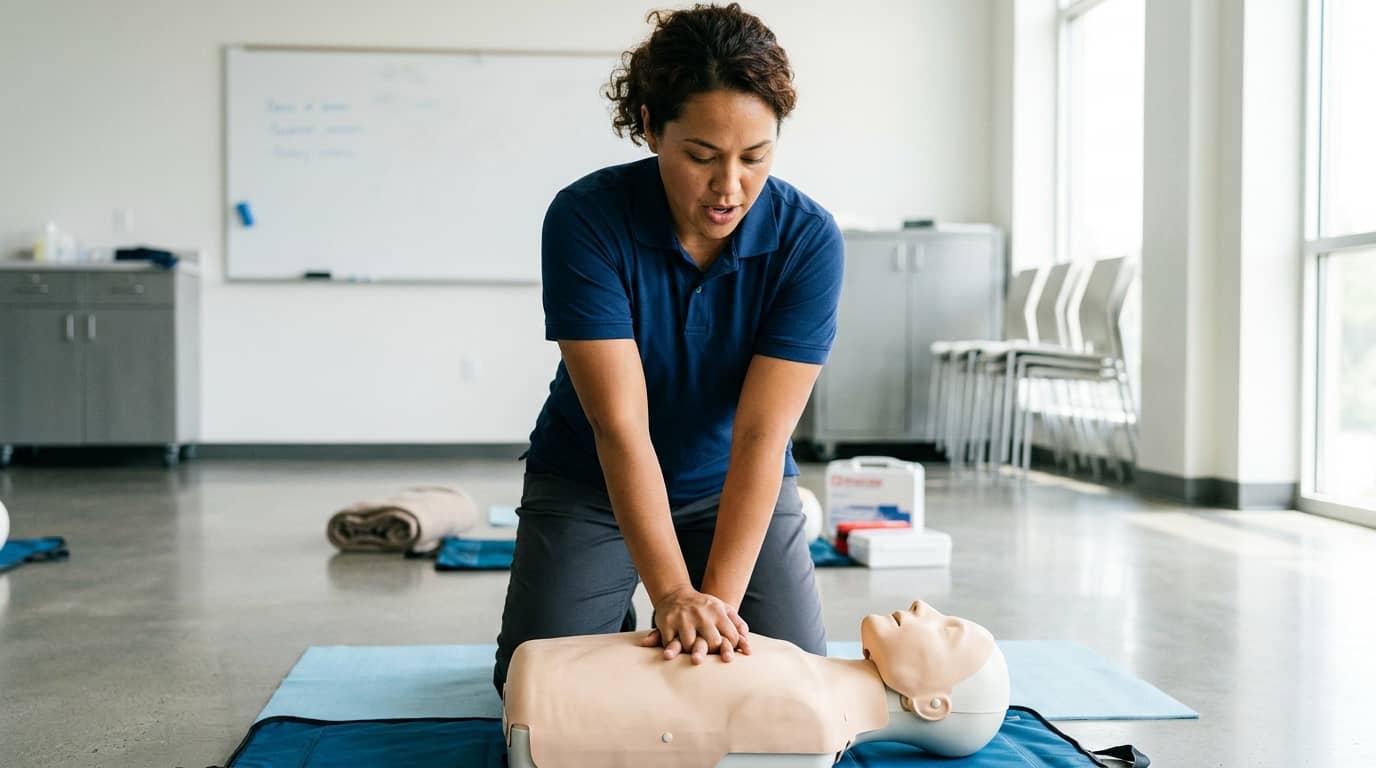
How you study in practice Sterilization Course
How you practise Sterilization Course
For companies looking to train their teams
With Dedika for businesses, the course includes exercises and examples tailored to your company and its specific needs.

Course content
8 Chapters • 38 LessonsDuration between 4 and 360 hours (you decide)
Chapter 1HideHide detailsSee detailsFoundations of Sterilization Science
Foundations of Sterilization Science
Lesson 1 • Overview of Sterilization Methods
Surveys all major sterilization modalities and their appropriate applications. Builds a comparative mental model students will expand in subsequent chapters.
Lesson 2 • Microbiology Essentials for Sterilization
Covers microbial taxonomy, cell structure, and resistance hierarchy. Provides the biological foundation needed to understand why different sterilization methods target different organisms.
Lesson 3 • Regulatory and Standards Framework
Introduces international sterilization standards and regulatory expectations. Students identify the governing documents that shape sterilization validation and routine practice.
Lesson 4 • Defining Sterility and Contamination
Clarifies the concept of sterility assurance and contamination risk. Students connect theoretical definitions to practical quality standards used in healthcare and industry.
Chapter 2HideHide detailsSee detailsCleaning, Decontamination, and Preparation
Cleaning, Decontamination, and Preparation
Lesson 1 • Inspection and Functional Testing
Addresses visual inspection, magnification tools, and functional checks after cleaning. Students apply acceptance criteria to determine device suitability for sterilization.
Lesson 2 • Why Cleaning Precedes Sterilization
Explains how organic soil and biofilm interfere with sterilant penetration and efficacy. Establishes cleaning as the most critical step in the reprocessing chain.
Lesson 3 • Packaging for Sterilization
Covers packaging material types, sealing integrity, and sterile barrier system requirements. Students design packaging configurations that maintain sterility through distribution.
Lesson 4 • Cleaning Validation and Verification
Teaches TOC, protein, and endotoxin testing methods for cleaning validation. Students design validation protocols that demonstrate consistent cleaning performance.
Lesson 5 • Manual and Automated Cleaning Methods
Covers manual scrubbing, ultrasonic cleaning, and automated washer-disinfectors. Students select and apply the appropriate method based on device design and soil type.
Chapter 3HideHide detailsSee detailsHeat Sterilization Methods and Principles
Heat Sterilization Methods and Principles
Lesson 1 • Dry Heat Sterilization
Addresses dry heat mechanisms, equipment types, and appropriate material applications. Students distinguish dry heat from moist heat and apply correct parameters.
Lesson 2 • Autoclave Equipment and Cycle Types
Covers autoclave design, components, and standard cycle configurations. Students learn to match cycle type to load characteristics for effective sterilization.
Lesson 3 • Heat Sterilization Monitoring and Failure
Teaches physical, chemical, and biological monitoring of heat cycles. Students identify failure indicators and apply corrective actions to maintain sterility assurance.
Lesson 4 • Moist Heat Sterilization Fundamentals
Explains steam sterilization mechanisms and the role of saturated steam. Connects thermodynamic principles to autoclave cycle design and microbial kill kinetics.
Chapter 4HideHide detailsSee detailsChemical Sterilization and High-Level Disinfection
Chemical Sterilization and High-Level Disinfection
Lesson 1 • Chemical Agent Mechanisms of Action
Explains how chemical sterilants damage microbial structures at the molecular level. Provides the mechanistic basis for understanding agent selection and concentration requirements.
Lesson 2 • Chemical Safety and Waste Management
Covers personal protective equipment, spill response, and chemical waste disposal for sterilants. Students integrate safety practices into daily chemical sterilization workflows.
Lesson 3 • Ethylene Oxide Sterilization
Covers EO sterilization cycle parameters, aeration requirements, and residual limits. Students apply safety protocols and understand regulatory limits for EO residuals.
Lesson 4 • High-Level Disinfection Agents and Processes
Distinguishes high-level disinfection from sterilization and covers glutaraldehyde, OPA, and peracetic acid. Students apply correct contact times and reprocessing protocols.
Lesson 5 • Hydrogen Peroxide and Plasma Systems
Addresses vaporized hydrogen peroxide and plasma sterilization technology and applications. Students evaluate material compatibility and cycle performance for heat-sensitive devices.
Chapter 5HideHide detailsSee detailsRadiation Sterilization Technologies
Radiation Sterilization Technologies
Lesson 1 • Electron Beam and X-Ray Sterilization
Addresses accelerator-based sterilization modalities and their throughput advantages. Students compare penetration depth, dose rate, and product suitability across modalities.
Lesson 2 • Dosimetry and Dose Setting
Teaches dosimeter types, placement strategies, and minimum dose verification. Students apply bioburden-based and VDmax methods to establish and verify sterilization doses.
Lesson 3 • Radiation Physics and Microbial Kill
Explains ionising radiation types, energy transfer, and DNA damage mechanisms. Establishes the physical basis for dose-response relationships used in radiation sterilization.
Lesson 4 • Gamma Radiation Sterilization
Covers cobalt-60 source technology, facility design, and dose mapping. Students understand how product density and geometry affect dose distribution.
Lesson 5 • Material Compatibility and Product Effects
Examines radiation-induced polymer degradation, colour changes, and functional property shifts. Students screen materials and design studies to confirm post-irradiation product integrity.
Chapter 6HideHide detailsSee detailsSterilization Validation and Process Control
Sterilization Validation and Process Control
Lesson 1 • Installation and Operational Qualification
Covers equipment installation checks, calibration, and operational performance testing. Students execute IQ and OQ protocols to confirm equipment meets design specifications.
Lesson 2 • Validation Concepts and Regulatory Expectations
Defines validation, verification, and qualification within a regulatory context. Students distinguish process validation from routine monitoring and understand documentation expectations.
Lesson 3 • Routine Process Monitoring and Control
Establishes ongoing monitoring requirements, control charts, and out-of-specification response. Students implement systems that detect process drift before sterility is compromised.
Lesson 4 • Performance Qualification and Load Studies
Addresses loaded chamber studies, worst-case load selection, and biological indicator placement. Students design PQ studies that demonstrate consistent lethality across the full load.
Lesson 5 • Validation Documentation and Reporting
Covers validation master plans, protocols, and final reports. Students produce compliant documentation packages that support regulatory review and internal audits.
Chapter 7HideHide detailsSee detailsSterile Processing Department Operations
Sterile Processing Department Operations
Lesson 1 • Workflow Management and Throughput
Addresses instrument tracking, tray assembly, and scheduling to meet surgical demand. Students optimise workflow to reduce turnaround time without compromising quality.
Lesson 2 • Staff Competency and Training Programmes
Covers competency assessment, orientation, and ongoing education for sterile processing staff. Students design training programmes that ensure consistent, error-free reprocessing performance.
Lesson 3 • Quality Management in Sterile Processing
Covers quality indicators, audit tools, and corrective action systems for sterile processing. Students build a quality management framework that drives continuous improvement.
Lesson 4 • Sterile Storage and Distribution
Addresses sterile storage conditions, shelf life, event-related sterility, and distribution controls. Students apply storage standards that preserve sterile barrier integrity until point of use.
Lesson 5 • Department Layout and Environmental Controls
Covers zone design, airflow, temperature, humidity, and traffic flow in sterile processing. Students apply environmental standards to prevent cross-contamination between zones.
Chapter 8HideHide detailsSee detailsAdvanced Topics and Emerging Sterilization Technologies
Advanced Topics and Emerging Sterilization Technologies
Lesson 1 • Ozone and Nitrogen Dioxide Sterilization
Addresses ozone and nitrogen dioxide as emerging low-temperature chemical sterilants. Students compare cycle parameters, material effects, and regulatory acceptance status.
Lesson 2 • Supercritical CO2 Sterilization
Introduces supercritical carbon dioxide as a low-temperature sterilization alternative. Students evaluate sporicidal efficacy, material compatibility, and industrial scalability.
Lesson 3 • Ultraviolet and Pulsed Light Technologies
Covers UV-C and pulsed light mechanisms, surface decontamination applications, and limitations. Students assess where these technologies complement rather than replace validated sterilization.
Lesson 4 • Digital Monitoring and Industry 4.0 Integration
Covers IoT sensors, real-time data analytics, and automated compliance reporting in sterilization. Students design digital monitoring architectures that enhance process control and traceability.
Lesson 5 • Single-Use Device Trends and Sustainability
Examines the growth of single-use devices and its impact on sterilization demand and waste. Students evaluate sustainability strategies and reprocessing of single-use devices.
Your valid completion certificate
This course is for you:
Sterile processing technicians: seeking to deepen their technical expertise and advance.
Medical device quality engineers: responsible for sterilisation validation in manufacturing settings.
Infection preventionists: wanting a stronger grasp of reprocessing science and standards.
Operating room nurses: handling instrument reprocessing and needing structured foundational knowledge.
Regulatory affairs specialists: managing sterilisation compliance submissions for medical device companies.
Career changers: entering healthcare or medical device industries from unrelated technical backgrounds.
What our students say
Your lessons are perfect. I purchased the one-year package and finally have the opportunity to follow various topics of interest without needing to change platforms... I'm grateful for everything you do, I've already recommended you to other people...

I like how the lessons are straight to the point and how I can change chapters and skip content I don't need.

I like the content and the way videos are presented and transcribed, which speeds up the process!

The platform is fast, simple to use. The diversity of content and complementary videos really help with learning.

Top qualifications


FAQ
Who is Dedika?
Is the certificate valid in South Africa?
Are the courses free?
What is the course workload?
What are the courses like?
How do the courses work?
What is the duration of the courses?
What is the cost or price of the courses?
What is an EAD or online course and how does it work?
PDF Course