
Animal Acupuncture Course
Master veterinary acupuncture from foundational theory to advanced clinical application across multiple species. This comprehensive course equips licensed veterinary professionals with the diagnostic frameworks, needling techniques, and treatment protocols needed to deliver evidence-based acupuncture care. Expand your practice, improve patient outcomes, and earn the credentials that set you apart.
What you will learn:
Gain a thorough understanding of Traditional Chinese Veterinary Medicine, covering Qi theory, Yin-Yang balance, and the Five Elements for animal patients. Learn to locate acupuncture points on horses, dogs, cats, and cattle using transpositional methods and species-specific landmarks. The course includes dry needling, electroacupuncture, aquapuncture, moxibustion, and laser acupuncture, enabling you to select the appropriate technique for each case. Develop diagnostic skills with tongue assessment, pulse evaluation, and the Eight Principles. Treatment modules guide protocol design for musculoskeletal, neurological, and internal medicine conditions. You will also acquire tools for client communication, informed consent, and integrating acupuncture into your practice.
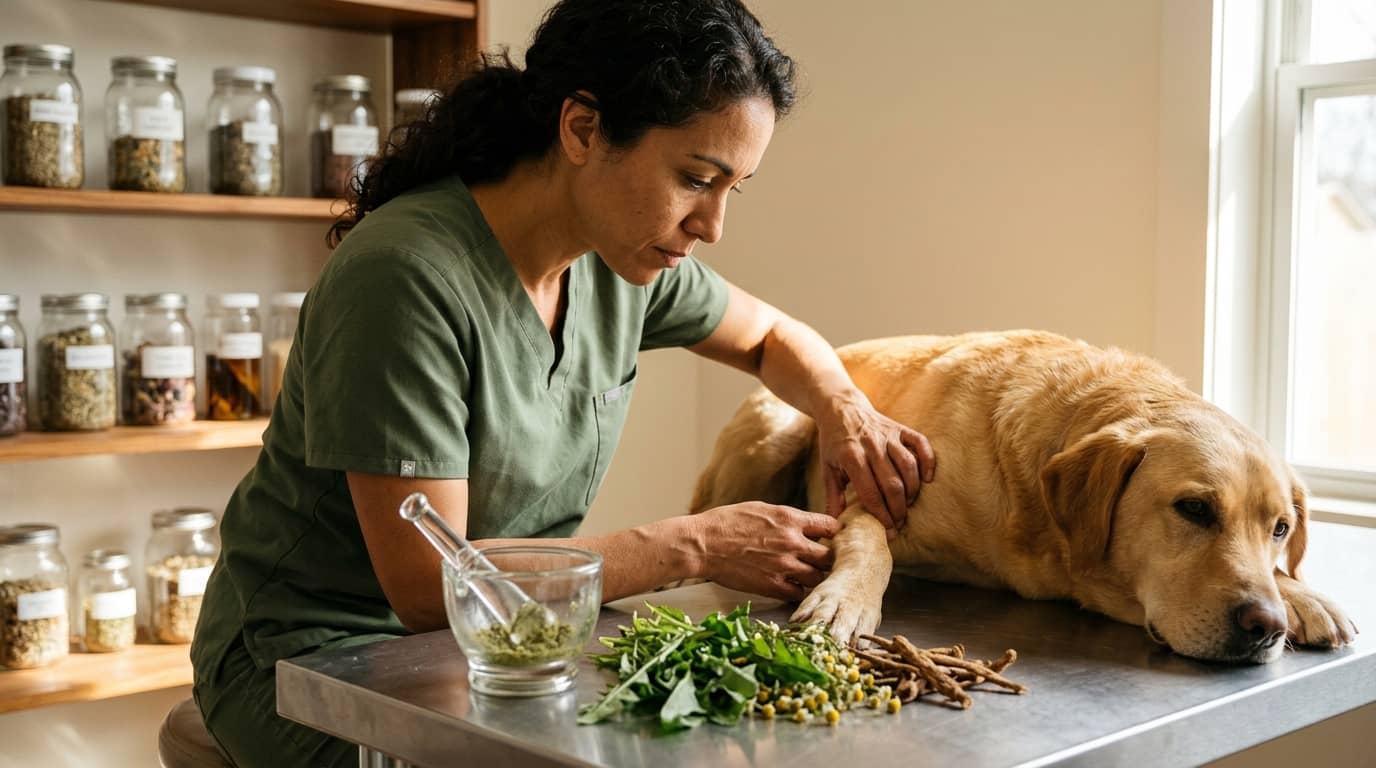
How you study in practice Animal Acupuncture Course
How you practise Animal Acupuncture Course
For companies looking to train their teams
With Dedika for businesses, the course includes exercises and examples tailored to your company and its specific needs.

Course content
8 Chapters • 38 LessonsDuration between 4 and 360 hours (you decide)
Chapter 1HideHide detailsSee detailsFoundations of Veterinary Acupuncture
Foundations of Veterinary Acupuncture
Lesson 1 • Regulatory and Ethical Framework
Covers licensure requirements, scope of practice, and ethical obligations for veterinary acupuncturists. Ensures students understand professional accountability before clinical work.
Lesson 2 • Core Principles of Traditional Chinese Medicine
Introduces Qi, Yin-Yang, and the Five Elements as applied to animals. These principles underpin diagnosis and point selection throughout the course.
Lesson 3 • History and Origins of Animal Acupuncture
Traces acupuncture from ancient Chinese veterinary texts to modern practice. Provides cultural and historical context that informs contemporary technique rationale.
Lesson 4 • Scientific Basis and Neurophysiology
Examines the neurological, biochemical, and physiological mechanisms behind acupuncture effects. Bridges traditional theory with evidence-based veterinary medicine.
Chapter 2HideHide detailsSee detailsComparative Anatomy for Acupuncture
Comparative Anatomy for Acupuncture
Lesson 1 • Species-Specific Anatomical Differences
Compares anatomy across equine, canine, feline, and bovine patients. Highlights structural differences that alter point location and needle angle.
Lesson 2 • Nervous System and Vascular Anatomy
Maps peripheral nerves and blood vessels near acupuncture points. Students learn to avoid critical structures during needle insertion.
Lesson 3 • Palpation and Landmark Identification
Develops hands-on skills for locating bony and soft-tissue landmarks on live animals. Palpation accuracy directly determines point location reliability.
Lesson 4 • Musculoskeletal Anatomy Review
Reviews bones, joints, and muscles relevant to acupuncture point location. Accurate anatomical knowledge prevents needle injury and improves treatment precision.
Chapter 3HideHide detailsSee detailsAcupuncture Point Location and Meridians
Acupuncture Point Location and Meridians
Lesson 1 • Transpositional Point Location Methods
Teaches the transpositional system for mapping human points onto animal anatomy. This method enables systematic point location across species.
Lesson 2 • Trunk, Head, and Governing Vessel Points
Locates points along the back, abdomen, and head including Governing and Conception Vessels. These points are critical for musculoskeletal and neurological conditions.
Lesson 3 • Meridian System Overview
Introduces the twelve primary and eight extraordinary meridians and their pathways. Understanding meridian flow is prerequisite to selecting clinically effective points.
Lesson 4 • Extra and Empirical Points
Introduces clinically validated extra points not on primary meridians. These points expand treatment options for specific conditions encountered in practice.
Lesson 5 • Forelimb and Hindlimb Meridian Points
Covers point location on all four limbs for equine and small animal patients. Limb points are among the most frequently used in clinical practice.
Chapter 4HideHide detailsSee detailsNeedling Techniques and Equipment
Needling Techniques and Equipment
Lesson 1 • Aseptic Technique and Infection Control
Establishes protocols for sterile needle handling, site preparation, and waste disposal. Strict asepsis prevents iatrogenic infection in animal patients.
Lesson 2 • Electroacupuncture Equipment and Application
Introduces electrical stimulation units, waveforms, and frequency selection for enhanced analgesia. Electroacupuncture extends treatment options for pain and neurological cases.
Lesson 3 • Acupuncture Needle Types and Selection
Compares needle gauges, lengths, and materials for different species and tissue depths. Correct needle selection reduces animal patient discomfort and improves therapeutic effect.
Lesson 4 • Basic Insertion and Manipulation Techniques
Teaches insertion angles, depths, and manual stimulation methods including tonification and sedation. Proper technique elicits De Qi and optimises treatment outcomes.
Lesson 5 • Aquapuncture and Implant Techniques
Covers injection of sterile solutions and semi-permanent implants at acupuncture points. These techniques provide prolonged stimulation between treatment sessions.
Chapter 5HideHide detailsSee detailsTraditional Chinese Veterinary Diagnosis
Traditional Chinese Veterinary Diagnosis
Lesson 1 • Eight Principles Pattern Diagnosis
Applies the Eight Principles—Interior/Exterior, Hot/Cold, Excess/Deficiency, Yin/Yang—to classify conditions. This framework organises clinical findings into actionable treatment strategies.
Lesson 2 • Four Examinations in Animals
Adapts the four TCVM examinations—looking, listening, asking, and touching—to veterinary patients. These examinations form the data-gathering foundation for pattern diagnosis.
Lesson 3 • Tongue and Pulse Diagnosis
Teaches tongue color, coating, and moisture assessment alongside pulse quality evaluation. These findings directly guide pattern identification and point selection.
Lesson 4 • Zang-Fu Organ Pattern Diagnosis
Identifies organ system imbalances underlying clinical presentations in animals. Organ patterns refine the Eight Principles diagnosis for precise point prescription.
Lesson 5 • Integrating TCVM and Western Diagnoses
Combines conventional veterinary diagnoses with TCVM pattern findings for a dual-diagnosis approach. Integration ensures acupuncture complements rather than conflicts with standard care.
Chapter 6HideHide detailsSee detailsTreatment Planning and Point Prescription
Treatment Planning and Point Prescription
Lesson 1 • Neurological and Internal Medicine Protocols
Prescribes acupuncture for intervertebral disc disease, seizures, and gastrointestinal disorders. These protocols extend acupuncture's role beyond musculoskeletal into systemic conditions.
Lesson 2 • Principles of Point Selection
Establishes rules for selecting local, adjacent, and distal points based on pattern and condition. Systematic selection logic ensures treatments are targeted and reproducible.
Lesson 3 • Designing a Treatment Protocol
Guides students through structuring session frequency, point quantity, and technique choices. A well-designed protocol balances therapeutic intensity with animal patient tolerance.
Lesson 4 • Modifying Plans for Special Populations
Adapts treatment plans for geriatric, pediatric, pregnant, and critically ill animals. Special populations require modified intensity, point selection, and session duration.
Lesson 5 • Musculoskeletal Treatment Protocols
Develops evidence-based point prescriptions for arthritis, back pain, and lameness. Musculoskeletal conditions represent the most common acupuncture referrals in veterinary practice.
Chapter 7HideHide detailsSee detailsClinical Application Across Species
Clinical Application Across Species
Lesson 1 • Canine Acupuncture Practice
Delivers acupuncture to dogs across common presentations including IVDD, osteoarthritis, and anxiety. Canine compliance techniques and positioning are emphasized for treatment success.
Lesson 2 • Bovine and Exotic Species Practice
Extends acupuncture principles to cattle, small ruminants, and select exotic species. Students learn to adapt point location and technique to non-standard anatomical presentations.
Lesson 3 • Equine Acupuncture Practice
Applies point location and needling to horses for performance, pain, and neurological conditions. Equine patients require specific restraint and behavioral management strategies.
Lesson 4 • Managing Adverse Events and Complications
Identifies, prevents, and manages needle-related complications including broken needles and infection. Competent adverse event management is essential for animal patient safety and professional credibility.
Lesson 5 • Feline Acupuncture Practice
Adapts techniques for the unique behavioral and physiological characteristics of cats. Feline patients demand minimal restraint and rapid, precise needle placement.
Chapter 8HideHide detailsSee detailsAdvanced Techniques and Integrative Practice
Advanced Techniques and Integrative Practice
Lesson 1 • Building an Integrative Veterinary Practice
Covers practice integration strategies, client communication, and referral network development. A sustainable practice requires both clinical excellence and effective professional positioning.
Lesson 2 • Moxibustion and Thermal Therapies
Applies moxa and heat-based stimulation to enhance acupuncture effects in Cold and Deficiency patterns. Thermal therapies complement needling for chronic and geriatric conditions.
Lesson 3 • Complex Case Management
Applies integrative reasoning to multi-diagnosis cases with competing treatment priorities. Students practice clinical decision-making under realistic constraints of time and animal patient tolerance.
Lesson 4 • Laser Acupuncture and Photobiomodulation
Uses low-level laser therapy to stimulate acupuncture points without needles. Laser acupuncture is valuable for needle-averse animal patients and superficial point stimulation.
Lesson 5 • Acupressure and Tui-Na Integration
Incorporates manual acupressure and Tui-Na massage as adjuncts to needle-based treatment. These techniques extend therapeutic contact and support owner home-care programs.
Your valid completion certificate
This course is for you:
Small animal veterinarian: seeking drug-free options for chronic pain patients.
Equine practitioner: wanting to address performance and lameness cases holistically.
Veterinary rehabilitation therapist: looking to expand beyond physical modalities alone.
Mixed-practice vet: aiming to differentiate their rural clinic with integrative services.
Veterinary specialist: exploring acupuncture as an adjunct for complex internal cases.
Recent veterinary graduate: building a distinctive clinical identity from the start.
What our students say
Your lessons are perfect. I purchased the one-year package and finally have the opportunity to follow various topics of interest without needing to change platforms... I'm grateful for everything you do, I've already recommended you to other people...

I like how the lessons are straight to the point and how I can change chapters and skip content I don't need.

I like the content and the way videos are presented and transcribed, which speeds up the process!

The platform is fast, simple to use. The diversity of content and complementary videos really help with learning.

Top qualifications




FAQ
Who is Dedika?
Is the certificate valid in South Africa?
Are the courses free?
What is the course workload?
What are the courses like?
How do the courses work?
What is the duration of the courses?
What is the cost or price of the courses?
What is an EAD or online course and how does it work?
PDF Course