
Canine Osteopathy Course
Canine Osteopathy Training gives you the clinical knowledge and hands-on techniques to assess and treat musculoskeletal dysfunction in dogs. From anatomy and biomechanics to condition-specific protocols, every module builds towards confident, independent practice. This is the comprehensive training serious animal therapy professionals choose.
What you will learn:
You will develop a thorough understanding of canine anatomy, osteopathic philosophy, and biomechanics as the foundation for all clinical work. You will learn systematic assessment protocols, refined palpation skills, and a full range of soft tissue and articular techniques. Condition-specific treatment protocols cover everything from spinal disc disease and hip dysplasia to neurological conditions and geriatric patients. You will also gain skills in rehabilitation exercise, sports performance care, and professional practice management. By the end, you will be equipped to assess, treat, and manage canine patients from initial consultation through discharge.
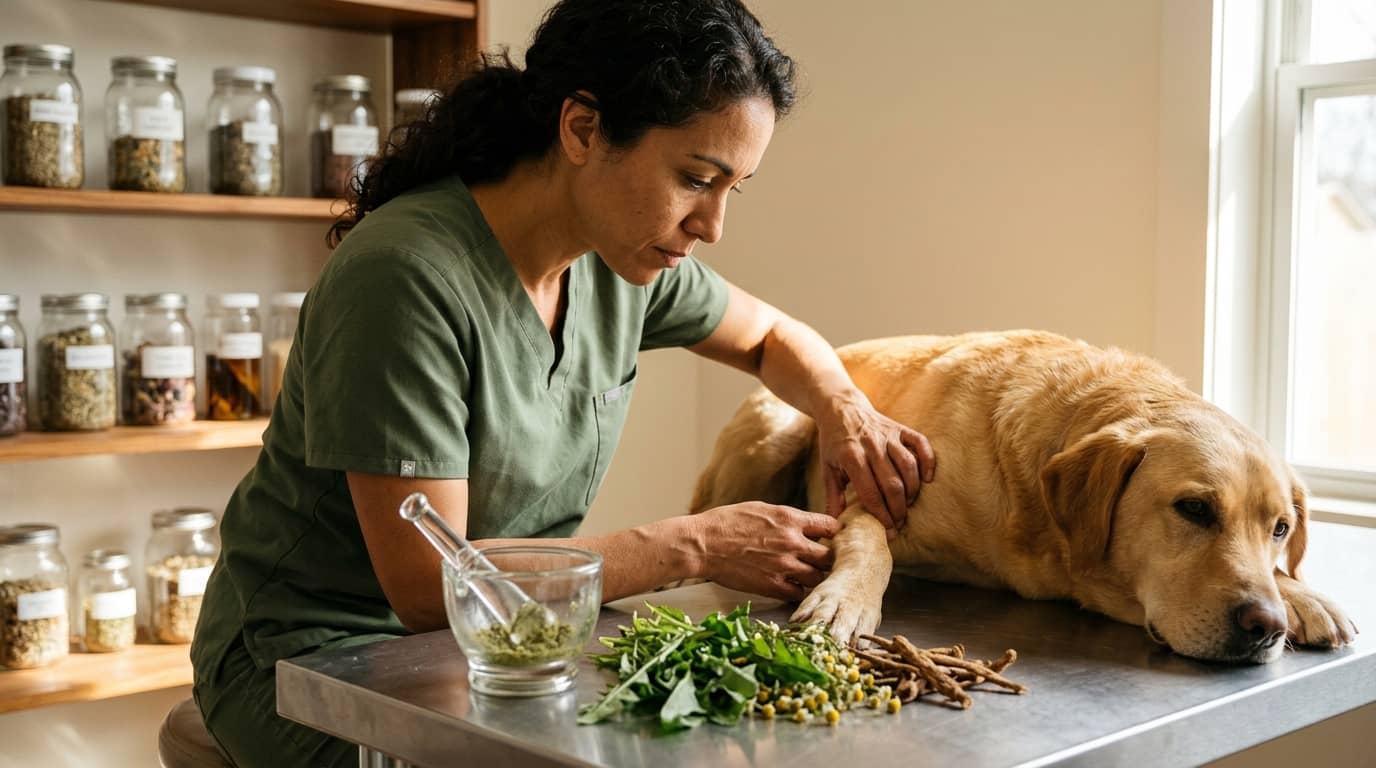
How you study in practice Canine Osteopathy Course
How you practise Canine Osteopathy Course
For companies looking to train their teams
With Dedika for businesses, the course includes exercises and examples tailored to your company and its specific needs.

Course content
8 Chapters • 39 LessonsDuration between 4 and 360 hours (you decide)
Chapter 1HideHide detailsSee detailsFoundations of Canine Anatomy
Foundations of Canine Anatomy
Lesson 1 • Muscular Anatomy and Function
Examines major muscle groups, fibre orientation, and functional roles in canine movement. Links muscle anatomy to common tension patterns addressed in osteopathy.
Lesson 2 • Skeletal System Overview
Covers the axial and appendicular skeleton, bone types, and joint classifications. Provides the structural map required for all subsequent palpation and treatment work.
Lesson 3 • Comparative Anatomy Considerations
Highlights anatomical differences across canine breeds and sizes relevant to treatment planning. Prepares students to adapt assessment techniques to diverse patient morphology.
Lesson 4 • Neurological Anatomy Essentials
Introduces the peripheral and autonomic nervous systems relevant to canine osteopathic practice. Explains how neural pathways influence tissue tone and pain responses.
Lesson 5 • Connective Tissue Structures
Details fascia, ligaments, tendons, and joint capsules and their mechanical roles. Establishes the basis for understanding tensional networks treated osteopathically.
Chapter 2HideHide detailsSee detailsPrinciples of Osteopathic Philosophy
Principles of Osteopathic Philosophy
Lesson 1 • Core Osteopathic Principles
Presents the four foundational osteopathic principles and their application to animal patients. Frames the philosophical basis that distinguishes osteopathy from other manual therapies.
Lesson 2 • Somatic Dysfunction Theory
Defines somatic dysfunction, its diagnostic criteria, and its relevance to canine health. Connects dysfunction identification to the TART criteria used in clinical assessment.
Lesson 3 • Osteopathic Approach to Pain
Examines pain mechanisms, sensitisation, and the osteopathic perspective on pain management. Guides students in recognising pain behaviour in canine patients without verbal feedback.
Lesson 4 • Fascia and Tensegrity Models
Explores fascial continuity and tensegrity as explanatory models for whole-body dysfunction. Provides a mechanical rationale for treating distant sites from the primary complaint.
Chapter 3HideHide detailsSee detailsCanine Biomechanics and Gait
Canine Biomechanics and Gait
Lesson 1 • Spinal Biomechanics
Analyses vertebral motion segments, coupled movements, and load transfer through the spine. Directly informs assessment of spinal restrictions encountered in practice.
Lesson 2 • Normal Gait Patterns
Describes the four primary gaits, footfall sequences, and associated spinal motion. Establishes the baseline against which pathological movement is compared.
Lesson 3 • Gait Analysis Techniques
Introduces observational and instrumented gait analysis methods applicable in clinical settings. Trains students to document and interpret movement findings systematically.
Lesson 4 • Limb Biomechanics and Load Sharing
Examines forelimb and hindlimb kinetics, weight distribution, and compensatory loading patterns. Connects limb mechanics to common compensatory dysfunction patterns seen clinically.
Lesson 5 • Pathological Movement Patterns
Identifies lameness grades, compensatory postures, and movement asymmetries linked to dysfunction. Bridges biomechanical knowledge to clinical problem identification.
Chapter 4HideHide detailsSee detailsClinical Assessment and Palpation Skills
Clinical Assessment and Palpation Skills
Lesson 1 • Postural and Static Assessment
Teaches systematic observation of standing posture, weight bearing, and static alignment. Identifies postural asymmetries that guide palpatory examination priorities.
Lesson 2 • Palpation Fundamentals
Develops tactile sensitivity for tissue texture, temperature, moisture, and tension differences. Palpation accuracy is the core diagnostic skill in osteopathic practice.
Lesson 3 • Integrated Osteopathic Examination
Combines history, postural, palpatory, and motion findings into a complete osteopathic assessment. Trains students to prioritise findings and formulate a treatment hypothesis.
Lesson 4 • Motion Testing Techniques
Introduces passive and active motion testing of spinal and peripheral joints. Quantifies range, quality, and end-feel of motion to locate somatic dysfunction.
Lesson 5 • Case History and Subjective Assessment
Covers structured history-taking, owner interview techniques, and relevant medical background collection. Establishes the subjective data foundation for clinical reasoning.
Chapter 5HideHide detailsSee detailsSoft Tissue Techniques
Soft Tissue Techniques
Lesson 1 • Effleurage and Petrissage Methods
Covers stroking, kneading, and compression techniques for superficial and deep tissue layers. These foundational strokes prepare tissue for more specific osteopathic interventions.
Lesson 2 • Myofascial Release Techniques
Teaches direct and indirect myofascial release for resolving fascial restrictions. Connects fascial treatment to whole-body tensional balance and improved movement.
Lesson 3 • Muscle Energy and Inhibition
Introduces muscle energy techniques and neuromuscular inhibition for hypertonic muscle treatment. Explains post-isometric relaxation and reciprocal inhibition mechanisms.
Lesson 4 • Stretching and Mobilisation
Covers passive stretching, active-assisted stretching, and joint mobilisation within soft tissue treatment. Integrates stretching into treatment sequences for lasting tissue change.
Lesson 5 • Principles of Soft Tissue Work
Establishes the physiological rationale for soft tissue techniques including neurological and mechanical effects. Provides the theoretical basis for selecting and applying each technique.
Chapter 6HideHide detailsSee detailsArticular and Spinal Techniques
Articular and Spinal Techniques
Lesson 1 • Peripheral Joint Mobilisation
Covers mobilisation of shoulder, elbow, hip, stifle, and tarsal joints using accessory movement techniques. Addresses common peripheral joint restrictions encountered in canine patients.
Lesson 2 • Spinal Articulatory Techniques
Teaches rhythmic articulatory techniques for cervical, thoracic, and lumbar spinal regions. Articulatory methods restore motion without high-velocity forces, making them broadly applicable.
Lesson 3 • Craniosacral and Sutural Techniques
Introduces craniosacral rhythm assessment and gentle sutural techniques for the canine skull and sacrum. Provides a low-force approach for sensitive or acute patients.
Lesson 4 • High-Velocity Low-Amplitude Techniques
Introduces HVLA thrust techniques, their indications, contraindications, and safe application in dogs. Emphasises patient selection, positioning, and force control for safe delivery.
Lesson 5 • Joint Mobilisation Principles
Establishes the biomechanical and neurophysiological basis for joint mobilisation techniques. Defines graded mobilisation levels and their clinical indications.
Chapter 7HideHide detailsSee detailsCondition-Specific Treatment Protocols
Condition-Specific Treatment Protocols
Lesson 1 • Forelimb and Shoulder Conditions
Examines osteopathic treatment of shoulder instability, elbow dysplasia sequelae, and forelimb compensatory patterns. Addresses the high forelimb load-bearing demands in dogs.
Lesson 2 • Neurological Condition Management
Guides osteopathic support for patients with degenerative myelopathy, nerve root compression, and peripheral neuropathy. Defines the scope and limits of osteopathic intervention.
Lesson 3 • Hip and Hindlimb Conditions
Covers osteopathic approaches to hip dysplasia, cruciate injury sequelae, and hindlimb muscle dysfunction. Integrates joint, soft tissue, and compensatory pattern treatment.
Lesson 4 • Geriatric and Chronic Pain Patients
Adapts osteopathic techniques for elderly dogs with multi-site dysfunction, osteoarthritis, and chronic pain. Emphasises gentle dosage, comfort, and quality-of-life outcomes.
Lesson 5 • Spinal Conditions and Disc Disease
Addresses osteopathic management of intervertebral disc disease, spondylosis, and spinal stenosis. Teaches safe technique selection and contraindication management for spinal pathology.
Chapter 8HideHide detailsSee detailsClinical Reasoning and Practice Management
Clinical Reasoning and Practice Management
Lesson 1 • Outcome Measurement and Reassessment
Introduces validated outcome tools, reassessment protocols, and treatment modification strategies. Builds accountability and evidence of effectiveness into routine clinical practice.
Lesson 2 • Professional Ethics and Regulation
Addresses ethical principles, professional conduct standards, and regulatory requirements for animal therapy practice. Prepares students for responsible, compliant independent practice.
Lesson 3 • Interprofessional Collaboration
Develops skills for working alongside veterinarians, physiotherapists, and other animal health professionals. Defines referral criteria and communication standards for collaborative care.
Lesson 4 • Treatment Planning and Progression
Covers goal setting, session structuring, treatment frequency, and progression criteria. Ensures treatment plans are individualised, measurable, and responsive to patient progress.
Lesson 5 • Clinical Reasoning Frameworks
Teaches hypothesis-driven reasoning, pattern recognition, and evidence integration in clinical decision-making. Develops the analytical thinking required for complex or atypical cases.
Your valid completion certificate
This course is for you:
Veterinary nurses seeking to expand into manual therapy specialisation.
Animal physiotherapists wanting to add osteopathic methods to their toolkit.
Dog trainers and handlers ready to deepen their understanding of canine health.
Career changers from human healthcare transitioning into animal therapy practice.
Canine massage therapists looking to advance towards a higher clinical qualification.
Passionate dog owners pursuing a professional credential in animal rehabilitation.
What our students say
Your lessons are perfect. I purchased the one-year package and finally have the opportunity to follow various topics of interest without needing to change platforms... I'm grateful for everything you do, I've already recommended you to other people...

I like how the lessons are straight to the point and how I can change chapters and skip content I don't need.

I like the content and the way videos are presented and transcribed, which speeds up the process!

The platform is fast, simple to use. The diversity of content and complementary videos really help with learning.

Top qualifications




FAQ
Who is Dedika?
Is the certificate valid in South Africa?
Are the courses free?
What is the course workload?
What are the courses like?
How do the courses work?
What is the duration of the courses?
What is the cost or price of the courses?
What is an EAD or online course and how does it work?
PDF Course