
Equipment Inspection Course
Master the full scope of equipment inspection — from pre-use checks to advanced non-destructive testing — and build the technical skills employers trust. This course covers defect identification, regulatory compliance, documentation, and inspection program management. Whether you're entering the field or sharpening your expertise, this is the training that gets the job done right.
What you will learn:
This course covers every stage of the equipment inspection process, starting with inspector qualifications, regulatory frameworks, and professional ethics. You will learn how equipment degrades, how to identify failure modes, and how to plan and execute safe, thorough inspections. Hands-on visual and physical inspection techniques are paired with an introduction to non-destructive testing methods including ultrasonic, liquid penetrant, magnetic particle, and radiographic testing. You will also learn how to evaluate defects against acceptance criteria and produce clear, defensible inspection reports. The course extends into specialized topics such as pressure vessel inspection, electrical equipment, lifting and rigging, and digital inspection tools.
How you study in practice Equipment Inspection Course
How you practice Equipment Inspection Course
For companies looking to train their teams
With Dedika for businesses, the course includes exercises and examples tailored to your own business and the way your company needs.

Course Content
8 Chapters • 38 LessonsDuration between 4 and 360 hours (you decide)
Chapter 1HideHide detailsSee detailsFoundations of Equipment Inspection
Foundations of Equipment Inspection
Lesson 1 • Role and Purpose of Inspection
Defines why equipment inspection exists and what it protects. Connects inspector duties to safety, reliability, and regulatory compliance outcomes.
Lesson 2 • Types of Equipment Inspections
Distinguishes pre-use, periodic, and special inspections by trigger and scope. Builds a mental model for selecting the correct inspection type.
Lesson 3 • Inspector Qualifications and Ethics
Outlines the competencies, certifications, and ethical conduct expected of inspectors. Establishes professional accountability as a core inspection value.
Lesson 4 • Regulatory and Standards Overview
Surveys the regulatory landscape governing equipment inspection without citing specific codes. Connects compliance obligations to inspection planning and documentation.
Chapter 2HideHide detailsSee detailsEquipment Fundamentals and Failure Modes
Equipment Fundamentals and Failure Modes
Lesson 1 • Common Equipment Failure Modes
Catalogs failure modes by category and links each to observable indicators. Prepares inspectors to connect visual evidence to underlying failure mechanisms.
Lesson 2 • Mechanical Components and Systems
Introduces common mechanical assemblies found across industrial equipment. Provides the vocabulary needed to describe and document component conditions accurately.
Lesson 3 • Equipment Documentation and Nameplates
Teaches inspectors to read manufacturer data plates, manuals, and design specifications. Accurate interpretation of documentation anchors all subsequent inspection activities.
Lesson 4 • Materials and Their Properties
Covers metals, polymers, and composites used in equipment construction. Links material properties to expected wear patterns and inspection priorities.
Lesson 5 • Degradation and Wear Mechanisms
Explains corrosion, fatigue, erosion, and creep as primary degradation pathways. Inspectors use this knowledge to anticipate where defects are most likely to occur.
Chapter 3HideHide detailsSee detailsInspection Planning and Preparation
Inspection Planning and Preparation
Lesson 1 • Lockout and Energy Isolation Procedures
Covers energy control procedures required before inspecting powered equipment. Mastery of isolation procedures is a prerequisite for safe hands-on inspection.
Lesson 2 • Personal Protective Equipment Selection
Matches PPE types to inspection hazards identified during planning. Correct PPE selection protects inspectors without impeding their ability to perform thorough assessments.
Lesson 3 • Developing an Inspection Plan
Guides inspectors through scoping, scheduling, and structuring an inspection before arrival. A solid plan reduces omissions and improves consistency across inspectors.
Lesson 4 • Hazard Identification and Risk Assessment
Applies risk assessment methods to identify hazards present during inspection activities. Connects pre-inspection risk analysis to safe work planning and control measures.
Lesson 5 • Tools and Instruments for Inspection
Surveys hand tools, measuring instruments, and portable testing devices used in field inspections. Proper tool selection directly affects the accuracy and completeness of findings.
Chapter 4HideHide detailsSee detailsVisual and Physical Inspection Techniques
Visual and Physical Inspection Techniques
Lesson 1 • Physical and Tactile Assessment
Covers hands-on techniques including probing, tapping, and manual movement checks. Physical assessment reveals defects not visible to the eye, such as looseness or internal voids.
Lesson 2 • Surface Defect Identification
Trains inspectors to recognize cracks, pitting, deformation, and coating failures visually. Accurate defect identification is the foundation of all subsequent evaluation and reporting.
Lesson 3 • Systematic Visual Inspection Methods
Introduces structured scanning patterns and observation disciplines for visual inspection. Systematic methods reduce the chance of overlooking defects in complex equipment.
Lesson 4 • Operational Function Testing
Evaluates equipment performance under controlled operating conditions during inspection. Functional testing reveals defects that appear only when the equipment is energized or loaded.
Lesson 5 • Dimensional and Clearance Measurements
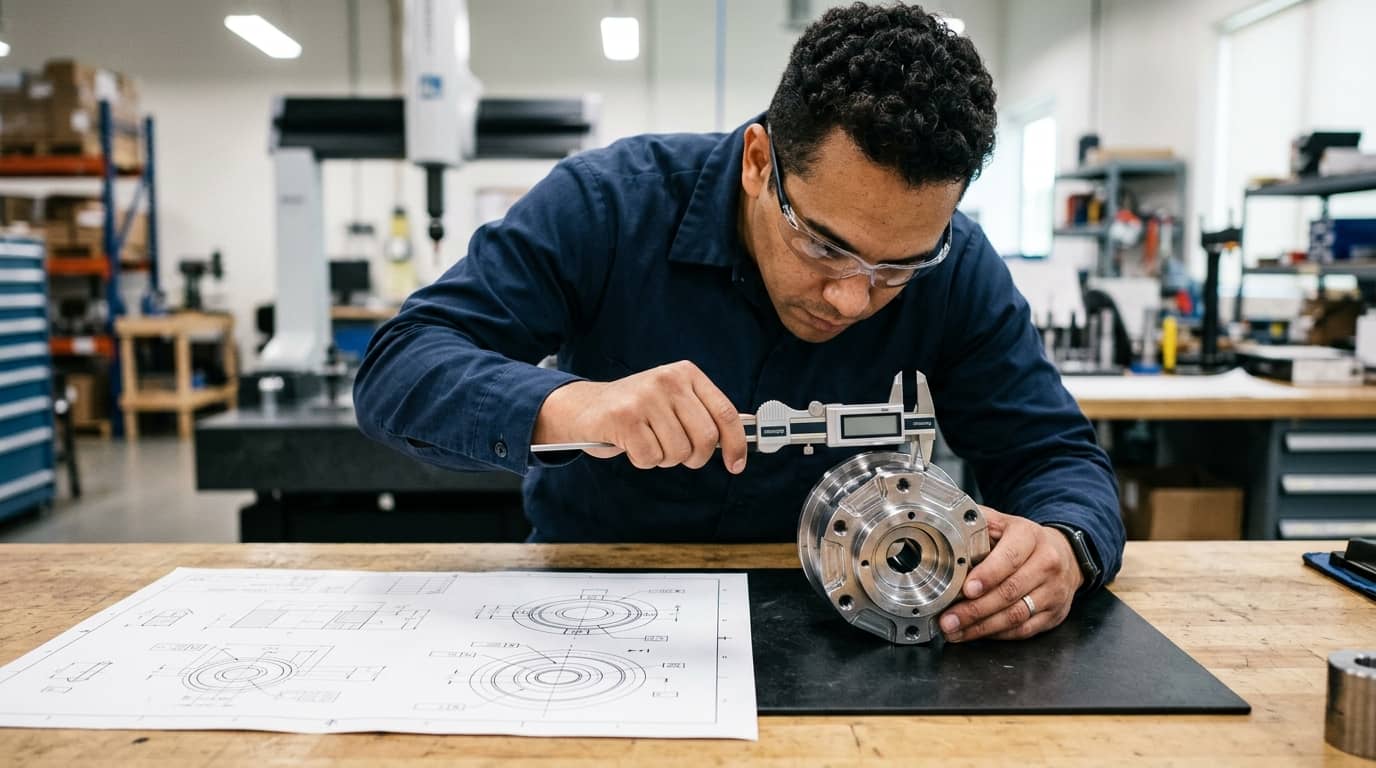
Applies measuring tools to verify dimensions, clearances, and alignment against specifications. Measurement data provides objective evidence of wear or deformation beyond acceptable limits.
Chapter 5HideHide detailsSee detailsNon-Destructive Testing Methods
Non-Destructive Testing Methods
Lesson 1 • Introduction to Non-Destructive Testing
Defines NDT, its advantages over destructive testing, and when it is required. Establishes the decision framework for choosing among available NDT methods.
Lesson 2 • Selecting and Combining NDT Methods
Teaches inspectors to match NDT methods to defect types and combine methods for comprehensive coverage. Effective method selection maximizes defect detection while controlling cost and time.
Lesson 3 • Radiographic Testing Overview
Introduces radiographic imaging for volumetric defect detection in welds and castings. Covers radiation safety requirements essential for any inspector working near radiographic operations.
Lesson 4 • Ultrasonic Testing Fundamentals
Explains sound wave propagation principles and basic ultrasonic testing techniques. Inspectors gain the foundation needed to interpret thickness readings and flaw signals.
Lesson 5 • Liquid Penetrant and Magnetic Particle Testing
Covers surface-sensitive NDT methods for detecting open and near-surface discontinuities. Inspectors learn application steps, interpretation, and limitations of each method.
Chapter 6HideHide detailsSee detailsDefect Evaluation and Acceptance Criteria
Defect Evaluation and Acceptance Criteria
Lesson 1 • Fitness-for-Service Assessment Basics
Introduces fitness-for-service concepts for evaluating equipment with known defects. Inspectors understand when to escalate to engineering assessment rather than applying standard criteria.
Lesson 2 • Accept, Monitor, and Reject Decisions
Provides a structured decision process for evaluating defects against applicable criteria. Inspectors learn to document the rationale for each disposition clearly and consistently.
Lesson 3 • Understanding Acceptance Criteria
Explains how acceptance criteria are established and where inspectors find them. Criteria from standards, manufacturer limits, and engineering judgments are distinguished and applied.
Lesson 4 • Defect Characterization and Sizing
Covers methods for accurately measuring and describing defects found during inspection. Precise characterization is required before any acceptance or rejection decision can be made.
Chapter 7HideHide detailsSee detailsInspection Documentation and Reporting
Inspection Documentation and Reporting
Lesson 1 • Principles of Effective Documentation
Establishes standards for accuracy, objectivity, and completeness in inspection records. Poor documentation undermines the value of even the most thorough physical inspection.
Lesson 2 • Photographic and Visual Evidence
Teaches techniques for capturing inspection photographs that clearly document defect evidence. Quality photographs reduce disputes and support remote review of inspection findings.
Lesson 3 • Field Notes and Data Recording
Covers techniques for capturing findings in the field using forms, sketches, and digital tools. Reliable field notes are the raw material from which formal reports are constructed.
Lesson 4 • Records Management and Retention
Covers systems for storing, retrieving, and retaining inspection records over equipment life cycles. Proper records management supports trend analysis, audits, and regulatory compliance.
Lesson 5 • Inspection Report Structure and Content
Defines the required sections of a formal inspection report and the content of each. A well-structured report enables readers to understand findings and act without ambiguity.
Chapter 8HideHide detailsSee detailsInspection Program Management
Inspection Program Management
Lesson 1 • Inspection Intervals and Scheduling
Establishes how inspection intervals are determined from standards, risk, and equipment history. Correct interval setting prevents both over-inspection waste and under-inspection risk.
Lesson 2 • Integrating Inspection with Asset Management
Connects inspection data to broader asset lifecycle and maintenance management systems. Integration maximizes the value of inspection findings for capital planning and reliability decisions.
Lesson 3 • Program Auditing and Continuous Improvement
Applies audit methods to evaluate inspection program effectiveness and identify gaps. Continuous improvement cycles ensure the program evolves with equipment changes and lessons learned.
Lesson 4 • Inspector Competency and Training Programs
Outlines how organizations develop, verify, and maintain inspector competency over time. A structured training program ensures consistent inspection quality across the workforce.
Lesson 5 • Risk-Based Inspection Planning
Applies risk ranking to prioritize inspection resources on the highest-consequence equipment. Risk-based planning improves safety outcomes while optimizing inspection costs.
Your valid completion certificate
This course is for you:
Maintenance technician: ready to formalize hands-on equipment knowledge into inspection credentials.
Safety officer: seeking deeper technical grounding to strengthen site compliance oversight.
Reliability engineer: wanting structured inspection methods to support asset management decisions.
Career changer: transitioning from a trade background into a dedicated inspection role.
Plant supervisor: building the skills to evaluate and manage their team's inspection quality.
Recent technical graduate: looking to enter the inspection field with a solid practical foundation.
What our students say
Your classes are perfect. I purchased the one-year package and finally have the opportunity to follow various topics of interest without needing to switch platforms... I thank you for everything you do, I've already recommended you to other people...

I like how the lessons are straight to the point and how I can switch chapters and skip content I don't need.

I like the content and the presentation style and video transcription, which speeds up the process!

The platform is fast, simple to use. The diversity of content and complementary videos really help with learning.

Top trainings




FAQ
Who is Dedika?
Is the certificate valid in United States?
Are the courses free?
What is the course workload?
What are the courses like?
How do the courses work?
What is the duration of the courses?
What is the cost or price of the courses?
What is an EAD or online course and how does it work?
PDF Course