
Industrial Mechanic and Assembler Course
Get the hands-on technical knowledge employers demand in industrial facilities. This course covers mechanical power transmission, hydraulic and pneumatic systems, precision alignment, lubrication, and preventive maintenance from the ground up. Whether you're entering the trades or upgrading your skills, you'll finish ready to work confidently on real industrial equipment.
What you will learn:
You will learn to read engineering drawings, select fasteners, and apply correct torque procedures on assembled machinery. The course covers belt drives, gearboxes, bearings, and shaft couplings, along with proper installation and troubleshooting methods for each. You will service hydraulic and pneumatic circuits, perform oil analysis, and manage lubrication schedules. Electrical fundamentals prepare you to safely interact with motors, sensors, and PLCs. Precision alignment, vibration analysis, and condition monitoring techniques round out your skill set. You will also build preventive maintenance schedules and use CMMS tools to track work orders and equipment history.
How you study in practice Industrial Mechanic and Assembler Course
How you practice Industrial Mechanic and Assembler Course
For companies looking to train their teams
With Dedika for businesses, the course includes exercises and examples tailored to your own business and the way your company needs.

Course Content
8 Chapters • 38 LessonsDuration between 4 and 360 hours (you decide)
Chapter 1HideHide detailsSee detailsFoundations of Industrial Mechanics
Foundations of Industrial Mechanics
Lesson 1 • Hand Tools and Measuring Instruments
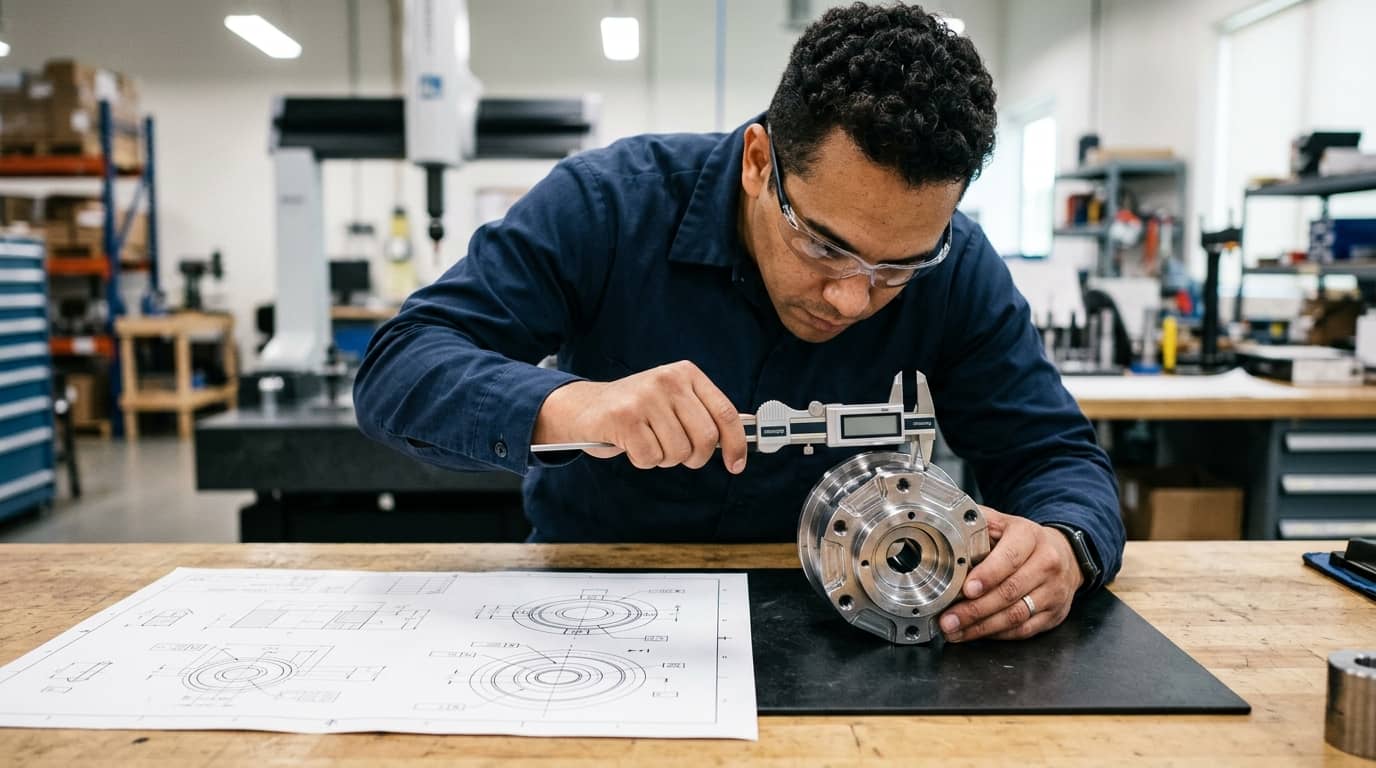
Introduces common hand tools and precision measuring devices used in assembly and maintenance. Proper selection and care of tools underpins accuracy in all mechanical tasks.
Lesson 2 • Fasteners and Joining Methods
Examines threaded fasteners, keys, pins, and adhesive joining techniques. Correct fastener selection and torque application prevent failures in assembled machinery.
Lesson 3 • Material Properties and Selection
Reviews metals, polymers, and composites used in industrial equipment. Understanding material behavior guides correct part selection and replacement decisions.
Lesson 4 • Engineering Drawings and Schematics
Teaches interpretation of technical drawings, tolerances, and assembly diagrams. Reading schematics accurately is essential for every assembly and repair task ahead.
Lesson 5 • Workplace Safety and Regulations
Covers hazard identification, personal protective equipment, and lockout/tagout procedures. Establishes the safety mindset required throughout all subsequent hands-on work.
Chapter 2HideHide detailsSee detailsMechanical Power Transmission Systems
Mechanical Power Transmission Systems
Lesson 1 • Bearings: Types and Installation
Identifies rolling-element and plain bearings, load ratings, and mounting methods. Proper installation and preload settings directly extend bearing service life.
Lesson 2 • Seals, Gaskets, and Leak Prevention
Addresses lip seals, O-rings, and static gaskets used to contain lubricants and fluids. Leak-free assemblies are critical for equipment reliability and environmental compliance.
Lesson 3 • Shafts and Shaft Couplings
Covers shaft types, alignment methods, and coupling selection for torque transmission. Misalignment is a leading cause of bearing failure, making this section foundational.
Lesson 4 • Belt and Chain Drives
Covers V-belt, synchronous belt, and roller chain systems including tensioning and sprocket alignment. Correct tension prevents slippage, wear, and unexpected downtime.
Lesson 5 • Gear Drives and Gearboxes
Explains spur, helical, bevel, and worm gear geometry and gear ratio calculations. Students disassemble and reassemble gearboxes following manufacturer specifications.
Chapter 3HideHide detailsSee detailsLubrication Systems and Fluid Management
Lubrication Systems and Fluid Management
Lesson 1 • Oil Analysis and Contamination Control
Introduces oil sampling, particle counting, and contamination identification techniques. Early detection of contamination prevents catastrophic component failures.
Lesson 2 • Lubricant Selection and Scheduling
Guides selection of oils and greases based on load, speed, and temperature. Scheduled lubrication intervals are mapped to equipment manufacturer requirements.
Lesson 3 • Manual and Automatic Lubrication Systems
Covers grease guns, oil cans, centralized systems, and automatic lubricators. Students service and troubleshoot each delivery method to ensure consistent lubricant supply.
Lesson 4 • Lubrication Fundamentals
Explains viscosity, film formation, and friction reduction principles. Understanding these concepts enables correct lubricant selection for any operating condition.
Chapter 4HideHide detailsSee detailsHydraulic Systems: Principles and Maintenance
Hydraulic Systems: Principles and Maintenance
Lesson 1 • Hydraulic Pumps and Motors
Identifies gear, vane, and piston pump designs and their performance characteristics. Students measure pump efficiency and recognize signs of internal wear.
Lesson 2 • Hydraulic Principles and Circuit Basics
Covers Pascal's law, flow, pressure, and power relationships in hydraulic circuits. These principles form the analytical basis for all hydraulic diagnosis tasks.
Lesson 3 • Hydraulic System Troubleshooting
Applies a structured diagnostic method to identify pressure loss, overheating, and erratic motion faults. Students use gauges and flow meters to isolate faulty components.
Lesson 4 • Control Valves and Actuators
Explains directional, pressure, and flow control valves and their role in circuit control. Correct valve adjustment ensures safe and precise actuator movement.
Lesson 5 • Hydraulic Fluid and Reservoir Maintenance
Covers fluid selection, reservoir inspection, and filter service intervals. Clean fluid at correct viscosity is the single greatest factor in hydraulic system longevity.
Chapter 5HideHide detailsSee detailsPneumatic Systems: Principles and Maintenance
Pneumatic Systems: Principles and Maintenance
Lesson 1 • Air Preparation and Distribution
Covers compressors, dryers, filters, regulators, and lubricators in the air supply chain. Properly conditioned air prevents valve and actuator failures downstream.
Lesson 2 • Pneumatic Circuit Troubleshooting
Applies leak detection, pressure testing, and logic tracing to diagnose pneumatic faults. Systematic diagnosis minimizes downtime and prevents repeat failures.
Lesson 3 • Pneumatic Valves and Actuators
Identifies directional, flow, and pressure control valves and pneumatic cylinder configurations. Students connect and adjust valves to achieve specified actuator motion profiles.
Lesson 4 • Compressed Air Principles
Reviews Boyle's law, pressure units, and airflow fundamentals relevant to pneumatic systems. A solid grasp of air behavior is required before working on live circuits.
Chapter 6HideHide detailsSee detailsElectrical Fundamentals for Mechanics
Electrical Fundamentals for Mechanics
Lesson 1 • Electric Motors and Starters
Covers induction motor construction, nameplate data, and starter circuit operation. Mechanics learn to check motor insulation and replace contactors and overload relays.
Lesson 2 • DC and AC Circuit Fundamentals
Reviews Ohm's law, series and parallel circuits, and AC waveform characteristics. These concepts enable mechanics to interpret wiring diagrams and meter readings accurately.
Lesson 3 • Sensors and Control Devices
Identifies proximity, photoelectric, and limit switch sensors used in automated machinery. Correct sensor alignment and wiring ensure reliable machine cycle control.
Lesson 4 • Introduction to PLC Operation
Explains PLC hardware, I/O modules, and basic ladder logic for maintenance purposes. Mechanics use PLC status indicators to identify faults without programming knowledge.
Lesson 5 • Electrical Safety and Lockout Procedures
Establishes arc flash awareness, voltage categories, and electrical lockout/tagout steps. Safe electrical practices protect mechanics during all maintenance activities.
Chapter 7HideHide detailsSee detailsPrecision Assembly and Alignment Techniques
Precision Assembly and Alignment Techniques
Lesson 1 • Vibration Analysis Basics
Introduces vibration frequency, amplitude, and phase as indicators of mechanical faults. Mechanics use handheld analyzers to detect imbalance, misalignment, and looseness.
Lesson 2 • Precision Measurement and Inspection
Uses surface plates, height gauges, and coordinate measuring to verify assembled dimensions. Inspection data confirms that assemblies meet design specifications before commissioning.
Lesson 3 • Geometric Dimensioning and Tolerancing
Applies GD&T symbols to interpret flatness, roundness, and positional tolerances on drawings. Accurate interpretation prevents assembly errors and costly rework.
Lesson 4 • Balancing Rotating Components
Explains static and dynamic imbalance and the correction methods used on fans and rotors. Balanced rotating parts reduce bearing loads and extend machine service life.
Lesson 5 • Shaft Alignment Methods
Covers rim-and-face, reverse dial, and laser alignment methods for coupled shafts. Achieving alignment within specification reduces vibration, bearing load, and seal wear.
Chapter 8HideHide detailsSee detailsPreventive and Predictive Maintenance
Preventive and Predictive Maintenance
Lesson 1 • Condition Monitoring Techniques
Applies vibration, thermography, ultrasound, and oil analysis to detect developing faults. Early fault detection allows planned repairs before failures cause production losses.
Lesson 2 • Maintenance Strategy Overview
Compares reactive, preventive, predictive, and reliability-centered maintenance strategies. Selecting the right strategy for each asset type optimizes cost and availability.
Lesson 3 • Computerized Maintenance Management
Introduces CMMS work order creation, asset history, and spare parts management functions. Accurate records improve planning, reduce inventory costs, and support audits.
Lesson 4 • Root Cause Analysis Methods
Applies the five-whys and fishbone diagram methods to identify failure root causes. Eliminating root causes prevents recurrence and reduces overall maintenance costs.
Lesson 5 • Preventive Maintenance Scheduling
Builds time-based and usage-based PM schedules using equipment data and failure history. Structured schedules prevent unplanned failures and support regulatory compliance.
Your valid completion certificate
This course is for you:
Entry-level factory worker: wants to move into a skilled trades role.
Recent high school graduate: exploring a well-paying career in manufacturing.
Military veteran: translating hands-on mechanical experience into civilian employment.
Production operator: ready to cross-train and take on maintenance responsibilities.
Career changer: leaving an unrelated field to pursue stable industrial work.
Maintenance helper: seeking structured knowledge to advance beyond basic tasks.
What our students say
Your classes are perfect. I purchased the one-year package and finally have the opportunity to follow various topics of interest without needing to switch platforms... I thank you for everything you do, I've already recommended you to other people...

I like how the lessons are straight to the point and how I can switch chapters and skip content I don't need.

I like the content and the presentation style and video transcription, which speeds up the process!

The platform is fast, simple to use. The diversity of content and complementary videos really help with learning.

Top trainings




FAQ
Who is Dedika?
Is the certificate valid in United States?
Are the courses free?
What is the course workload?
What are the courses like?
How do the courses work?
What is the duration of the courses?
What is the cost or price of the courses?
What is an EAD or online course and how does it work?
PDF Course