
Sterile Processing Tech Course
Launch your career in sterile processing with the hands-on knowledge employers demand. This course covers everything from infection prevention and decontamination to sterilization technologies and quality systems. You'll graduate ready to protect patients, pass your certification exam, and step confidently onto the job.
What you will learn:
This course walks you through every core responsibility of a sterile processing technician, starting with infection control fundamentals and department workflow. You'll learn how to decontaminate soiled instruments, assemble and package surgical sets, and operate steam and low-temperature sterilizers correctly. The curriculum also covers flexible endoscope reprocessing, sterile storage standards, and quality management practices. You'll study regulatory requirements, biological indicator monitoring, and how to respond to sterilization failures. By the end, you'll have the technical knowledge and practical skills needed to pursue national certification and succeed in a real sterile processing department.
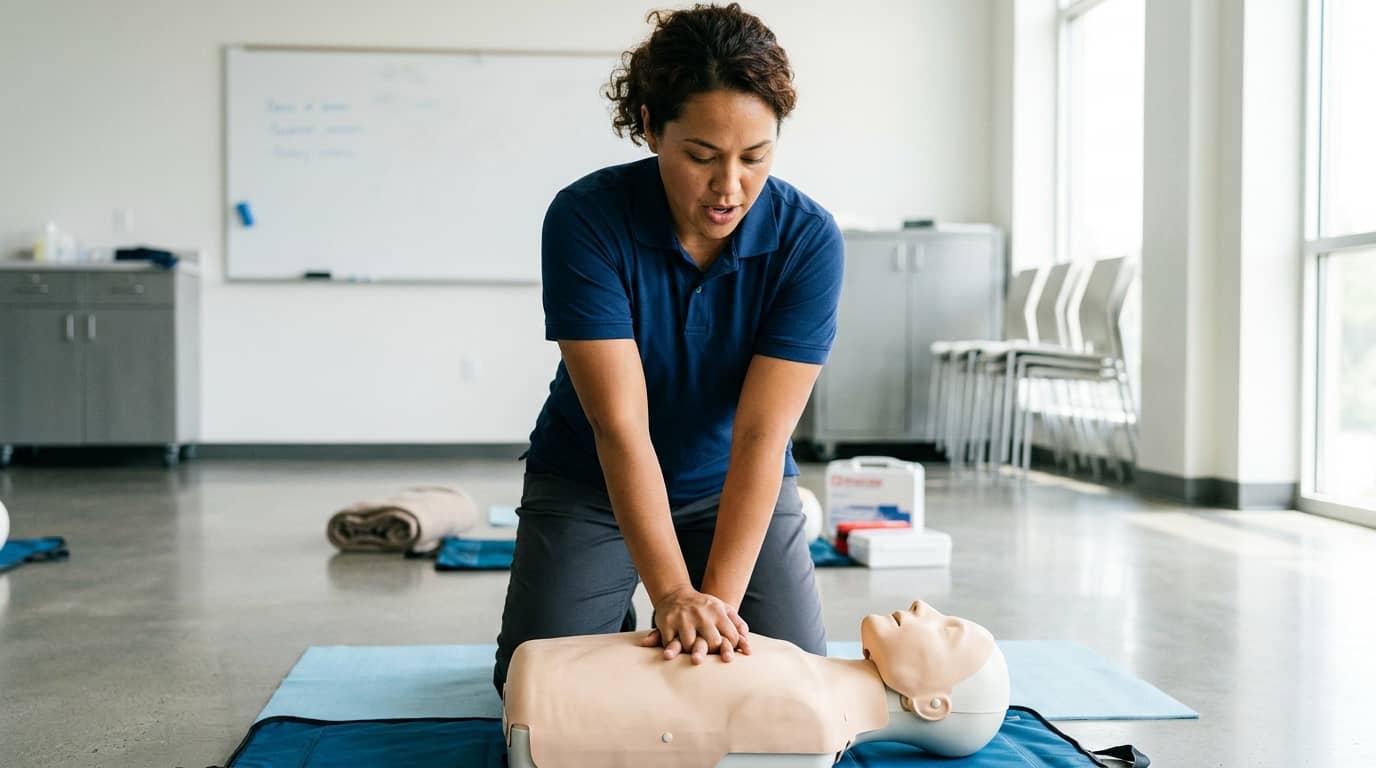
How you study in practice Sterile Processing Tech Course
How you practice Sterile Processing Tech Course
For companies looking to train their teams
With Dedika for businesses, the course includes exercises and examples tailored to your own business and the way your company needs.

Course Content
8 Chapters • 40 LessonsDuration between 4 and 360 hours (you decide)
Chapter 1HideHide detailsSee detailsFoundations of Sterile Processing
Foundations of Sterile Processing
Lesson 1 • Department Layout and Workflow Zones
Maps the physical zones of a sterile processing department and the unidirectional workflow between them. Prevents cross-contamination by establishing zone discipline.
Lesson 2 • The Sterile Processing Department Role
Defines the department's function within a healthcare facility and its impact on patient safety. Connects technician duties to infection prevention outcomes.
Lesson 3 • Microbiology Basics for Technicians
Introduces microorganism types, transmission routes, and the microbial hierarchy of resistance. Builds the scientific rationale for decontamination and sterilization methods.
Lesson 4 • Infection Prevention Principles
Explains standard precautions, hand hygiene, and environmental controls that protect staff and patients. Grounds all subsequent processing steps in infection control logic.
Lesson 5 • Regulatory and Accreditation Standards
Covers governing bodies, accreditation requirements, and professional standards that guide sterile processing practice. Provides the compliance framework used throughout the course.
Chapter 2HideHide detailsSee detailsPersonal Protective Equipment and Safety
Personal Protective Equipment and Safety
Lesson 1 • Donning and Doffing Procedures
Teaches the correct sequence for putting on and removing PPE to prevent self-contamination. Directly applies infection prevention principles from Chapter 1.
Lesson 2 • Hazard Identification in the Department
Identifies biological, chemical, and ergonomic hazards present in each processing zone. Establishes the risk context that drives PPE selection decisions.
Lesson 3 • PPE Selection by Zone and Task
Matches specific PPE types to decontamination, preparation, and sterilization tasks. Reinforces that PPE requirements differ by zone and contaminant type.
Lesson 4 • Chemical Safety and Exposure Response
Covers safety data sheets, chemical labeling, and emergency response to sterilant exposure. Prepares technicians to act correctly during accidental chemical contact.
Lesson 5 • Bloodborne Pathogen Compliance
Details exposure control plans, post-exposure protocols, and vaccination requirements for sterile processing staff. Ensures regulatory compliance and staff health protection.
Chapter 3HideHide detailsSee detailsDecontamination Principles and Procedures
Decontamination Principles and Procedures
Lesson 1 • Receiving and Sorting Soiled Instruments
Establishes protocols for accepting soiled case carts and sorting instruments by material and contamination level. Prevents damage and ensures appropriate cleaning pathway selection.
Lesson 2 • Manual Cleaning Techniques
Teaches hand-scrubbing, brushing, and flushing methods for instruments that cannot be mechanically cleaned. Builds foundational cleaning skill applied to complex and delicate devices.
Lesson 3 • Decontamination Verification and Quality Checks
Introduces visual inspection, protein residue testing, and ATP testing to confirm cleaning effectiveness. Establishes quality checkpoints before instruments advance to preparation.
Lesson 4 • Mechanical Cleaning Equipment
Covers ultrasonic cleaners, washer-disinfectors, and cart washers including loading, cycle parameters, and validation. Connects mechanical cleaning to consistent bioburden reduction.
Lesson 5 • Cleaning Chemistry and Water Quality
Explains enzymatic detergents, neutral cleaners, and water quality standards that affect cleaning efficacy. Provides the chemical knowledge needed to select and dilute cleaning agents correctly.
Chapter 4HideHide detailsSee detailsInstrument Inspection, Assembly, and Packaging
Instrument Inspection, Assembly, and Packaging
Lesson 1 • Instrument Inspection Techniques
Covers magnification tools, lighting standards, and systematic inspection criteria for cleanliness and function. Ensures defective instruments are identified before packaging.
Lesson 2 • Set Assembly and Count Sheets
Explains how to use instrument count sheets to assemble sets accurately and in correct order. Directly supports surgical team efficiency and patient safety.
Lesson 3 • Instrument Functionality Testing
Teaches testing methods for scissors, clamps, needle holders, and powered instruments. Confirms instruments meet performance standards before inclusion in a set.
Lesson 4 • Packaging Material Selection
Compares woven and nonwoven wraps, pouches, and rigid containers for compatibility with sterilization methods. Guides correct packaging choice based on item type and sterilization modality.
Lesson 5 • Wrapping and Sealing Techniques
Demonstrates sequential wrap, envelope wrap, and heat-seal pouch techniques that maintain sterile barrier integrity. Prepares students to package any instrument configuration correctly.
Chapter 5HideHide detailsSee detailsSterilization Methods and Technologies
Sterilization Methods and Technologies
Lesson 1 • Low-Temperature Sterilization Methods
Explains ethylene oxide, hydrogen peroxide gas plasma, vaporized hydrogen peroxide, and ozone sterilization for heat-sensitive devices. Covers safety requirements unique to each low-temperature agent.
Lesson 2 • Sterilization Monitoring and Documentation
Covers physical, chemical, and biological indicators used to verify sterilization cycle success. Establishes the monitoring triad required by regulatory standards.
Lesson 3 • Steam Sterilization
Covers gravity and pre-vacuum steam cycles, critical parameters, and load configuration for steam-compatible instruments. Steam sterilization is the most common modality and the benchmark for all others.
Lesson 4 • Sterilizer Loading and Unloading
Teaches correct load configuration, item positioning, and unloading practices that ensure sterilant contact and prevent wet packs. Directly affects sterilization cycle success.
Lesson 5 • Principles of Sterilization
Defines sterilization, the sterility assurance level concept, and the factors that influence microbial kill. Establishes the scientific foundation for all sterilization method chapters.
Chapter 6HideHide detailsSee detailsSterile Storage and Distribution
Sterile Storage and Distribution
Lesson 1 • Recall and Retrieval Procedures
Explains how to initiate and execute a sterile item recall when a sterilization failure is identified. Protects patients by ensuring compromised items are removed from use.
Lesson 2 • Sterile Stock Rotation and Inventory Control
Teaches first-in, first-out rotation, par level management, and expired item removal procedures. Ensures sterile inventory is current and available when needed.
Lesson 3 • Sterile Storage Environment Requirements
Defines temperature, humidity, air exchange, and shelving standards for sterile storage areas. Establishes the environmental conditions that preserve package integrity.
Lesson 4 • Event-Related Sterility Concepts
Explains that sterility is maintained until a package is compromised by an event, not by time alone. Guides inventory rotation and package inspection practices.
Lesson 5 • Handling and Transport of Sterile Items
Covers correct handling techniques, transport containers, and cart standards that prevent package damage during distribution. Connects storage principles to point-of-use delivery.
Chapter 7HideHide detailsSee detailsFlexible Endoscope Reprocessing
Flexible Endoscope Reprocessing
Lesson 1 • High-Level Disinfection Methods
Explains manual and automated high-level disinfection using glutaraldehyde, OPA, and peracetic acid systems. Covers contact time, concentration testing, and rinse requirements.
Lesson 2 • Endoscope Design and Vulnerability
Describes endoscope channel architecture, materials, and the design features that make reprocessing challenging. Provides the anatomical knowledge needed to clean all internal pathways.
Lesson 3 • Pre-Cleaning and Leak Testing
Covers point-of-use pre-cleaning, transport, and leak testing before full reprocessing begins. Prevents channel damage and confirms scope integrity before immersion.
Lesson 4 • Manual Cleaning of Endoscopes
Details enzymatic soak, channel brushing, flushing, and rinsing steps required before high-level disinfection. Bioburden removal is the most critical step in endoscope reprocessing.
Lesson 5 • Drying, Storage, and Traceability
Covers forced-air drying, vertical hanging storage, and scope traceability systems that prevent recontamination. Ensures scopes are safe and traceable from reprocessing to patient use.
Chapter 8HideHide detailsSee detailsQuality Systems and Continuous Improvement
Quality Systems and Continuous Improvement
Lesson 1 • Sterilization Failure Response
Covers the steps taken when a biological indicator is positive or a sterilizer malfunctions. Connects recall procedures from Chapter 6 to the broader quality response process.
Lesson 2 • Key Performance Indicators and Metrics
Defines metrics such as biological indicator failure rates, instrument complaint rates, and turnaround time. Teaches technicians to collect and interpret data that drives improvement.
Lesson 3 • Quality Management in Sterile Processing
Introduces quality management system concepts, policy development, and the technician's role in maintaining standards. Frames quality as a system, not an individual act.
Lesson 4 • Root Cause Analysis Techniques
Teaches fishbone diagrams, five-why analysis, and failure mode identification for sterile processing errors. Enables systematic identification of process failures rather than individual blame.
Lesson 5 • Process Improvement and Lean Principles
Applies lean methodology concepts such as waste reduction, standardized work, and visual management to sterile processing workflows. Builds a culture of ongoing operational improvement.
Your valid completion certificate
This course is for you:
Career changers: seeking stable, skilled healthcare work without a four-year degree.
Recent high school graduates: exploring allied health careers with strong job demand.
Hospital support staff: ready to move into a higher-skilled technical department role.
Medical or dental assistants: expanding their scope into surgical instrument management.
Unemployed workers: looking for a fast, structured path into healthcare employment.
Nursing students: building supplementary knowledge of surgical instrument safety standards.
What our students say
Your classes are perfect. I purchased the one-year package and finally have the opportunity to follow various topics of interest without needing to switch platforms... I thank you for everything you do, I've already recommended you to other people...

I like how the lessons are straight to the point and how I can switch chapters and skip content I don't need.

I like the content and the presentation style and video transcription, which speeds up the process!

The platform is fast, simple to use. The diversity of content and complementary videos really help with learning.

Top trainings




FAQ
Who is Dedika?
Is the certificate valid in United States?
Are the courses free?
What is the course workload?
What are the courses like?
How do the courses work?
What is the duration of the courses?
What is the cost or price of the courses?
What is an EAD or online course and how does it work?
PDF Course