
Centrifugal Pump Training Course
Master centrifugal pumps from first principles to advanced system optimization with this comprehensive training course. You'll gain hands-on knowledge of hydraulics, mechanical seals, bearings, alignment, troubleshooting, and predictive maintenance — everything needed to keep pumps running reliably. Whether you work in operations, maintenance, or engineering, this course builds the technical depth your career demands.
What your team will master:
This course covers every critical aspect of centrifugal pump technology, starting with fluid mechanics fundamentals and pump components, then advancing through performance curve analysis, NPSH calculations, and affinity laws. You will learn correct installation and commissioning procedures, mechanical seal selection and flush plan configuration, and bearing lubrication and shaft alignment techniques. The course also trains you to build a condition monitoring program using vibration analysis, thermography, and oil analysis. Troubleshooting chapters walk you through structured root cause analysis for hydraulic and mechanical failures. Advanced topics include variable speed drive integration, lifecycle cost analysis, and reliability-centered maintenance strategies.
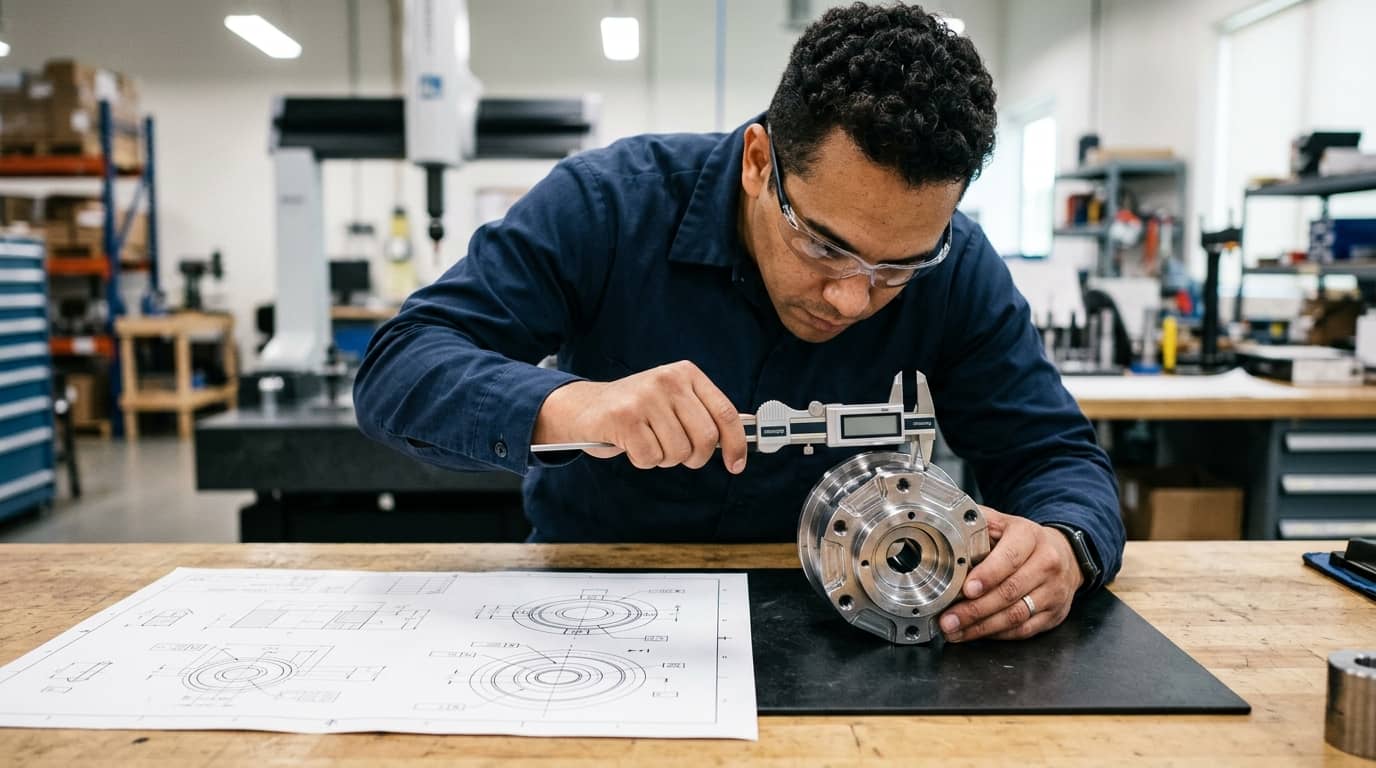
How your team learns in practice Centrifugal Pump Training Course
How your team practices Centrifugal Pump Training Course
Professionals from these companies study at Dedika



Course Content
8 Chapters • 39 LessonsDuration between 4 and 360 hours (you decide)
Chapter 1HideHide detailsSee detailsFundamentals of Centrifugal Pumps
Fundamentals of Centrifugal Pumps
Lesson 1 • Introduction to Pump Technology
Covers the role of pumps in industrial systems and the distinction between pump categories. Establishes context for why centrifugal pumps dominate fluid transfer applications.
Lesson 2 • Basic Fluid Mechanics for Pumps
Introduces pressure, flow, velocity, and Bernoulli's principle as applied to pump systems. These concepts underpin performance analysis covered in later chapters.
Lesson 3 • Core Components and Anatomy
Identifies every major component of a centrifugal pump and explains each part's function. Provides the vocabulary needed for all subsequent maintenance and troubleshooting chapters.
Lesson 4 • Pump Classification and Selection Overview
Surveys centrifugal pump subtypes including radial, axial, and mixed-flow designs. Students match pump class to application requirements as a precursor to detailed selection methods.
Chapter 2HideHide detailsSee detailsPump Performance and Hydraulics
Pump Performance and Hydraulics
Lesson 1 • Affinity Laws and Speed Variation
Applies the affinity laws to predict changes in flow, head, and power when speed or impeller diameter changes. Enables students to evaluate variable-speed drive benefits.
Lesson 2 • Parallel and Series Pump Operation
Analyzes combined performance when pumps operate in parallel or series configurations. Students determine when each arrangement is appropriate and predict resulting operating points.
Lesson 3 • Understanding Pump Performance Curves
Explains head-flow, efficiency, power, and NPSH curves provided by manufacturers. Students learn to extract operating data and identify the best efficiency point.
Lesson 4 • System Curve Development
Teaches calculation of static head, friction losses, and minor losses to construct a system curve. Combining system and pump curves locates the actual operating point.
Lesson 5 • Net Positive Suction Head Analysis
Defines NPSH available and required, and explains how their relationship prevents cavitation. Students calculate NPSH margins for given system configurations.
Chapter 3HideHide detailsSee detailsMechanical Seals and Sealing Systems
Mechanical Seals and Sealing Systems
Lesson 1 • Mechanical Seal Design and Components
Details rotating and stationary faces, secondary seals, springs, and drive mechanisms. Understanding component roles enables correct assembly and failure diagnosis.
Lesson 2 • Sealing Fundamentals and Seal Types
Compares packing, lip seals, and mechanical seals in terms of leakage, friction, and maintenance. Establishes the basis for selecting the correct sealing method for each application.
Lesson 3 • Packing Installation and Adjustment
Covers correct packing ring selection, cutting, staggering, and gland adjustment procedures. Proper technique balances acceptable leakage against heat generation and shaft wear.
Lesson 4 • Seal Support and Flush Plans
Introduces standardized flush plan configurations used to control seal environment temperature and pressure. Students select appropriate plans based on fluid properties and process conditions.
Lesson 5 • Mechanical Seal Installation and Removal
Provides step-by-step procedures for safe seal removal, inspection, and installation. Correct technique prevents face damage and premature failure after reassembly.
Chapter 4HideHide detailsSee detailsBearings, Lubrication, and Shaft Systems
Bearings, Lubrication, and Shaft Systems
Lesson 1 • Shaft Alignment Measurement Methods
Teaches dial indicator, reverse-dial, and laser alignment techniques with step-by-step correction procedures. Students achieve alignment within specified tolerances using each method.
Lesson 2 • Shaft Alignment Principles
Explains angular and parallel misalignment, their causes, and the forces they impose on bearings and seals. Alignment accuracy directly determines bearing and seal service life.
Lesson 3 • Couplings and Power Transmission
Reviews flexible coupling types, their misalignment accommodation, and correct installation torque. Coupling selection affects vibration transmission and maintenance frequency.
Lesson 4 • Bearing Types and Load Characteristics
Distinguishes radial and thrust bearings, rolling element and sleeve designs used in centrifugal pumps. Students match bearing type to load direction and magnitude requirements.
Lesson 5 • Lubrication Systems and Practices
Covers oil bath, oil mist, grease, and forced lubrication systems with their respective maintenance requirements. Correct lubrication is the single largest factor in bearing longevity.
Chapter 5HideHide detailsSee detailsPump Installation and Commissioning
Pump Installation and Commissioning
Lesson 1 • Startup and Initial Operation
Guides students through priming, valve sequencing, and controlled startup to reach stable operation. Correct startup sequence protects impeller, seals, and bearings from transient damage.
Lesson 2 • Pre-Commissioning Checks
Defines the inspection sequence before initial startup, covering rotation, lubrication, and seal readiness. Systematic pre-checks prevent costly damage during first operation.
Lesson 3 • Piping Design and Connection
Addresses suction and discharge piping layout rules that prevent hydraulic losses and nozzle loads. Poor piping design is a leading cause of premature pump failure.
Lesson 4 • Foundation and Baseplate Requirements
Specifies foundation mass, stiffness, and grouting requirements for stable pump operation. A properly prepared foundation minimizes vibration and maintains long-term alignment.
Lesson 5 • Performance Acceptance Testing
Applies flow, head, and power measurements to verify pump meets design specifications at commissioning. Baseline data enables future condition monitoring and trend analysis.
Chapter 6HideHide detailsSee detailsCondition Monitoring and Predictive Maintenance
Condition Monitoring and Predictive Maintenance
Lesson 1 • Thermographic and Ultrasonic Inspection
Uses infrared thermography to detect bearing overheating and ultrasound to identify cavitation and seal leaks. These non-contact methods complement vibration analysis for complete coverage.
Lesson 2 • Oil and Lubricant Analysis
Interprets oil analysis reports for wear metals, contamination, and viscosity degradation in pump bearing housings. Trending results predicts bearing condition and optimal oil change intervals.
Lesson 3 • Vibration Fundamentals for Pumps
Explains vibration measurement units, frequency analysis, and common pump vibration signatures. Frequency identification links measured data to specific mechanical faults.
Lesson 4 • Common Vibration Fault Signatures
Maps specific vibration patterns to imbalance, misalignment, cavitation, looseness, and bearing defects. Pattern recognition enables targeted corrective action before catastrophic failure.
Lesson 5 • Building a Condition Monitoring Program
Structures measurement routes, frequencies, alert levels, and reporting workflows into a sustainable program. A formal program converts raw data into actionable maintenance decisions.
Chapter 7HideHide detailsSee detailsTroubleshooting and Failure Analysis
Troubleshooting and Failure Analysis
Lesson 1 • Mechanical Failure Diagnosis
Analyzes bearing, seal, impeller, and shaft failures through physical evidence and operating history. Correct failure mode identification directs the appropriate corrective action.
Lesson 2 • Hydraulic Performance Faults
Diagnoses low flow, low head, excessive power draw, and cavitation using performance curve deviation analysis. Hydraulic faults often originate in system design rather than the pump itself.
Lesson 3 • Corrective and Preventive Action Planning
Converts root cause findings into design changes, procedure updates, and monitoring improvements. Closing the loop prevents recurrence and reduces total maintenance cost.
Lesson 4 • Failure Evidence Collection and Analysis
Teaches preservation of failed components, photography, and measurement for laboratory analysis. Quality evidence collection is essential for accurate root cause determination.
Lesson 5 • Structured Troubleshooting Methodology
Introduces fault tree analysis, fishbone diagrams, and five-why techniques applied to pump failures. A systematic approach prevents misdiagnosis and wasted repair effort.
Chapter 8HideHide detailsSee detailsAdvanced Pump Systems and Optimization
Advanced Pump Systems and Optimization
Lesson 1 • Energy Efficiency Assessment
Quantifies pump system energy waste through wire-to-water efficiency analysis and benchmarking. Identifying inefficiency sources is the first step toward cost-effective optimization.
Lesson 2 • Pump System Redesign and Rightsizing
Applies system curve analysis to identify oversized pumps and evaluate impeller trim or replacement options. Rightsizing eliminates chronic operation away from BEP.
Lesson 3 • Reliability-Centered Maintenance for Pumps
Applies RCM principles to select the most effective maintenance strategy for each pump failure mode. Students balance preventive, predictive, and run-to-failure strategies by criticality.
Lesson 4 • Lifecycle Cost Analysis and Asset Management
Calculates total cost of ownership including energy, maintenance, and capital costs to guide pump investment decisions. Lifecycle thinking shifts focus from purchase price to long-term value.
Lesson 5 • Variable Speed Drive Integration
Covers VFD operating principles, control modes, and integration with pump systems for flow control. VFDs eliminate throttling losses and extend equipment life at reduced speeds.
Your valid completion certificate
This course is for you:
Maintenance technician: wants to move beyond reactive repairs into root cause work.
Process or plant engineer: needs stronger pump hydraulics knowledge for system design.
Reliability engineer: building a formal asset care program around rotating equipment.
Operations supervisor: responsible for uptime but lacks deep pump technical grounding.
Mechanical engineering student: seeking practical industrial knowledge to complement coursework.
Career changer: transitioning into oil, gas, or water treatment from another trade.
Related courses




FAQ
Who is Dedika?
Is the certificate valid in United States?
Are the courses free?
What is the course workload?
What are the courses like?
How do the courses work?
What is the duration of the courses?
What is the cost or price of the courses?
What is an EAD or online course and how does it work?
PDF Course