
Hydraulic Maintenance Training
Master the hands-on skills that keep hydraulic and pneumatic systems running at peak performance. This training covers everything from fluid selection and seal replacement to pump overhauls and systematic fault diagnosis. Whether you work in manufacturing, heavy equipment, or industrial maintenance, this course gives you the technical knowledge to reduce downtime and do the job right.
What your team will master:
You will learn how hydraulic, pneumatic, and hybrid fluid systems are designed and how each major component functions. The course covers fluid selection, contamination control, filtration, and proper seal installation across all common system interfaces. You will develop hands-on skills for servicing pumps, valves, cylinders, hose assemblies, and conductors to manufacturer specifications. Structured troubleshooting methods using pressure gauges, flow meters, and thermal tools will help you diagnose faults accurately and efficiently. You will also learn how to build preventive and predictive maintenance programs, track key performance indicators, and apply root cause analysis to eliminate repeat failures.
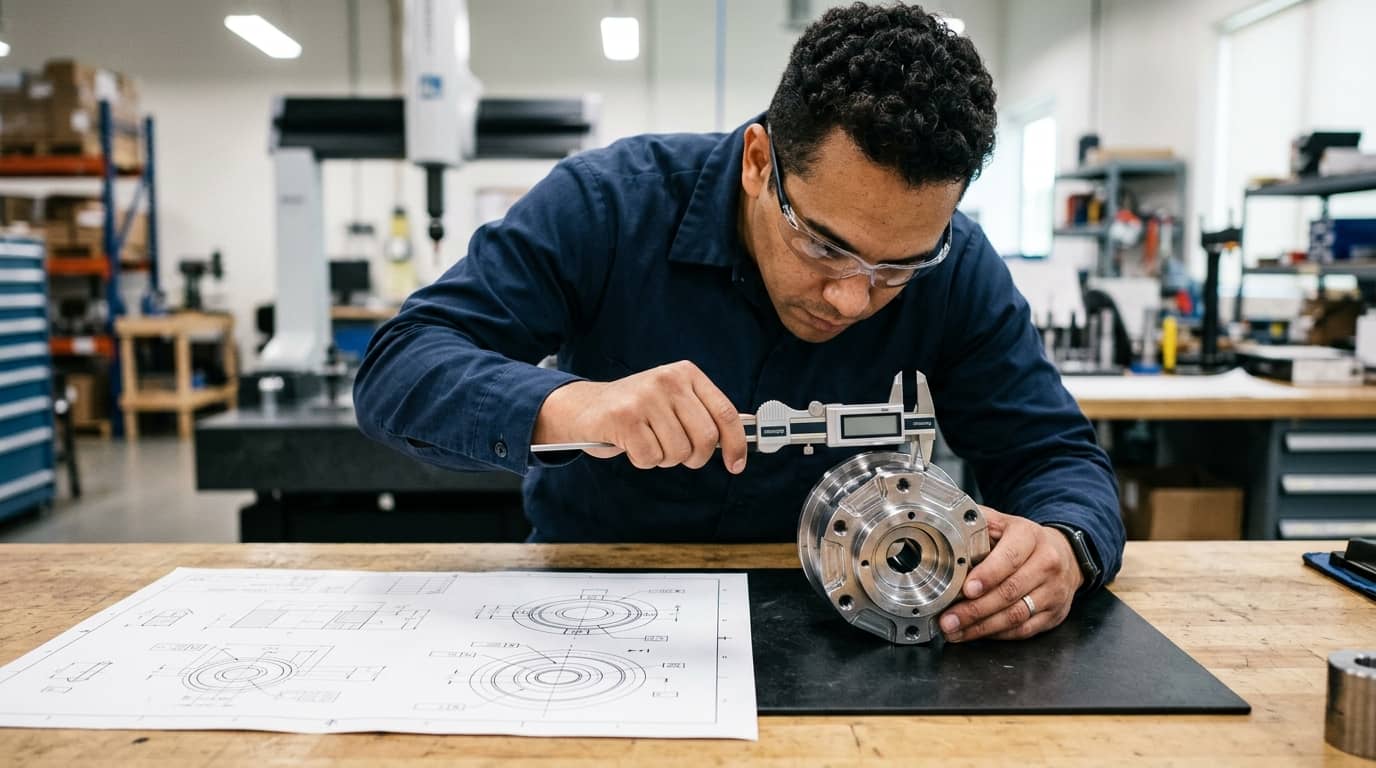
How your team learns in practice Hydraulic Maintenance Training
How your team practices Hydraulic Maintenance Training
Professionals from these companies study at Dedika



Course Content
8 Chapters • 39 LessonsDuration between 4 and 360 hours (you decide)
Chapter 1HideHide detailsSee detailsFundamentals of Fluid Systems
Fundamentals of Fluid Systems
Lesson 1 • Fluid Properties and Behavior
Covers viscosity, density, compressibility, and flow characteristics. Establishes the physical basis for understanding system performance and fluid selection.
Lesson 2 • Core System Components
Identifies pumps, actuators, valves, reservoirs, and conductors as primary components. Provides the vocabulary needed for all subsequent maintenance tasks.
Lesson 3 • Hydraulic and Pneumatic System Types
Distinguishes hydraulic, pneumatic, and hybrid fluid systems by function and design. Connects system type to maintenance approach and component selection.
Lesson 4 • Fluid System Schematics and Symbols
Teaches reading of standardized schematic symbols and circuit diagrams. Enables technicians to interpret system layouts before performing any maintenance.
Lesson 5 • Safety Principles in Fluid Systems
Introduces pressure hazards, injection injuries, and lockout/tagout procedures. Safety awareness established here underpins every hands-on task in the course.
Chapter 2HideHide detailsSee detailsFluid Selection and Contamination Control
Fluid Selection and Contamination Control
Lesson 1 • Fluid Sampling and Analysis
Teaches correct sampling technique and interpretation of laboratory analysis reports. Fluid analysis data drives proactive maintenance decisions.
Lesson 2 • Filtration Systems and Ratings
Explains filter ratings, beta ratios, and placement strategies within a circuit. Proper filtration selection directly reduces component wear and system downtime.
Lesson 3 • Fluid Contamination Sources
Identifies built-in, ingressed, and generated contamination as the three primary sources. Understanding origins enables targeted prevention strategies.
Lesson 4 • Fluid Maintenance and Replacement
Covers fluid top-up, flushing procedures, and system recharge after fluid change. Ensures fluid integrity is maintained throughout the service interval.
Lesson 5 • Hydraulic and Pneumatic Fluid Types
Covers mineral oils, synthetic fluids, water-based fluids, and compressed air quality grades. Connects fluid type to system material compatibility and performance.
Chapter 3HideHide detailsSee detailsSeals, Gaskets, and Leak Prevention
Seals, Gaskets, and Leak Prevention
Lesson 1 • Seal Failure Analysis
Teaches identification of extrusion, nibbling, compression set, and chemical degradation in failed seals. Root-cause analysis prevents repeat failures after replacement.
Lesson 2 • Seal Types and Materials
Identifies O-rings, lip seals, piston seals, rod seals, and face seals by design and material. Material selection determines chemical and temperature compatibility.
Lesson 3 • Seal Installation Best Practices
Details correct installation tools, lubrication, and handling to avoid installation damage. Proper technique is the single largest factor in seal service life.
Lesson 4 • Gasket and Static Sealing Methods
Covers flat gaskets, formed-in-place gaskets, and thread sealants for static joints. Correct static sealing prevents the most common source of external leakage.
Chapter 4HideHide detailsSee detailsConductors, Fittings, and Hose Assemblies
Conductors, Fittings, and Hose Assemblies
Lesson 1 • Fitting Types and Connection Standards
Identifies JIC, NPT, ORFS, BSP, and compression fitting types with their sealing mechanisms. Fitting selection determines joint integrity under dynamic pressure conditions.
Lesson 2 • Tubing and Pipe Selection
Covers material grades, wall thickness, pressure ratings, and bend radius requirements for rigid conductors. Correct selection prevents fatigue failure and pressure loss.
Lesson 3 • Hose Assembly Fabrication
Teaches cutting, skiving, crimping, and swaging procedures for field and shop hose assembly. Correct fabrication ensures rated burst strength and leak-free service.
Lesson 4 • Hose Construction and Selection
Explains hose layers, pressure ratings, temperature limits, and routing requirements. Hose selection errors are the leading cause of premature hose assembly failure.
Lesson 5 • Conductor Inspection and Replacement
Covers visual inspection criteria, pressure testing, and replacement intervals for hoses and rigid lines. Proactive replacement prevents catastrophic in-service failures.
Chapter 5HideHide detailsSee detailsPumps and Prime Movers Maintenance
Pumps and Prime Movers Maintenance
Lesson 1 • Prime Mover Alignment and Coupling
Covers shaft alignment methods, coupling types, and mounting procedures for electric motors and engines. Misalignment is a leading cause of premature pump failure.
Lesson 2 • Pump Types and Operating Principles
Covers gear, vane, piston, and screw pump designs with their pressure and flow characteristics. Understanding operating principles guides correct maintenance procedures.
Lesson 3 • Pump Inspection and Condition Assessment
Teaches visual inspection, noise analysis, and volumetric efficiency testing to assess pump health. Early detection of wear prevents unplanned downtime.
Lesson 4 • Pump Disassembly and Reassembly
Provides step-by-step disassembly, component measurement, and reassembly procedures for common pump types. Correct reassembly restores rated performance and service life.
Lesson 5 • Pump Performance Testing After Service
Defines acceptance criteria and test procedures to confirm pump performance after maintenance. Documented test results validate the repair before system return to service.
Chapter 6HideHide detailsSee detailsValves and Actuator Maintenance
Valves and Actuator Maintenance
Lesson 1 • Pressure Control Valve Maintenance
Teaches adjustment, inspection, and replacement of relief, reducing, and sequence valves. Correct pressure settings protect all downstream components from overload.
Lesson 2 • Rotary Actuator and Motor Service
Covers hydraulic motor and rotary actuator inspection, shaft seal replacement, and torque verification. Rotary actuator faults often mimic pump failures and require distinct diagnosis.
Lesson 3 • Flow Control and Check Valve Service
Covers needle valve adjustment, flow divider inspection, and check valve poppet replacement. Flow control accuracy directly affects actuator speed and positioning.
Lesson 4 • Directional Control Valve Service
Covers spool inspection, centering spring replacement, and solenoid testing for directional valves. Directional valve faults cause the majority of circuit control failures.
Lesson 5 • Hydraulic Cylinder Maintenance
Details cylinder disassembly, bore measurement, rod inspection, and seal replacement procedures. Cylinder service restores force output and eliminates internal bypass leakage.
Chapter 7HideHide detailsSee detailsSystem Troubleshooting and Diagnostics
System Troubleshooting and Diagnostics
Lesson 1 • Troubleshooting Methodology
Establishes a structured six-step diagnostic process from symptom collection to verified repair. A consistent method prevents misdiagnosis and unnecessary component replacement.
Lesson 2 • Temperature and Thermal Diagnostics
Explains thermal imaging, fluid temperature trending, and heat exchanger performance testing. Overheating is both a symptom and a cause of accelerated component degradation.
Lesson 3 • Flow and Cycle Time Diagnostics
Covers flow meter installation, actuator cycle time measurement, and pump flow verification. Flow data distinguishes internal leakage from pump wear and valve faults.
Lesson 4 • Electrical and Electronic Fault Diagnosis
Covers solenoid valve testing, proportional valve electronics, and sensor signal verification. Electrical faults in fluid systems are frequently misdiagnosed as mechanical failures.
Lesson 5 • Pressure Diagnostics
Teaches gauge placement, pressure drop analysis, and relief valve verification across a circuit. Pressure data pinpoints restriction, leakage, and pump faults.
Chapter 8HideHide detailsSee detailsPreventive and Predictive Maintenance Programs
Preventive and Predictive Maintenance Programs
Lesson 1 • Failure Mode and Root Cause Analysis
Applies FMEA and fishbone analysis to recurring fluid system failures. Root cause elimination reduces repeat failures and lowers total maintenance cost.
Lesson 2 • Preventive Maintenance Scheduling
Covers time-based and usage-based PM task development, interval setting, and task assignment. A well-structured PM schedule is the foundation of system reliability.
Lesson 3 • Condition Monitoring Techniques
Teaches vibration analysis, ultrasonic leak detection, and fluid analysis as predictive tools. Condition data enables maintenance before failure rather than after.
Lesson 4 • Maintenance Records and Documentation
Establishes standards for work orders, inspection reports, and component history records. Accurate records enable trend analysis and support regulatory compliance audits.
Lesson 5 • Continuous Improvement and KPI Tracking
Defines key performance indicators for fluid system reliability and maintenance efficiency. KPI tracking drives data-based decisions that improve uptime and reduce costs.
Your valid completion certificate
This course is for you:
Maintenance technician: ready to move beyond basic mechanical tasks.
Industrial electrician: expanding into fluid power system responsibilities.
Heavy equipment operator: wanting to understand the systems they run.
Plant engineer: needing hands-on diagnostic depth for daily decisions.
Career changer: entering industrial maintenance from an unrelated trade background.
Apprentice mechanic: building a complete skill set before entering the workforce.
Related courses




FAQ
Who is Dedika?
Is the certificate valid in United States?
Are the courses free?
What is the course workload?
What are the courses like?
How do the courses work?
What is the duration of the courses?
What is the cost or price of the courses?
What is an EAD or online course and how does it work?
PDF Course