
Hydraulics Course
Master every aspect of hydraulic systems, from fluid mechanics fundamentals to advanced electrohydraulic controls. This course gives technicians and engineers the practical knowledge to design, size, troubleshoot, and maintain hydraulic equipment with confidence. Whether you work in industrial manufacturing or mobile machinery, you'll build skills that translate directly to the job site.
What your team will master:
This course covers the complete hydraulic system from the ground up. You will learn fluid mechanics principles, how to read and draft hydraulic schematics, and how to select pumps, cylinders, and motors for specific load requirements. You will study directional, pressure, and flow control valves and understand how they work together in real circuits. The course also covers systematic troubleshooting methods, preventive maintenance programs, fluid selection, and commissioning procedures. By the end, you will have the technical knowledge to design, diagnose, and optimize hydraulic systems in industrial and mobile applications.
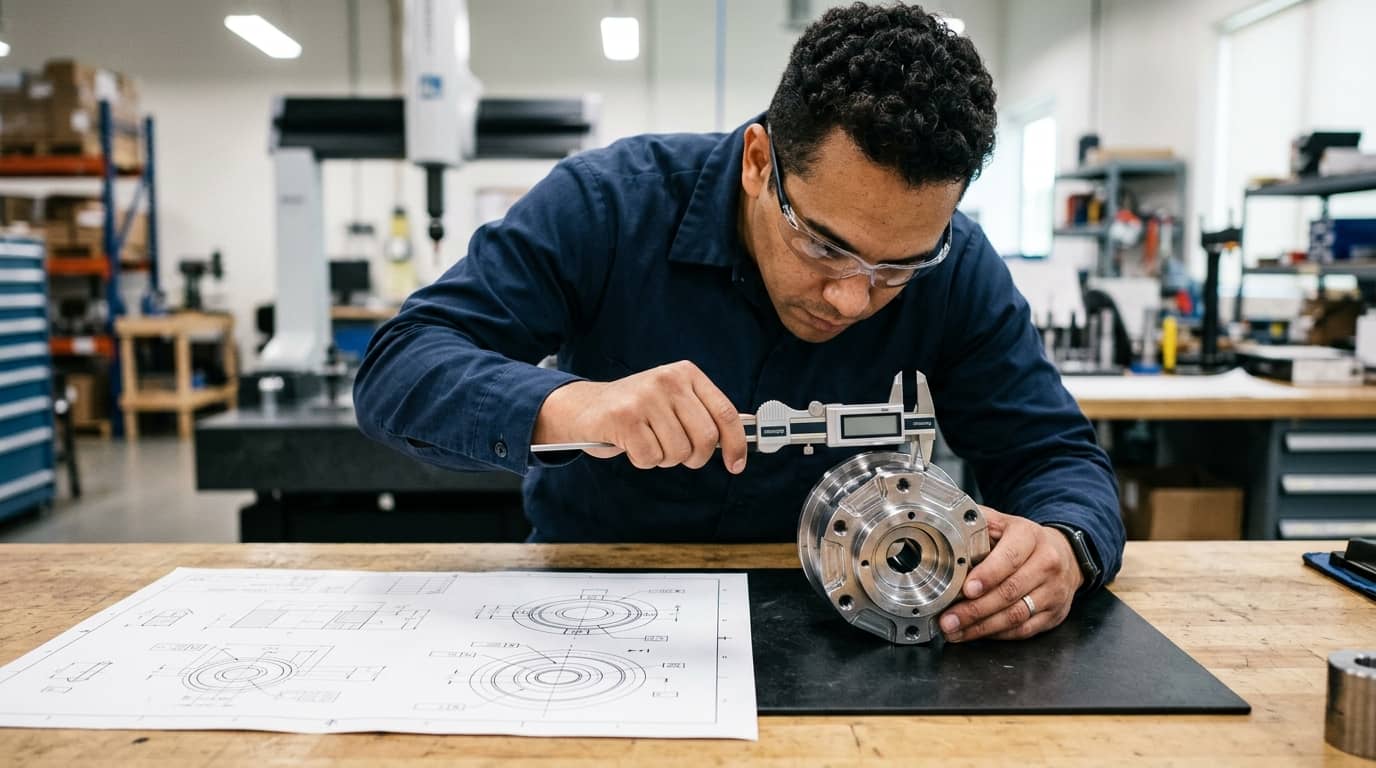
How your team learns in practice Hydraulics Course
How your team practices Hydraulics Course
Professionals from these companies study at Dedika



Course Content
8 Chapters • 40 LessonsDuration between 4 and 360 hours (you decide)
Chapter 1HideHide detailsSee detailsFundamentals of Fluid Mechanics
Fundamentals of Fluid Mechanics
Lesson 1 • Fluid Statics and Buoyancy
Examines forces on submerged surfaces and buoyancy principles. Understanding static fluid behavior supports reservoir and tank design decisions.
Lesson 2 • Continuity and Flow Fundamentals
Introduces the continuity equation and laminar versus turbulent flow regimes. These principles underpin flow rate calculations used in every subsequent chapter.
Lesson 3 • Pressure Concepts and Measurement
Defines absolute, gauge, and differential pressure and their measurement methods. Accurate pressure reading is essential for diagnosing and designing hydraulic circuits.
Lesson 4 • Properties of Hydraulic Fluids
Covers density, viscosity, compressibility, and thermal expansion of fluids. These properties govern fluid selection and system performance throughout the course.
Lesson 5 • Bernoulli's Equation and Energy
Applies Bernoulli's principle to relate pressure, velocity, and elevation in flowing fluids. This energy balance is the basis for pump and actuator sizing.
Chapter 2HideHide detailsSee detailsHydraulic System Components Overview
Hydraulic System Components Overview
Lesson 1 • Reservoirs, Filters, and Fluid Conditioning
Covers reservoir sizing, filtration ratings, and heat exchangers. Proper fluid conditioning extends component life and maintains system efficiency.
Lesson 2 • Hydraulic System Architecture
Maps the open-loop and closed-loop circuit layouts and their typical applications. Understanding system topology prevents misdiagnosis during troubleshooting.
Lesson 3 • Hydraulic Symbols and Schematics
Teaches standardized graphical symbols used in hydraulic circuit diagrams. Schematic literacy is required for all design, installation, and troubleshooting tasks ahead.
Lesson 4 • Seals and Leak Prevention
Describes seal materials, groove standards, and installation best practices. Effective sealing is critical to maintaining system pressure and preventing environmental contamination.
Lesson 5 • Hydraulic Lines and Fittings
Explains pipe, tubing, and hose selection criteria along with fitting standards. Correct line sizing prevents excessive pressure drop and system failures.
Chapter 3HideHide detailsSee detailsHydraulic Pumps: Theory and Selection
Hydraulic Pumps: Theory and Selection
Lesson 1 • Pump Operating Principles
Explains positive-displacement and dynamic pump mechanisms and their pressure-flow characteristics. This distinction drives every pump selection decision in practice.
Lesson 2 • Gear, Vane, and Piston Pumps
Compares internal and external gear, vane, and axial/radial piston pump designs. Each type suits specific pressure, flow, and efficiency requirements.
Lesson 3 • Pump Selection and Sizing
Applies flow demand, pressure rating, and drive speed to select the correct pump. Proper sizing prevents premature failure and excessive energy use.
Lesson 4 • Pump Performance and Efficiency
Defines volumetric, mechanical, and overall efficiency and interprets pump curves. Efficiency analysis identifies energy waste and guides system optimization.
Lesson 5 • Variable-Displacement Pump Controls
Covers pressure-compensated, load-sensing, and horsepower-limiting controls. Variable displacement reduces energy consumption in variable-demand systems.
Chapter 4HideHide detailsSee detailsHydraulic Actuators: Cylinders and Motors
Hydraulic Actuators: Cylinders and Motors
Lesson 1 • Hydraulic Cylinder Types and Construction
Describes single-acting, double-acting, telescoping, and tandem cylinder configurations. Construction knowledge enables correct specification and maintenance planning.
Lesson 2 • Cylinder Cushioning and End-of-Stroke Control
Explains built-in cushions, deceleration valves, and position sensing for smooth stops. Proper end-of-stroke control reduces shock loads and extends cylinder life.
Lesson 3 • Hydraulic Motor Types and Torque
Covers gear, vane, and piston motor designs and their torque-speed characteristics. Motor selection balances starting torque, speed range, and efficiency needs.
Lesson 4 • Cylinder Force and Speed Calculations
Derives push force, pull force, and extension/retraction speed from pressure and flow. Accurate calculations prevent undersizing and structural overload.
Lesson 5 • Actuator Selection and Load Matching
Applies load analysis, duty cycle, and environmental factors to finalize actuator choice. Correct matching ensures reliable performance and minimizes lifecycle cost.
Chapter 5HideHide detailsSee detailsHydraulic Valves and Control Logic
Hydraulic Valves and Control Logic
Lesson 1 • Check Valves and Shuttle Valves
Explains free-flow, pilot-operated, and shuttle check valve functions in circuits. These valves prevent backflow and enable priority or logic functions.
Lesson 2 • Flow Control Valves
Describes fixed orifices, needle valves, and pressure-compensated flow controls. Flow control valves regulate actuator speed independently of load variation.
Lesson 3 • Proportional and Servo Valves
Introduces proportional solenoid and electrohydraulic servo valve technology. These valves enable precise, continuously variable control of flow and pressure.
Lesson 4 • Directional Control Valves
Explains spool, poppet, and rotary valve designs along with actuation methods. Directional valves determine the path of flow and actuator direction in every circuit.
Lesson 5 • Pressure Control Valves
Covers relief, reducing, sequence, counterbalance, and unloading valves and their settings. Pressure control protects components and sequences operations in complex circuits.
Chapter 6HideHide detailsSee detailsHydraulic Circuit Design and Analysis
Hydraulic Circuit Design and Analysis
Lesson 1 • Pressure Drop and Line Loss Calculations
Calculates friction losses in lines, fittings, and valves using Darcy-Weisbach and equivalent-length methods. Accurate loss budgeting ensures adequate pressure at actuators.
Lesson 2 • Synchronization and Load-Sharing Circuits
Designs circuits that synchronize multiple cylinders or motors under unequal loads. Synchronization prevents structural damage in lifting and pressing applications.
Lesson 3 • Accumulator Circuits and Energy Storage
Covers bladder, piston, and diaphragm accumulators for energy storage and shock dampening. Accumulators reduce pump size and improve system response in cyclic applications.
Lesson 4 • Circuit Design Methodology
Presents a structured design process from load analysis through component selection to schematic completion. A systematic approach prevents costly redesign after fabrication.
Lesson 5 • Series, Parallel, and Regenerative Circuits
Analyzes flow and pressure distribution in series, parallel, and regenerative cylinder circuits. Circuit topology selection directly affects speed, force, and energy efficiency.
Chapter 7HideHide detailsSee detailsHydraulic System Troubleshooting
Hydraulic System Troubleshooting
Lesson 1 • Common Failure Modes and Causes
Catalogs pump cavitation, valve sticking, seal failure, and contamination-related faults. Recognizing failure signatures accelerates root-cause identification.
Lesson 2 • Troubleshooting Methodology
Establishes a structured fault-isolation process using symptom analysis and elimination. A repeatable method reduces diagnostic time and prevents misdiagnosis.
Lesson 3 • Repair, Replacement, and Verification
Guides component repair versus replacement decisions and post-repair performance verification. Proper verification confirms the fault is resolved before returning equipment to service.
Lesson 4 • Fluid Analysis and Contamination Control
Uses oil sampling, particle counting, and cleanliness standards to assess fluid condition. Proactive fluid management prevents the majority of hydraulic failures.
Lesson 5 • Pressure and Flow Testing
Applies pressure gauges, flow meters, and test points to measure system performance. Quantitative testing confirms whether components meet specification.
Chapter 8HideHide detailsSee detailsAdvanced Hydraulic Systems and Applications
Advanced Hydraulic Systems and Applications
Lesson 1 • High-Pressure and Intensifier Systems
Examines pressure intensifiers, ultra-high-pressure circuits, and their industrial uses. Intensifier systems enable cutting, forming, and testing beyond standard pump limits.
Lesson 2 • Electrohydraulic Control Systems
Integrates PLCs, sensors, and proportional valves into closed-loop hydraulic control. Electrohydraulic systems achieve positioning accuracy unattainable with manual controls.
Lesson 3 • Hydrostatic Transmission Systems
Covers variable-pump and fixed-motor hydrostatic drives used in mobile machinery. Hydrostatic transmissions provide infinitely variable speed with high torque at low speed.
Lesson 4 • Load-Sensing and Pressure-Compensated Systems
Analyzes load-sensing pump-valve combinations that match output to demand. These systems deliver significant energy savings in multi-actuator mobile equipment.
Lesson 5 • System Performance Optimization
Applies energy auditing, component upgrades, and control tuning to improve efficiency. Optimization reduces operating cost and extends equipment service life.
Your valid completion certificate
This course is for you:
Maintenance technician: ready to move beyond basic mechanical repair skills.
Mechanical engineering student: bridging classroom theory with real-world hydraulic applications.
Industrial equipment operator: wanting to understand the systems they run daily.
Field service engineer: needing structured hydraulic knowledge to reduce diagnostic guesswork.
Career changer: entering the heavy equipment or manufacturing sector from another trade.
Plant reliability specialist: looking to add hydraulic system expertise to their toolkit.
Related courses




FAQ
Who is Dedika?
Is the certificate valid in United States?
Are the courses free?
What is the course workload?
What are the courses like?
How do the courses work?
What is the duration of the courses?
What is the cost or price of the courses?
What is an EAD or online course and how does it work?
PDF Course