
Industrial Torqueing Course
Master every phase of industrial torquing — from fastener physics and tool calibration to critical joint procedures and quality verification. This course gives maintenance technicians, pipefitters, and bolted joint specialists the hands-on knowledge to get the torque right the first time, every time. Build the skills that keep equipment running and worksites safe.
What your team will master:
You will learn how torque generates clamping force and why friction, lubrication, and fastener grade all affect the final result. The course covers manual and powered torque tools, calibration requirements, and how to read engineering torque documents and industry standards. You will practice bolt tightening sequences for flanges, structural connections, and gasketed joints. Safety procedures, lockout requirements, and job hazard analysis are built into the training throughout. You will also learn how to identify non-conformances, document torque results, and apply root cause analysis when failures occur. Advanced topics include critical joint management, high-pressure and high-temperature assemblies, and digital torque data systems.
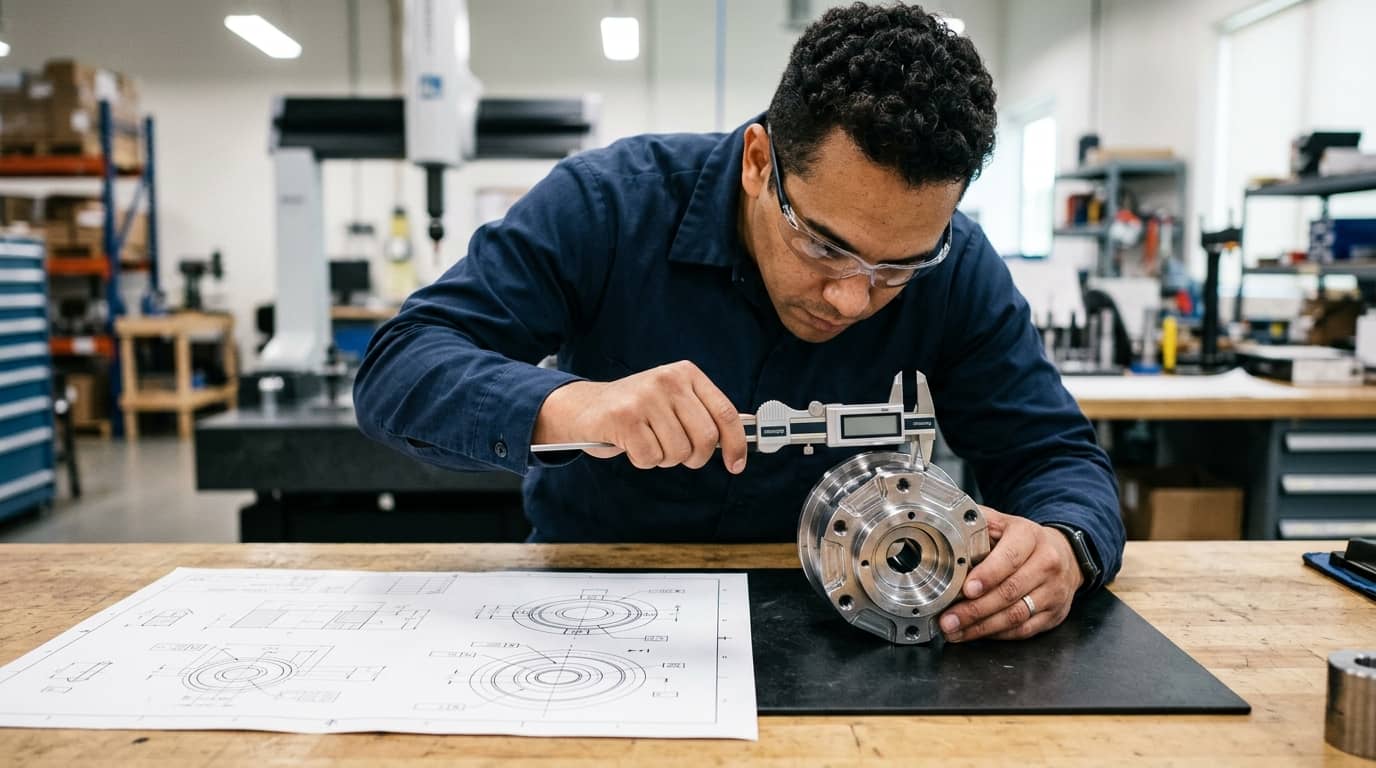
How your team learns in practice Industrial Torqueing Course
How your team practices Industrial Torqueing Course
Professionals from these companies study at Dedika



Course Content
8 Chapters • 40 LessonsDuration between 4 and 360 hours (you decide)
Chapter 1HideHide detailsSee detailsFoundations of Torque and Fastening
Foundations of Torque and Fastening
Lesson 1 • Fastener Types and Materials
Identifies bolts, studs, screws, and nuts by grade, material, and application. Connects fastener selection to torque capacity and joint integrity.
Lesson 2 • Friction and Its Role in Torquing
Analyzes how friction under the bolt head and in threads consumes applied torque. Establishes why lubrication and surface condition critically affect clamping force.
Lesson 3 • Clamping Force and Joint Behavior
Explains how applied torque generates clamping force and how joints respond under load. Provides the conceptual link between torque values and structural performance.
Lesson 4 • Thread Geometry and Engagement
Covers thread pitch, form, and engagement length as factors affecting torque efficiency. Directly supports accurate torque specification and fastener selection.
Lesson 5 • Physics of Torque Explained
Covers force, moment arm, and rotational force as they apply to fastening. Establishes the physical basis for all subsequent torque application techniques.
Chapter 2HideHide detailsSee detailsTorque Tools and Equipment
Torque Tools and Equipment
Lesson 1 • Tool Calibration and Accuracy
Covers calibration intervals, methods, and traceability requirements for torque tools. Ensures students can maintain tool accuracy and document compliance with quality standards.
Lesson 2 • Tool Inspection and Maintenance
Establishes pre-use inspection routines and preventive maintenance for torque tools. Prevents measurement error and equipment failure caused by worn or damaged tools.
Lesson 3 • Powered Torque Tools
Introduces pneumatic, hydraulic, and electric torque tools used in high-volume or high-torque applications. Connects tool capability to production efficiency and accuracy requirements.
Lesson 4 • Torque Multipliers and Tensioners
Explains gear-driven multipliers and bolt tensioners for extreme-torque applications. Addresses when tensioning is preferred over torquing for critical joints.
Lesson 5 • Manual Torque Wrench Types
Covers click-type, beam, dial, and electronic torque wrenches and their operating principles. Enables correct tool selection based on torque range and application environment.
Chapter 3HideHide detailsSee detailsTorque Specifications and Standards
Torque Specifications and Standards
Lesson 1 • Torque-Tension Relationship and K-Factor
Explains the torque-tension equation and the nut factor (K-factor) used to account for friction. Enables accurate torque calculation for any fastener and lubrication condition.
Lesson 2 • Resolving Specification Conflicts
Provides a decision framework for handling conflicting torque values from different sources. Ensures students escalate or resolve discrepancies safely and with proper documentation.
Lesson 3 • Industry Standards and Codes
Surveys major industry standards governing fastener torque in structural, pressure, and mechanical applications. Connects regulatory compliance to correct torque selection and documentation.
Lesson 4 • Torque Specification for Special Conditions
Addresses torque adjustments for elevated temperature, cyclic loading, and gasketed joints. Prepares students to modify standard specifications for non-standard service conditions.
Lesson 5 • Reading Engineering Torque Documents
Teaches interpretation of torque tables, assembly drawings, and bolt-load specifications. Builds the document literacy needed to execute torque tasks without guesswork.
Chapter 4HideHide detailsSee detailsSafety in Torquing Operations
Safety in Torquing Operations
Lesson 1 • Personal Protective Equipment Selection
Specifies PPE requirements for hand, eye, foot, and hearing protection during torque tasks. Connects PPE selection to specific hazard types identified in the job hazard analysis.
Lesson 2 • Hazard Identification in Torquing
Catalogs physical, ergonomic, and energy-release hazards associated with torque operations. Provides the hazard awareness foundation for all subsequent safety controls.
Lesson 3 • Safe Tool Handling and Body Positioning
Establishes correct grip, stance, and body mechanics for manual and powered torque tools. Reduces injury risk from reaction forces and unexpected tool movement.
Lesson 4 • Lockout and Energy Isolation
Applies energy isolation procedures before torquing on pressurized or energized systems. Ensures no unintended energy release during fastener removal or installation.
Lesson 5 • Job Hazard Analysis for Torque Tasks
Guides students through completing a job hazard analysis specific to torque operations. Integrates hazard identification, control selection, and documentation into a single workflow.
Chapter 5HideHide detailsSee detailsTorque Application Techniques
Torque Application Techniques
Lesson 1 • Structural Bolted Connection Techniques
Covers snug-tight and pretensioned installation methods for structural steel connections. Connects technique selection to connection type and load-transfer requirements.
Lesson 2 • Flange and Gasket Joint Assembly
Applies tightening sequences and multi-pass methods specifically to flanged pipe and vessel joints. Ensures leak-free assembly through correct gasket seating and load distribution.
Lesson 3 • Multi-Pass Torquing Methods
Explains snug, intermediate, and final torque passes and their role in achieving uniform preload. Builds skill in executing phased tightening on gasketed and structural joints.
Lesson 4 • Torque-Plus-Angle Method
Introduces the torque-plus-angle (torque-turn) method for achieving precise bolt stretch. Addresses applications where friction variability makes torque-only methods insufficient.
Lesson 5 • Bolt Tightening Sequences and Patterns
Covers star, cross, and spiral tightening patterns for flanges, covers, and structural connections. Correct sequencing prevents gasket damage, distortion, and uneven clamping.
Chapter 6HideHide detailsSee detailsQuality Control and Verification
Quality Control and Verification
Lesson 1 • Non-Conformance Identification and Reporting
Establishes criteria for identifying torque non-conformances and the steps to report and contain them. Prevents defective joints from entering service without engineering review.
Lesson 2 • Torque Verification Methods
Covers residual torque check, torque audit, and breakaway torque methods for joint verification. Establishes when and how each method is applied to confirm assembly quality.
Lesson 3 • Statistical Process Control for Torque
Introduces control charts and process capability metrics applied to torque data from production lines. Enables early detection of process drift before non-conformances occur.
Lesson 4 • Torque Documentation and Records
Covers torque log formats, digital data capture, and record retention requirements for auditable quality systems. Supports traceability from fastener to final assembly.
Lesson 5 • Visual and Physical Inspection
Identifies visual indicators of under-torque, over-torque, and fastener damage after assembly. Connects observable conditions to root causes for corrective action.
Chapter 7HideHide detailsSee detailsTroubleshooting Torque Problems
Troubleshooting Torque Problems
Lesson 1 • Tool and Process Error Diagnosis
Identifies torque errors caused by miscalibrated tools, incorrect procedures, and operator technique. Separates equipment-related causes from process and human-factor causes.
Lesson 2 • Common Torque Failure Modes
Catalogs under-torque, over-torque, fastener fatigue, and galling as primary failure modes. Provides the diagnostic vocabulary needed for systematic troubleshooting.
Lesson 3 • Corrective and Preventive Actions
Guides development of corrective actions that address root causes and preventive actions that eliminate recurrence. Closes the quality loop from failure detection to process improvement.
Lesson 4 • Root Cause Analysis Techniques
Applies five-why and fishbone analysis methods to torque failure investigations. Moves students from symptom identification to verified root cause determination.
Lesson 5 • Material and Environmental Factors
Examines how fastener material, surface condition, temperature, and contamination cause torque anomalies. Expands diagnostic scope beyond tools and procedures to environmental variables.
Chapter 8HideHide detailsSee detailsAdvanced Torquing Applications
Advanced Torquing Applications
Lesson 1 • Subsea and Confined Space Torquing
Adapts torque procedures for subsea environments and confined-space access restrictions. Addresses tool selection, communication, and safety controls unique to these environments.
Lesson 2 • Rotating Equipment Fastening
Covers torque requirements for couplings, bearing housings, and rotating machinery covers. Addresses balance sensitivity and the consequences of uneven clamping on rotating components.
Lesson 3 • Critical Bolted Joint Management
Defines critical joints by consequence of failure and applies enhanced controls to their assembly. Integrates specification review, tool selection, and verification into a single critical-joint plan.
Lesson 4 • High-Pressure and High-Temperature Joints
Addresses torque strategy for joints operating under elevated pressure and temperature service conditions. Covers re-torquing after thermal cycling and hot-bolting procedures where applicable.
Lesson 5 • Torque Planning and Procedure Writing
Develops skills in writing torque procedures, work packages, and inspection test plans for complex jobs. Produces documents that guide technicians through critical assemblies without ambiguity.
Your valid completion certificate
This course is for you:
Maintenance technician: wants structured knowledge behind daily fastening tasks.
Pipefitter: needs reliable torque skills for pressure-rated flange assemblies.
Millwright: handles rotating equipment and must prevent costly fastener failures.
Quality inspector: verifies bolted joints and needs deeper technical grounding.
Career changer: entering industrial trades and building a specialized skill set.
Apprentice tradesperson: ready to move beyond basics into professional-grade practice.
Related courses




FAQ
Who is Dedika?
Is the certificate valid in United States?
Are the courses free?
What is the course workload?
What are the courses like?
How do the courses work?
What is the duration of the courses?
What is the cost or price of the courses?
What is an EAD or online course and how does it work?
PDF Course