
Professional Technologist in Electrical Engineering and Industrial Automation Course
Master the full spectrum of electrical engineering and industrial automation — from circuit analysis and electrical machines to PLCs, variable frequency drives, and SCADA systems. This comprehensive program equips you with the hands-on technical skills employers demand in modern industrial facilities. Build a career-ready foundation that covers power systems, process control, cybersecurity, and Industry 4.0 technologies.
What your team will master:
You will gain a thorough understanding of electrical fundamentals, electronic devices, and industrial power distribution. You will learn to program and commission PLCs using multiple IEC 61131-3 languages and integrate sensors, actuators, and control loops into automated systems. The program covers variable frequency drives, servo motion control, and industrial communication protocols including PROFIBUS, PROFINET, and Modbus. You will also explore SCADA architecture, OT cybersecurity, renewable energy integration, and IIoT concepts. Technical communication, project management, and professional ethics round out your training for a complete engineering technologist skill set.
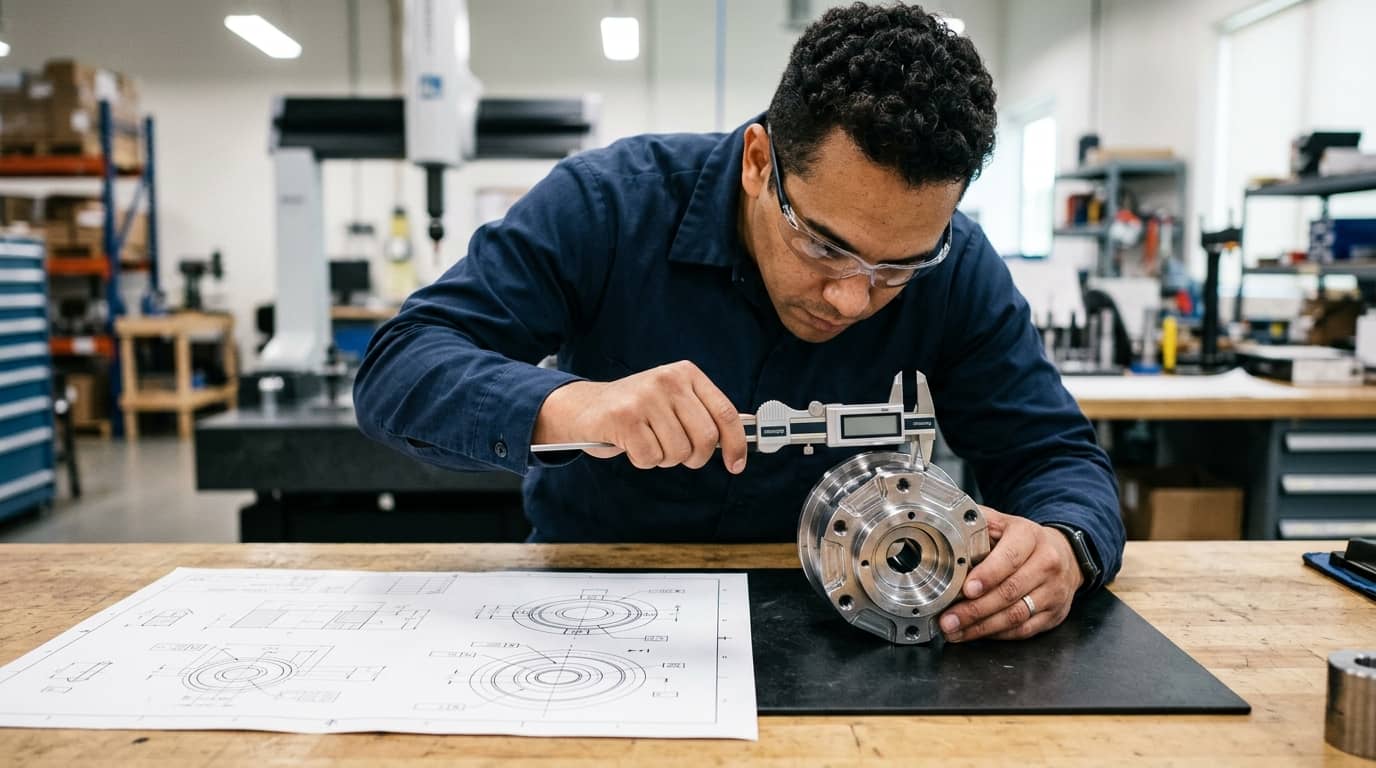
How your team learns in practice Professional Technologist in Electrical Engineering and Industrial Automation Course
How your team practices Professional Technologist in Electrical Engineering and Industrial Automation Course
Professionals from these companies study at Dedika



Course Content
8 Chapters • 40 LessonsDuration between 4 and 360 hours (you decide)
Chapter 1HideHide detailsSee detailsFoundations of Electrical Engineering
Foundations of Electrical Engineering
Lesson 1 • Magnetism and Electromagnetic Induction
Examines magnetic fields, flux, and Faraday's Law as the basis for transformers and motors. Links electromagnetic theory to practical machine operation.
Lesson 2 • Electrical Safety and Standards
Covers shock hazards, grounding, protective devices, and workplace safety standards. Ensures safe practices are integrated from the start of professional training.
Lesson 3 • AC Circuit Fundamentals
Introduces sinusoidal waveforms, phasors, impedance, and AC power concepts. Connects DC analysis skills to alternating current systems used in industry.
Lesson 4 • DC Circuit Analysis Techniques
Applies Ohm's Law, Kirchhoff's Laws, and network theorems to DC circuits. Provides analytical tools for solving series, parallel, and complex networks.
Lesson 5 • Electrical Quantities and Units
Covers voltage, current, resistance, and power with SI units. Establishes the measurement language used throughout all subsequent electrical analysis.
Chapter 2HideHide detailsSee detailsElectronic Devices and Circuits
Electronic Devices and Circuits
Lesson 1 • Operational Amplifier Circuits
Teaches ideal op-amp analysis and practical configurations including comparators and filters. Builds signal processing skills essential for sensor interfacing.
Lesson 2 • Bipolar and Field-Effect Transistors
Covers BJT and MOSFET operation, biasing, and small-signal models. Enables students to design amplifier and switching stages for control circuits.
Lesson 3 • Power Electronics Devices
Introduces SCRs, TRIACs, IGBTs, and their gate drive requirements. Prepares students for motor drive and power conversion topics in later chapters.
Lesson 4 • Semiconductor Fundamentals
Explains P-N junction behavior, doping, and carrier dynamics. Provides the physical basis for understanding all active electronic components.
Lesson 5 • Diode Circuits and Applications
Analyzes rectifier, clipper, clamper, and Zener regulator circuits. Connects diode theory to power supply and signal conditioning applications.
Chapter 3HideHide detailsSee detailsElectrical Machines and Transformers
Electrical Machines and Transformers
Lesson 1 • Machine Protection and Maintenance
Covers thermal, overcurrent, and differential protection schemes and predictive maintenance techniques. Ensures students can sustain machine reliability in industrial plants.
Lesson 2 • Three-Phase Induction Motors
Examines rotating magnetic field, slip, equivalent circuit, and torque production. Provides the foundation for variable frequency drive selection and control.
Lesson 3 • DC Machines: Motors and Generators
Covers DC machine construction, excitation types, torque-speed characteristics, and speed control. Connects machine theory to adjustable-speed drive applications.
Lesson 4 • Transformer Theory and Design
Analyzes ideal and practical transformer models, efficiency, and voltage regulation. Establishes transformer knowledge needed for power distribution and drives.
Lesson 5 • Synchronous Machines
Analyzes synchronous generator and motor operation, excitation control, and power factor correction. Links machine behavior to grid-connected and standalone systems.
Chapter 4HideHide detailsSee detailsPower Systems and Distribution
Power Systems and Distribution
Lesson 1 • Protective Relaying and Coordination
Teaches relay types, time-current coordination, and selectivity principles for industrial networks. Ensures students can design protection schemes that isolate faults safely.
Lesson 2 • Industrial Power Distribution Design
Covers switchgear, busbar sizing, cable selection, and power factor correction for industrial facilities. Connects system theory to practical plant electrical design.
Lesson 3 • Grounding Systems and Power Quality
Covers grounding electrode design, ground fault protection, and power quality standards. Links grounding and power quality to equipment reliability and personnel safety.
Lesson 4 • Power System Structure and Components
Maps generation, transmission, and distribution levels and key equipment roles. Provides the system-level context for all subsequent power engineering topics.
Lesson 5 • Fault Analysis and Short Circuit Calculations
Applies symmetrical component theory to calculate fault currents for system protection design. Enables correct selection of protective device ratings.
Chapter 5HideHide detailsSee detailsProgrammable Logic Controllers
Programmable Logic Controllers
Lesson 1 • PLC I/O Interfacing and Sensors
Covers wiring of discrete sensors, analog transmitters, and actuators to PLC I/O modules. Connects programming knowledge to physical field device integration.
Lesson 2 • PLC Architecture and Hardware
Examines CPU, memory, I/O modules, and power supply components of modern PLCs. Establishes hardware knowledge required for system configuration and wiring.
Lesson 3 • PLC Program Commissioning and Diagnostics
Applies structured testing, online monitoring, and fault diagnostics to commissioned PLC systems. Prepares students to validate and maintain automation programs in production.
Lesson 4 • Ladder Logic Programming
Teaches contacts, coils, timers, counters, and data manipulation in ladder diagrams. Builds the primary programming skill used in most industrial PLC applications.
Lesson 5 • IEC 61131-3 Programming Languages
Introduces Function Block Diagram, Structured Text, and Sequential Function Chart languages. Expands programming capability beyond ladder logic for complex automation tasks.
Chapter 6HideHide detailsSee detailsIndustrial Sensors, Actuators, and Control Loops
Industrial Sensors, Actuators, and Control Loops
Lesson 1 • Industrial Actuators and Final Control Elements
Examines control valves, variable frequency drives, and pneumatic actuators as final control elements. Links actuator characteristics to control loop performance.
Lesson 2 • PID Controller Tuning Methods
Applies Ziegler-Nichols, Cohen-Coon, and model-based tuning methods to real process loops. Enables students to achieve stable, responsive control in industrial environments.
Lesson 3 • Process Measurement and Sensors
Covers temperature, pressure, flow, and level sensors with their operating principles and signal outputs. Provides the measurement foundation for all closed-loop control design.
Lesson 4 • Closed-Loop Control Fundamentals
Introduces feedback control concepts, block diagram algebra, and transfer functions. Establishes the theoretical basis for PID controller design and tuning.
Lesson 5 • Advanced Control Strategies
Covers cascade, feedforward, ratio, and split-range control for complex industrial processes. Extends PID skills to multi-loop and interacting process control scenarios.
Chapter 7HideHide detailsSee detailsVariable Speed Drives and Motion Control
Variable Speed Drives and Motion Control
Lesson 1 • VFD Selection and Installation
Applies motor load analysis, derating factors, and cable guidelines to VFD installation. Ensures correct drive sizing and compliant installation for reliable operation.
Lesson 2 • VFD Commissioning and Parameter Setup
Guides motor nameplate entry, auto-tuning, acceleration ramp setup, and PID configuration. Prepares students to commission drives to meet process performance requirements.
Lesson 3 • Variable Frequency Drive Fundamentals
Covers VFD power conversion topology, PWM modulation, and V/Hz control principles. Establishes the technical foundation for drive selection and parameter configuration.
Lesson 4 • Advanced Drive Control: Vector and DTC
Examines field-oriented control and direct torque control for high-performance motor drives. Extends scalar drive knowledge to precision torque and speed control applications.
Lesson 5 • Servo Systems and Motion Control
Covers servo motor and drive architecture, position control loops, and multi-axis coordination. Enables students to design and commission servo-based motion control systems.
Chapter 8HideHide detailsSee detailsIndustrial Communication Networks and SCADA
Industrial Communication Networks and SCADA
Lesson 1 • Industrial Ethernet and Real-Time Protocols
Covers PROFINET, EtherNet/IP, and EtherCAT for high-speed deterministic control. Connects Ethernet knowledge to motion control and high-performance automation systems.
Lesson 2 • SCADA System Architecture and Design
Teaches SCADA components, data acquisition, historian configuration, and HMI screen design. Enables students to build centralized monitoring and control systems for industrial plants.
Lesson 3 • Industrial Communication Fundamentals
Covers OSI model layers, serial vs. Ethernet media, and noise immunity in industrial environments. Establishes the networking foundation for all fieldbus and SCADA topics.
Lesson 4 • Fieldbus and Device-Level Protocols
Examines PROFIBUS, DeviceNet, Modbus, and HART protocols for field device communication. Enables students to configure and troubleshoot device-level networks.
Lesson 5 • OPC and Data Integration Standards
Covers OPC DA, OPC UA, and data modeling for seamless device-to-enterprise integration. Prepares students to connect automation systems to MES and ERP platforms.
Your valid completion certificate
This course is for you:
Electrical technician: ready to advance into automation and control roles.
Maintenance engineer: seeking structured knowledge to back hands-on plant experience.
Recent engineering graduate: bridging the gap between academic theory and industry practice.
Career changer: transitioning from a trade background into professional engineering technology.
Instrumentation technician: expanding expertise to include drives, PLCs, and networked systems.
Plant operator: aiming to move into technical engineering or automation support positions.
Related courses




FAQ
Who is Dedika?
Is the certificate valid in United States?
Are the courses free?
What is the course workload?
What are the courses like?
How do the courses work?
What is the duration of the courses?
What is the cost or price of the courses?
What is an EAD or online course and how does it work?
PDF Course