
Brazilian Cuisine Course
Master the full spectrum of Brazilian cuisine, from Afro-Brazilian stews and churrasco grilling to classic street food and iconic desserts. This course gives you the techniques, cultural context, and hands-on skills to cook Brazil's most celebrated dishes with confidence and precision.
What you'll learn:
You will learn the historical and cultural roots of Brazilian cooking across all five major regions. You will develop knife skills, build foundational stocks and sauces, and master everyday staples like arroz branco, feijão, and farofa. The course covers slow-cooked dishes including feijoada and moqueca, as well as churrasco techniques for grilling restaurant-quality meats. You will also produce beloved street foods, traditional desserts like brigadeiro and quindim, and classic cocktails including the caipirinha. Business, plating, dietary adaptation, and beverage pairing modules round out your professional skill set.
How you study in practice Brazilian Cuisine Course
How you practise Brazilian Cuisine Course
For businesses looking to train their team
With Dedika for businesses, the course includes exercises and examples tailored to your own business and the way your company needs.

Course content
8 Chapters • 35 LessonsDuration between 4 and 360 hours (you decide)
Chapter 1HideHide detailsSee detailsFoundations of Brazilian Culinary Culture
Foundations of Brazilian Culinary Culture
Lesson 1 • Core Ingredients and Pantry Essentials
Identify the foundational ingredients used across Brazilian cooking, from grains to spices. Students stock and organise a Brazilian pantry for practical coursework.
Lesson 2 • Regional Diversity Across Brazil
Map the five major culinary regions and their signature ingredients and dishes. Students build a geographic framework for understanding recipe variation.
Lesson 3 • African and Portuguese Culinary Contributions
Examine how African and Portuguese settlers transformed Brazilian food culture. Students identify fusion techniques that define classic Brazilian flavour profiles.
Lesson 4 • History and Indigenous Culinary Roots
Trace pre-colonial indigenous foodways and their lasting influence on Brazilian cooking. This context anchors ingredient selection and preparation methods throughout the course.
Chapter 2HideHide detailsSee detailsEssential Brazilian Knife and Prep Skills
Essential Brazilian Knife and Prep Skills
Lesson 1 • Mise en Place for Brazilian Cooking
Organise ingredients, equipment, and timing before cooking begins. Efficient mise en place is the professional standard applied in every subsequent chapter.
Lesson 2 • Knife Selection and Maintenance
Identify knives suited to Brazilian produce and proteins, and maintain their edges. Proper tool care ensures safety and precision throughout the course.
Lesson 3 • Butchering and Portioning Proteins
Break down whole chickens, pork cuts, and fish common in Brazilian recipes. Correct portioning reduces waste and ensures even cooking times.
Lesson 4 • Cutting Techniques for Brazilian Produce
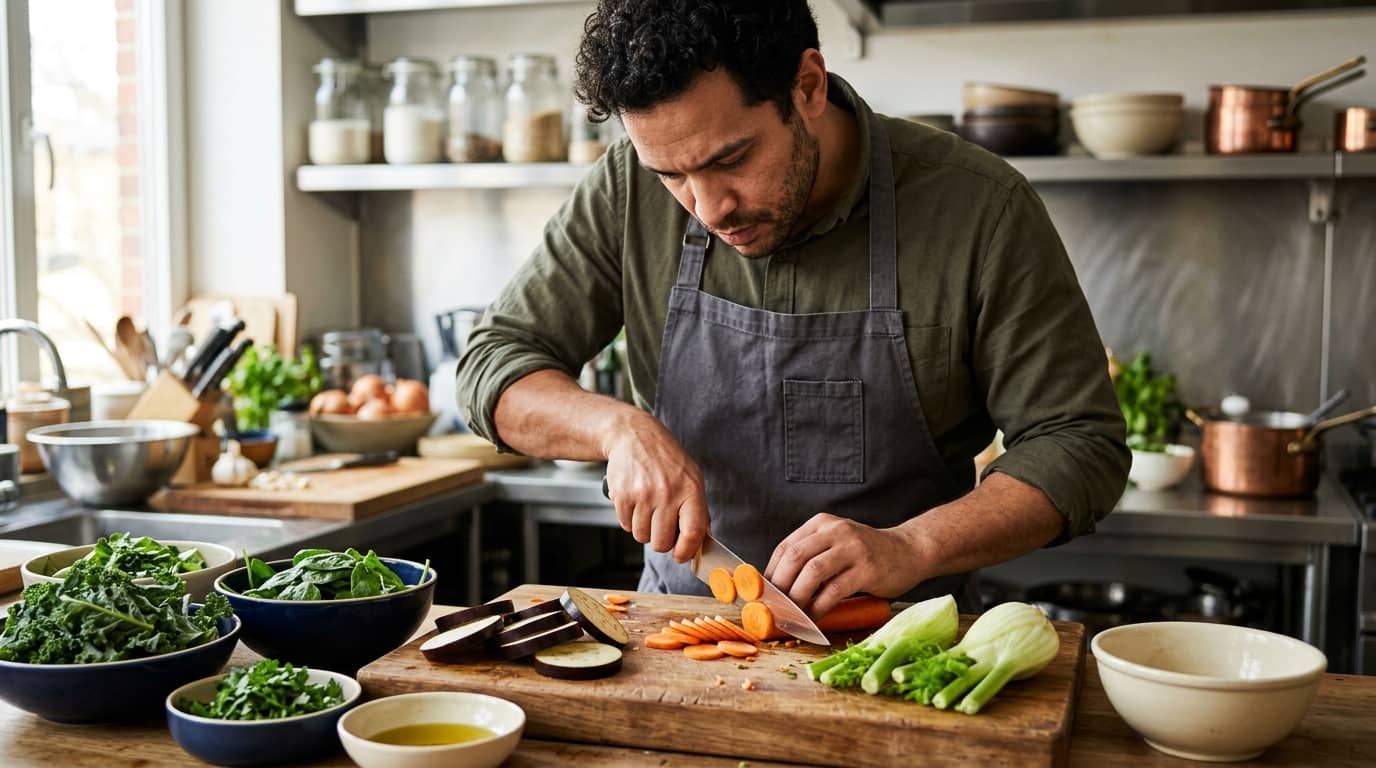
Practise julienne, brunoise, and rough chops on cassava, plantains, and tropical fruits. These cuts appear repeatedly in sauces, stews, and garnishes.
Chapter 3HideHide detailsSee detailsStocks, Sauces, and Flavour Bases
Stocks, Sauces, and Flavour Bases
Lesson 1 • Meat and Seafood Stocks
Produce clear and rich stocks from beef bones, chicken carcasses, and shrimp shells. These stocks form the liquid base for stews, soups, and braises covered later.
Lesson 2 • Vinaigrette and Pepper Sauces
Prepare vinagrete salsa and malagueta pepper sauces used as condiments and marinades. These bright, acidic preparations balance the richness of grilled and braised dishes.
Lesson 3 • Brazilian Sofrito: Refogado
Build the classic refogado base of onion, garlic, tomato, and herbs cooked in fat. This aromatic foundation appears in virtually every savoury Brazilian dish.
Lesson 4 • Coconut Milk and Dendê Sauces
Develop Bahian-style sauces using coconut milk, dendê oil, and dried shrimp. Students learn emulsification and heat control to prevent sauce breaking.
Chapter 4HideHide detailsSee detailsRice, Beans, and Grain Preparations
Rice, Beans, and Grain Preparations
Lesson 1 • Brazilian White Rice Technique
Cook arroz branco using the toasting and absorption method with refogado. Proper technique produces separate, fluffy grains that accompany every main dish.
Lesson 2 • Polenta and Corn-Based Preparations
Cook angu and canjica using stone-ground corn for savoury and sweet applications. These preparations reflect indigenous and African grain traditions in Brazilian cooking.
Lesson 3 • Black Beans and Feijão Varieties
Prepare feijão preto and other bean varieties from dried and canned forms. Students control texture and seasoning for use in feijoada and everyday meals.
Lesson 4 • Farofa: Toasted Cassava Flour
Toast farinha de mandioca with butter, bacon, and aromatics to create farofa. This textural garnish is essential to feijoada and churrasco service.
Chapter 5HideHide detailsSee detailsSoups, Stews, and Braised Dishes
Soups, Stews, and Braised Dishes
Lesson 1 • Vatapá and Afro-Brazilian Stews
Produce vatapá and caruru using peanuts, cashews, dried shrimp, and dendê oil. These Afro-Brazilian dishes require precise texture management and bold seasoning balance.
Lesson 2 • Moqueca: Bahian Seafood Stew
Cook moqueca baiana with fish, shrimp, coconut milk, and dendê oil in a clay pot. Students practise heat control to preserve seafood texture and sauce integrity.
Lesson 3 • Feijoada: Brazil's National Dish
Assemble and cook feijoada completa with black beans, smoked meats, and accompaniments. Students manage multi-component timing and traditional service presentation.
Lesson 4 • Caldo and Sopa Traditions
Prepare caldo de feijão, caldo verde, and sopa de mandioca using stock foundations. These soups demonstrate how Brazilian cooking adapts European soup formats.
Lesson 5 • Braised Meats: Carne de Panela
Braise beef and pork using the carne de panela method with tomatoes and aromatics. Students control collagen breakdown and sauce reduction for tender, flavourful results.
Chapter 6HideHide detailsSee detailsGrilling, Churrasco, and Dry-Heat Cooking
Grilling, Churrasco, and Dry-Heat Cooking
Lesson 1 • Grilled Vegetables and Side Dishes
Grill pão de queijo, polenta slices, and vegetables as churrasco accompaniments. These sides balance the richness of grilled meats and complete the churrasco spread.
Lesson 2 • Skewering and Seasoning Meats
Season picanha, fraldinha, and chicken with rock salt and marinades, then skewer correctly. Proper skewering ensures even cooking and safe rotation over the fire.
Lesson 3 • Tableside Carving and Service
Practise the rodízio-style carving technique for slicing meat directly onto guests' plates. Students develop knife control, speed, and professional service posture.
Lesson 4 • Fire and Grill Setup for Churrasco
Build and manage charcoal and wood fires for Brazilian-style grilling. Correct heat zones and coal management are prerequisites for all churrasco proteins.
Chapter 7HideHide detailsSee detailsStreet Food, Snacks, and Salgados
Street Food, Snacks, and Salgados
Lesson 1 • Esfiha and Savoury Baked Snacks
Prepare open-faced esfiha with spiced meat and closed versions with cheese. These Lebanese-Brazilian snacks demonstrate immigrant culinary influence on Brazilian street food.
Lesson 2 • Coxinha and Filled Dough Snacks
Prepare coxinha dough, chicken filling, and breading for deep frying. Students practise shaping, sealing, and frying to achieve a crisp shell with moist interior.
Lesson 3 • Acarajé: Afro-Brazilian Bean Fritters
Soak, peel, and grind black-eyed peas into batter for acarajé, then fry in dendê oil. Students learn the cultural significance and precise frying technique of this Bahian speciality.
Lesson 4 • Pão de Queijo: Cheese Bread Mastery
Mix and bake pão de queijo using polvilho azedo and fresh cheese for the correct chew. Students control hydration and oven temperature for consistent hollow, crispy results.
Lesson 5 • Pastéis and Fried Pastry Techniques
Roll and fill pastel dough with cheese, meat, or heart of palm, then deep fry to a blister. Students master thin dough rolling and oil temperature for maximum crispness.
Chapter 8HideHide detailsSee detailsBrazilian Desserts, Sweets, and Beverages
Brazilian Desserts, Sweets, and Beverages
Lesson 1 • Juices, Vitaminas, and Non-Alcoholic Drinks
Blend açaí, cupuaçu, and tropical fruit vitaminas for breakfast and dessert menus. Students balance sweetness, texture, and temperature for high-volume beverage service.
Lesson 2 • Brigadeiro and Chocolate Confections
Cook brigadeiro to the correct fudge stage using condensed milk and cocoa powder. Students practise rolling, coating, and presenting these confections for professional service.
Lesson 3 • Caipirinhas and Classic Cocktails
Muddle, measure, and balance caipirinhas using cachaça, lime, and sugar. Students learn spirit characteristics and variations using seasonal fruits for bar menu applications.
Lesson 4 • Quindim and Egg-Based Custards
Bake quindim using egg yolks, coconut, and sugar in a water bath for a glossy finish. Students control bain-marie temperature to achieve the dense, shiny custard texture.
Lesson 5 • Pudim de Leite and Caramel Desserts
Prepare pudim de leite condensado with a dry caramel and baked custard base. Students master caramel colour control and custard doneness testing for a smooth, trembling texture.
Your valid completion certificate
This course is for you:
Home cook: wants to move beyond recipes into genuine cultural technique.
Culinary student: seeking a focused regional specialisation to stand out professionally.
Restaurant cook: ready to add a distinct Latin American cuisine to their skill set.
Food entrepreneur: planning a Brazilian-themed catering, pop-up, or restaurant concept.
Cooking enthusiast with Brazilian roots: eager to reconnect with and master family food traditions.
Hospitality professional: building beverage pairing and menu planning expertise for diverse clientele.
What our students say
Your lessons are perfect. I purchased the one-year package and finally have the opportunity to follow various topics of interest without needing to change platforms... I'm grateful for everything you do, I've already recommended you to other people...

I like how the lessons are straight to the point and how I can change chapters and skip content I don't need.

I like the content and the way videos are presented and transcribed, which speeds up the process!

The platform is fast and simple to use. The diversity of content and complementary videos really help with learning.

Top upskilling courses




FAQ
Who is Dedika?
Is the certificate valid in Australia?
Are the courses free?
What is the course workload?
What are the courses like?
How do the courses work?
What is the duration of the courses?
What is the cost or price of the courses?
What is an EAD or online course and how does it work?
PDF Course