
Psychologist Course
This comprehensive Psychologist Course takes you from the philosophical roots of the discipline to advanced clinical practice, covering assessment, diagnosis, and evidence-based therapy. You will build the scientific and ethical foundation required for competent, culturally responsive psychological work. Every module is designed to develop the knowledge and applied skills that define a capable, professional psychologist.
What you will learn:
You will gain a thorough understanding of psychological theory, neuroscience, research methods, and lifespan development. The course trains you to conduct clinical interviews, administer and interpret psychological assessments, and write defensible diagnostic reports. You will study major therapeutic modalities, including cognitive-behavioral, psychodynamic, humanistic, and third-wave approaches, and learn how to apply them to diverse client populations. Forensic, organizational, and health psychology modules expand your professional scope. You will also develop crisis intervention skills, cultural competence, and the professional identity needed to enter supervised practice with confidence.
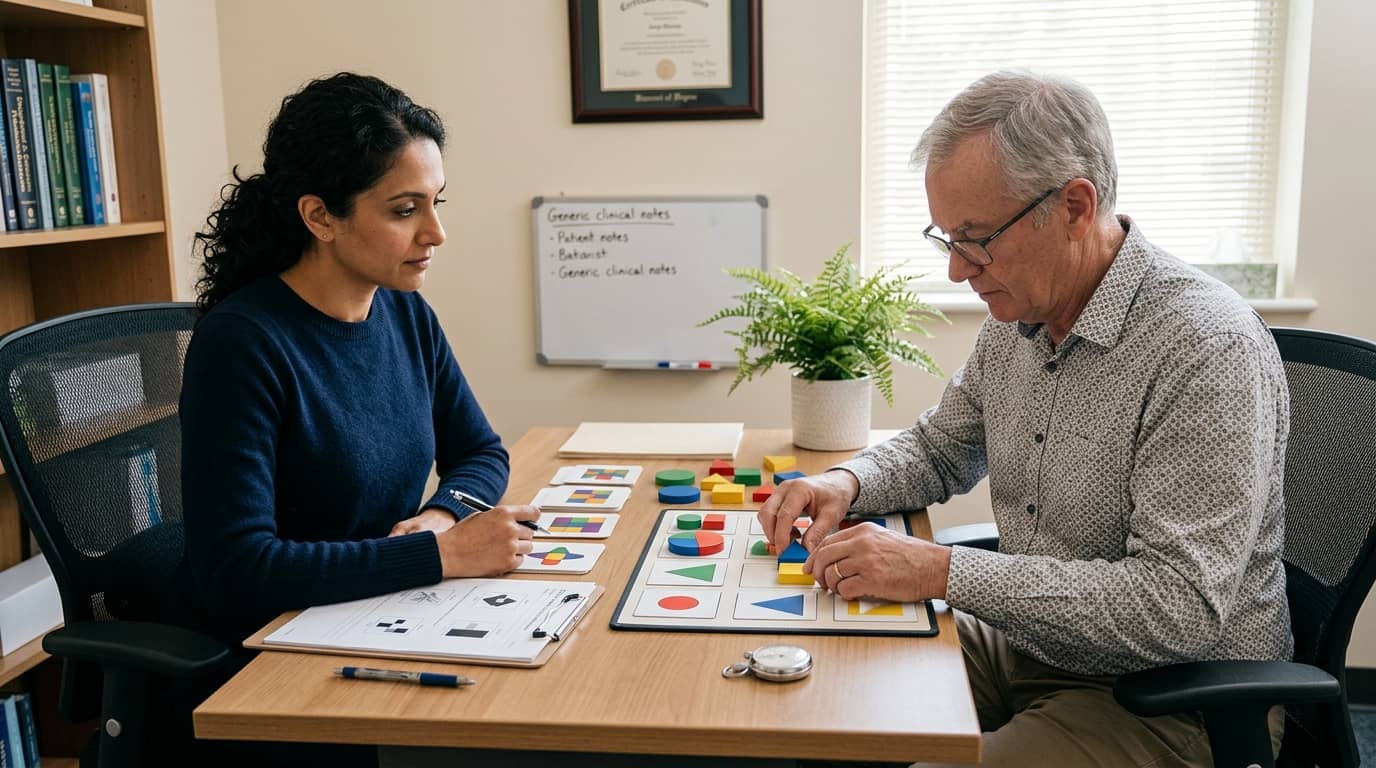
How you study in practice Psychologist Course
How you practise Psychologist Course
For companies looking to train their team
With Dedika for Business, the course includes exercises and examples tailored to your own business and the way your company needs.

Course Content
8 Chapters • 37 LessonsDuration between 4 and 360 hours (you decide)
Chapter 1HideHide detailsSee detailsFoundations of Psychology as a Discipline
Foundations of Psychology as a Discipline
Lesson 1 • Major Theoretical Perspectives
Compares psychodynamic, humanistic, cognitive, behavioral, and biological frameworks. Students apply each lens to a single case to understand their distinct explanatory power.
Lesson 2 • Ethics in Psychological Practice
Covers core ethical principles—beneficence, autonomy, justice, and fidelity—and their application to research and clinical settings. Establishes the ethical baseline for all course modules.
Lesson 3 • History and Evolution of Psychology
Traces psychology from ancient philosophy through structuralism, functionalism, and behaviorism. Provides the chronological framework needed for all subsequent theoretical study.
Lesson 4 • Scientific Method in Psychological Research
Introduces hypothesis formation, experimental design, and peer review as the backbone of evidence-based psychology. Links scientific rigor to credible clinical and research outcomes.
Chapter 2HideHide detailsSee detailsBiological Bases of Behavior
Biological Bases of Behavior
Lesson 1 • Neuroanatomy for Psychologists
Surveys major brain regions, lobes, and subcortical structures relevant to psychological functioning. Builds the anatomical vocabulary required for clinical and research communication.
Lesson 2 • Psychophysiology and Stress Response
Details the hypothalamic-pituitary-adrenal axis, autonomic arousal, and allostatic load. Students link chronic stress physiology to mental and physical health outcomes.
Lesson 3 • Neurotransmitters and Psychopharmacology Basics
Explains how neurotransmitter systems modulate mood, cognition, and behavior. Prepares students to collaborate with prescribers and interpret medication effects on clients.
Lesson 4 • Genetics, Epigenetics, and Behavior
Examines heritability, gene-environment interaction, and epigenetic modification as contributors to psychological traits. Contextualizes nature-nurture debates with current evidence.
Chapter 3HideHide detailsSee detailsResearch Methods and Statistical Analysis
Research Methods and Statistical Analysis
Lesson 1 • Research Design Fundamentals
Covers experimental, quasi-experimental, longitudinal, and single-case designs with their respective strengths and threats to validity. Prepares students to select designs matching research questions.
Lesson 2 • Research Ethics and Responsible Conduct
Addresses institutional review, participant protection, data integrity, and publication ethics. Ensures students conduct and report research in compliance with professional standards.
Lesson 3 • Systematic Review and Meta-Analysis
Guides literature searching, study selection, risk-of-bias assessment, and effect size pooling. Enables students to synthesize evidence and evaluate treatment efficacy claims.
Lesson 4 • Qualitative and Mixed-Methods Research
Introduces thematic analysis, grounded theory, phenomenology, and mixed-methods integration. Expands students' methodological repertoire beyond quantitative approaches.
Lesson 5 • Quantitative Statistical Methods
Teaches descriptive statistics, inferential testing, effect sizes, and regression analysis. Builds the quantitative literacy needed to analyze and report psychological data accurately.
Chapter 4HideHide detailsSee detailsDevelopmental Psychology Across the Lifespan
Developmental Psychology Across the Lifespan
Lesson 1 • Theories of Human Development
Compares Piaget, Vygotsky, Erikson, Bronfenbrenner, and attachment theory as frameworks for understanding growth. Establishes the theoretical toolkit for lifespan analysis.
Lesson 2 • Infancy and Early Childhood Development
Covers prenatal influences, neonatal capacities, and developmental milestones through age six. Identifies early risk and protective factors relevant to later psychological outcomes.
Lesson 3 • Adolescence and Emerging Adulthood
Analyzes identity formation, puberty, peer influence, and risk behavior during adolescence and the transition to adulthood. Connects developmental tasks to common presenting concerns.
Lesson 4 • Adulthood and Aging
Explores cognitive changes, relationship patterns, career development, and late-life adjustment. Prepares students to assess and support adults across the full adult lifespan.
Chapter 5HideHide detailsSee detailsPsychological Assessment and Testing
Psychological Assessment and Testing
Lesson 1 • Personality and Projective Assessment
Examines objective personality inventories and projective techniques, including their strengths and limitations. Situates personality assessment within a comprehensive evaluation framework.
Lesson 2 • Cognitive and Neuropsychological Assessment
Introduces intelligence testing, memory batteries, and executive function measures. Students learn to identify cognitive profiles relevant to diagnosis and treatment planning.
Lesson 3 • Psychometric Foundations
Covers classical test theory, item analysis, standardization, and normative comparison. Provides the statistical literacy needed to evaluate and select appropriate instruments.
Lesson 4 • Clinical Interviewing and Behavioral Observation
Teaches structured, semi-structured, and unstructured interview formats alongside systematic behavioral observation. Connects interview data to hypothesis generation and test selection.
Lesson 5 • Assessment Report Writing
Guides students through referral question analysis, data integration, and clear written communication of findings. Emphasizes actionable recommendations tailored to the referral source.
Chapter 6HideHide detailsSee detailsPsychopathology and Diagnostic Classification
Psychopathology and Diagnostic Classification
Lesson 1 • Case Conceptualization and Differential Diagnosis
Integrates biopsychosocial data into a coherent case formulation and systematic differential diagnosis. Bridges diagnostic knowledge to individualized treatment planning.
Lesson 2 • Trauma, Psychosis, and Personality Disorders
Examines PTSD, dissociative conditions, schizophrenia spectrum, and personality disorder clusters. Emphasizes the role of developmental history and trauma in complex presentations.
Lesson 3 • Mood and Anxiety Disorders
Covers diagnostic criteria, prevalence, course, and differential diagnosis for depressive, bipolar, and anxiety spectrum disorders. Connects symptom profiles to biological and psychological models.
Lesson 4 • Neurodevelopmental and Substance Use Disorders
Addresses ADHD, autism spectrum, intellectual disability, and substance use disorders across the lifespan. Prepares students to assess and plan treatment for these frequently co-occurring conditions.
Lesson 5 • Diagnostic Classification Systems
Compares categorical and dimensional models of psychopathology and the structure of current diagnostic manuals. Establishes the conceptual framework for all subsequent diagnostic work.
Chapter 7HideHide detailsSee detailsEvidence-Based Therapeutic Interventions
Evidence-Based Therapeutic Interventions
Lesson 1 • Third-Wave and Acceptance-Based Therapies
Introduces ACT, DBT, mindfulness-based cognitive therapy, and schema therapy. Highlights how acceptance and values clarification extend traditional CBT.
Lesson 2 • Group, Couples, and Family Therapy
Examines systemic, structural, and group dynamics frameworks for treating relational and family systems. Prepares students to facilitate and co-facilitate group and family sessions.
Lesson 3 • Psychodynamic and Humanistic Approaches
Covers transference, interpretation, unconditional positive regard, and motivational interviewing. Contrasts insight-oriented and person-centered mechanisms of change.
Lesson 4 • Cognitive-Behavioral Therapy Techniques
Teaches cognitive restructuring, behavioral activation, exposure hierarchies, and homework design. Grounds each technique in the cognitive model and its evidence base.
Lesson 5 • Treatment Planning and Progress Monitoring
Guides goal setting, session structuring, outcome measurement, and treatment adjustment. Connects ongoing monitoring data to evidence-based decision-making throughout therapy.
Chapter 8HideHide detailsSee detailsProfessional Practice and Clinical Competency
Professional Practice and Clinical Competency
Lesson 1 • Interdisciplinary Collaboration and Consultation
Covers communication with psychiatrists, social workers, educators, and medical teams. Builds the collaborative skills needed in integrated and multidisciplinary care settings.
Lesson 2 • Crisis Intervention and Risk Assessment
Teaches structured suicide risk assessment, safety planning, and crisis de-escalation protocols. Equips students to respond effectively to acute psychiatric emergencies.
Lesson 3 • Supervision and Reflective Practice
Examines supervision models, supervisee roles, and the use of self-reflection to enhance clinical skill. Prepares students to maximize learning from supervisory relationships.
Lesson 4 • Self-Care and Professional Sustainability
Addresses compassion fatigue, burnout prevention, vicarious trauma, and personal wellness strategies. Sustains long-term professional effectiveness and ethical practice.
Lesson 5 • Cultural Competence and Diversity
Develops awareness, knowledge, and skills for working with clients across cultural, racial, gender, and socioeconomic dimensions. Embeds multicultural competence in all clinical activities.
Your valid completion certificate
This course is for you:
Psychology undergraduates: ready to deepen their clinical and theoretical knowledge.
Social workers: seeking a stronger psychological framework for client-facing roles.
Career changers: drawn to mental health work from unrelated professional backgrounds.
Educators: wanting to understand student behavior through a psychological lens.
Healthcare workers: aiming to integrate psychological principles into patient care.
Counseling students: building foundational competency before entering supervised practice.
What our students say
Your classes are perfect. I purchased the one-year package and finally have the opportunity to follow various topics of interest without needing to switch platforms... I thank you for everything you do, I've already recommended you to other people...

I like how the lessons are straight to the point and how I can change chapters and skip content I don't need.

I like the content and the presentation style and video transcription, which speeds up the process!

The platform is fast, simple to use. The diversity of content and complementary videos really help with learning.

Top training programs



















FAQ
Who is Dedika?
Is the certificate valid in Canada?
Are the courses free?
What is the course workload?
What are the courses like?
How do the courses work?
What is the duration of the courses?
What is the cost or price of the courses?
What is an EAD or online course and how does it work?
PDF Course