
Calibration Management Training
Master every layer of calibration management — from measurement traceability and uncertainty analysis to equipment scheduling, documentation, and regulatory compliance. This course gives quality professionals, metrologists, and calibration technicians the technical depth and program management skills to run a calibration operation that holds up under any audit.
What you will learn:
You will build a complete understanding of calibration principles, measurement standards, and uncertainty quantification. You will learn how to write and execute calibration procedures for electrical, dimensional, temperature, and pressure instruments. The course covers documentation requirements, equipment lifecycle management, and interval optimisation strategies. You will also explore quality system alignment, corrective action processes, and industry-specific regulatory requirements. Advanced topics include KPI tracking, risk management, outsourcing decisions, and continuous improvement methods. Statistical tools, digital calibration software, and emerging technologies such as AI and IoT round out the curriculum.
How you study in a practical way Calibration Management Training
How you practise Calibration Management Training
For companies looking to train their teams
With Dedika for businesses, the course includes exercises and examples tailored to your own business and the way your company needs.

Course content
8 Chapters • 36 LessonsDuration between 4 and 360 hours (you decide)
Chapter 1HideHide detailsSee detailsFoundations of Calibration Management
Foundations of Calibration Management
Lesson 1 • What Calibration Means
Defines calibration, measurement accuracy, and traceability. Anchors all subsequent technical content to a shared conceptual baseline.
Lesson 2 • Role of Measurement in Industry
Explains how measurement errors propagate into product quality and safety decisions. Connects calibration value to real operational consequences.
Lesson 3 • Overview of Calibration Program Structure
Maps the components of a complete calibration management program. Provides a mental framework for organising all topics covered in later chapters.
Lesson 4 • Key Calibration Terminology
Introduces standardised terms used across calibration programs. Ensures consistent communication throughout the course and on the job.
Chapter 2HideHide detailsSee detailsMeasurement Standards and Traceability
Measurement Standards and Traceability
Lesson 1 • Types of Measurement Standards
Distinguishes primary, secondary, and working standards by function and uncertainty level. Guides correct standard selection for specific calibration tasks.
Lesson 2 • Calibration Certificates and Records
Covers required content of calibration certificates and how to evaluate them. Connects certificate review to maintaining a valid traceability chain.
Lesson 3 • The Traceability Chain Explained
Traces the hierarchy from international measurement standards down to field instruments. Establishes why each link in the chain must be documented and maintained.
Lesson 4 • Maintaining Traceability Over Time
Addresses drift, re-calibration intervals, and standard replacement to preserve traceability. Prepares students to manage long-term integrity of the measurement chain.
Chapter 3HideHide detailsSee detailsMeasurement Uncertainty Fundamentals
Measurement Uncertainty Fundamentals
Lesson 1 • Type A and Type B Evaluations
Explains statistical (Type A) and non-statistical (Type B) methods for estimating uncertainty components. Equips students to apply both approaches in practice.
Lesson 2 • Reporting and Applying Uncertainty
Covers how to express uncertainty in calibration records and use it in pass/fail decisions. Links uncertainty knowledge to practical calibration outcomes.
Lesson 3 • Sources of Measurement Uncertainty
Identifies environmental, instrument, operator, and method contributions to uncertainty. Builds awareness needed before any quantitative uncertainty analysis.
Lesson 4 • Combining Uncertainty Components
Demonstrates how to combine individual uncertainty components into a combined standard uncertainty. Prepares students to produce a single defensible uncertainty value.
Chapter 4HideHide detailsSee detailsCalibration Procedures and Techniques
Calibration Procedures and Techniques
Lesson 1 • Writing Effective Calibration Procedures
Defines the required elements of a calibration procedure and common pitfalls. Directly enables students to create procedures used in subsequent practical exercises.
Lesson 2 • Calibrating Temperature and Pressure Instruments
Details calibration of thermocouples, RTDs, pressure gauges, and transmitters. Reinforces procedure execution across two high-frequency process instrument types.
Lesson 3 • Handling Out-of-Tolerance Findings
Establishes the required response when an instrument fails calibration. Connects technical findings to quality system actions introduced in later chapters.
Lesson 4 • Calibrating Electrical and Electronic Instruments
Addresses calibration of multimeters, signal generators, and process transmitters. Extends procedural skills to the electrical measurement domain.
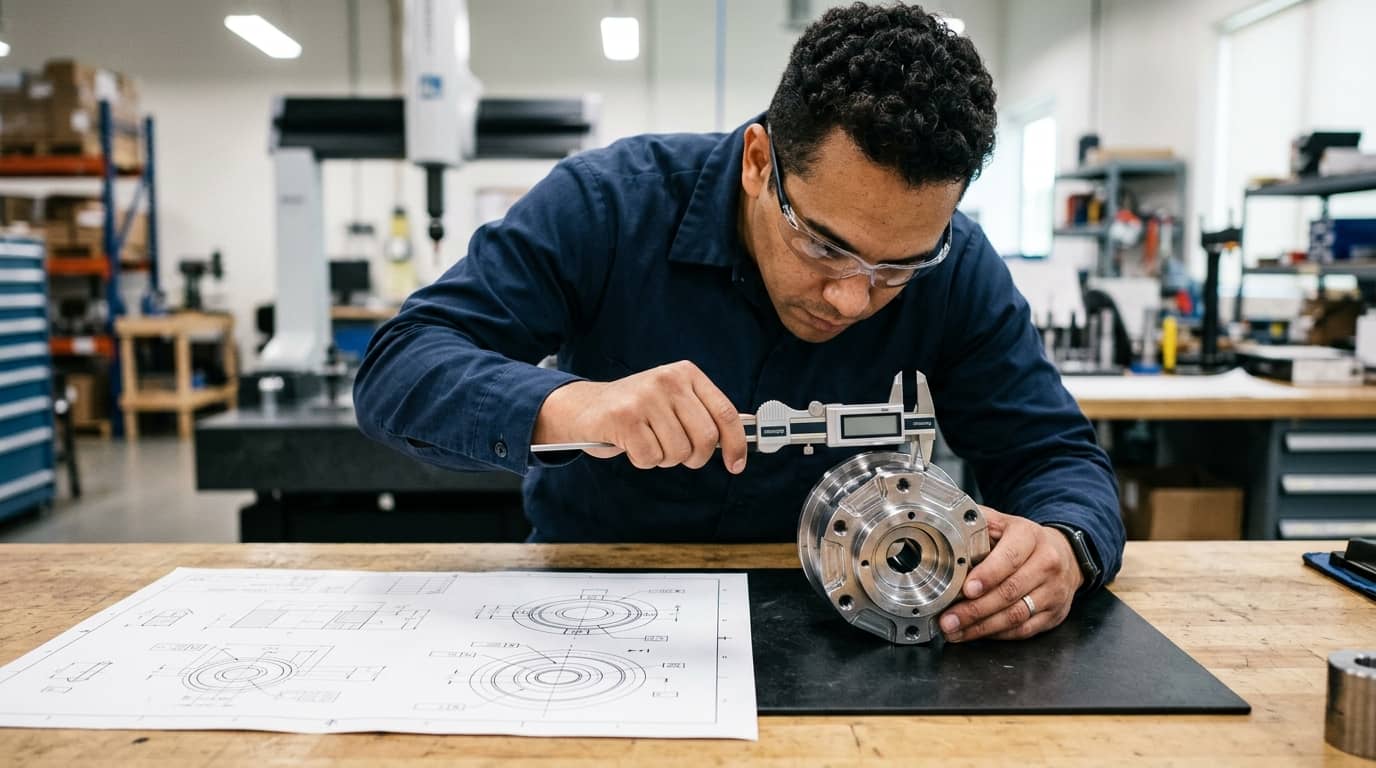
Lesson 5 • Calibrating Dimensional Instruments
Covers calibration methods for calipers, micrometers, gauges, and similar tools. Applies traceability and uncertainty concepts to a common instrument category.
Chapter 5HideHide detailsSee detailsCalibration Records and Documentation
Calibration Records and Documentation
Lesson 1 • Audit Trails and Data Integrity
Explains data integrity principles and how audit trails protect record authenticity. Directly supports compliance with quality management and regulatory audits.
Lesson 2 • Document Control for Calibration
Covers version control, approval workflows, and change management for calibration documents. Prevents use of obsolete procedures and records in active calibration work.
Lesson 3 • Electronic Calibration Management Systems
Introduces software tools for managing calibration schedules, records, and reports. Prepares students to operate and evaluate calibration management software.
Lesson 4 • Calibration Record Requirements
Specifies mandatory data fields in a calibration record and the rationale for each. Grounds documentation practice in quality system and regulatory expectations.
Chapter 6HideHide detailsSee detailsCalibration Intervals and Equipment Management
Calibration Intervals and Equipment Management
Lesson 1 • Principles of Calibration Interval Setting
Explains the factors that determine appropriate calibration frequency for each instrument. Provides the decision framework applied in all interval management activities.
Lesson 2 • Interval Adjustment Methods
Covers statistical and empirical methods for extending or shortening calibration intervals. Enables data-driven interval optimization rather than arbitrary scheduling.
Lesson 3 • Equipment Inventory and Lifecycle Management
Addresses maintaining an accurate equipment register from acquisition through retirement. Connects inventory accuracy to scheduling reliability and audit readiness.
Lesson 4 • Scheduling and Workload Planning
Covers building and managing a calibration schedule to meet all due dates. Prepares supervisors and technicians to plan resources against calibration demand.
Lesson 5 • Equipment Identification and Labeling
Defines requirements for unique equipment identification and calibration status labeling. Ensures field personnel can immediately determine instrument calibration status.
Chapter 7HideHide detailsSee detailsQuality Systems and Regulatory Compliance
Quality Systems and Regulatory Compliance
Lesson 1 • Internal Calibration Audits
Provides a structured approach to planning and conducting internal calibration audits. Builds the audit skills needed to identify and correct program weaknesses.
Lesson 2 • Laboratory Accreditation Requirements
Covers the technical and management requirements for laboratory accreditation. Prepares students to support or achieve accreditation for internal calibration labs.
Lesson 3 • Calibration Within Quality Management Systems
Maps calibration requirements to quality management system clauses and their intent. Positions calibration as a core element of product and process quality assurance.
Lesson 4 • Corrective and Preventive Action
Explains the corrective and preventive action process applied to calibration nonconformances. Closes the compliance loop by turning audit findings into lasting improvements.
Lesson 5 • Industry-Specific Regulatory Requirements
Surveys calibration obligations in regulated industries such as pharmaceutical, food, and aerospace. Enables students to identify and apply sector-specific compliance requirements.
Chapter 8HideHide detailsSee detailsAdvanced Calibration Program Management
Advanced Calibration Program Management
Lesson 1 • Risk Management in Calibration Programs
Applies risk assessment techniques to prioritize calibration resources and mitigate measurement failures. Integrates risk thinking into all program management decisions.
Lesson 2 • Communicating Program Value to Leadership
Equips calibration managers to present program data and business cases to senior stakeholders. Translates technical performance into financial and strategic language.
Lesson 3 • Continuous Improvement in Calibration
Applies process improvement methodologies to calibration workflows and program outcomes. Builds a culture of ongoing optimization within the calibration function.
Lesson 4 • Outsourcing Calibration Services
Covers criteria for selecting, qualifying, and monitoring external calibration service providers. Ensures outsourced calibrations meet the same standards as in-house work.
Lesson 5 • Key Performance Indicators for Calibration
Defines measurable KPIs that reflect calibration program health and efficiency. Enables managers to monitor performance and justify program investments.
Your valid completion certificate
This course is for you:
Calibration Technician: ready to move beyond hands-on work into program oversight.
Quality Engineer: responsible for measurement systems but lacking formal calibration training.
Metrology Lab Supervisor: managing a team without a structured program framework.
Regulatory Affairs Specialist: needing deeper calibration knowledge to support audits confidently.
Manufacturing Engineer: troubleshooting measurement inconsistencies affecting production quality.
Career Changer: transitioning into quality or metrology roles from a technical background.
What our students say
Your classes are perfect. I purchased the one-year package and finally have the opportunity to follow various topics of my interest without needing to change platforms... I thank you for everything you do, I've already recommended you to other people...

I like how the lessons are straight to the point and how I can change chapters and skip content that I don't need.

I like the content and the way of presentation and video transcription, which speeds up the process!

The platform is fast, simple to use. The diversity of content and complementary videos help a lot in learning.

Top qualifications



FAQs
Who is Dedika?
Is the certificate valid in India?
Are the courses free?
What is the course workload?
What are the courses like?
How do the courses work?
What is the duration of the courses?
What is the cost or price of the courses?
What is an EAD or online course and how does it work?
PDF Course