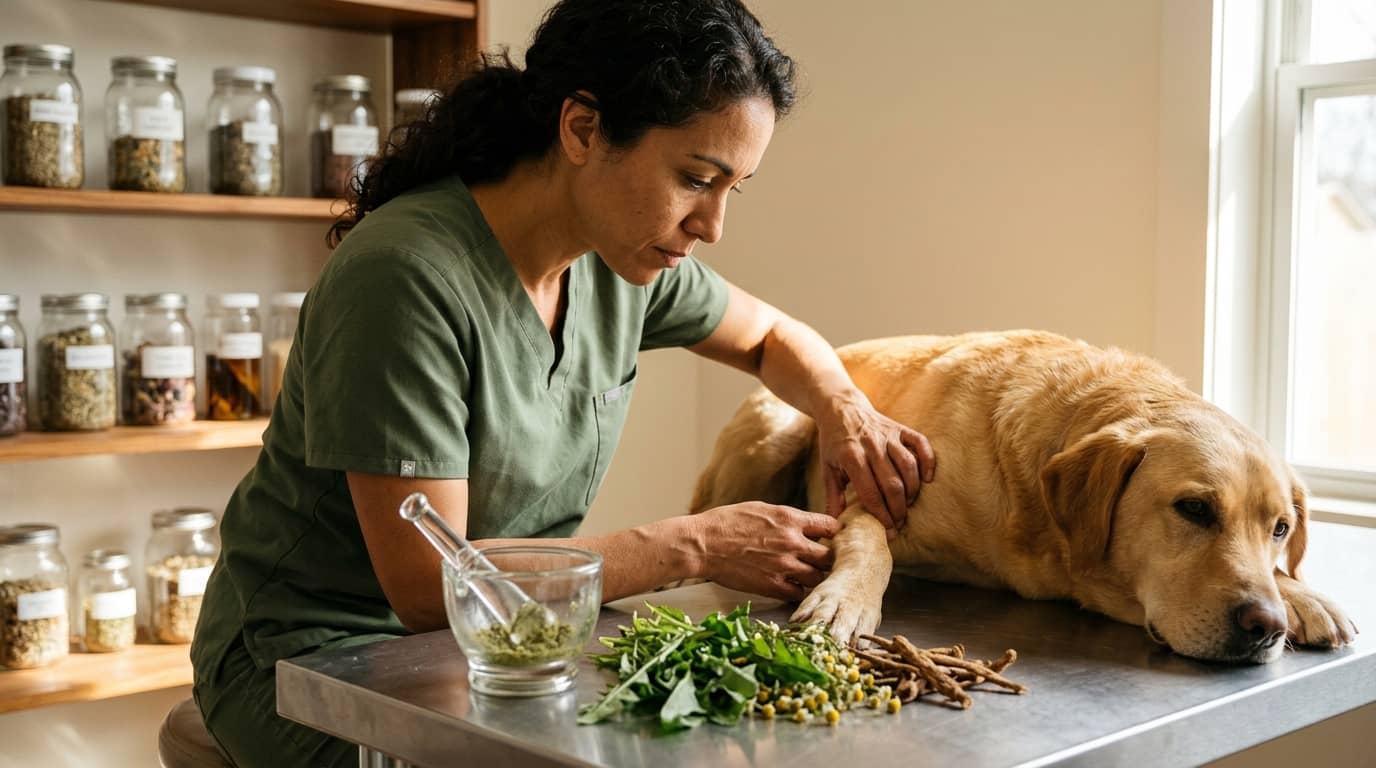
Animal Naturopath Training
Become a certified Animal Naturopath with the skills to support animal health through nutrition, herbal medicine, and holistic treatment planning. This comprehensive training covers everything from anatomy and case intake to advanced multi-condition protocols. Whether you're starting a new practice or expanding your expertise, this program gives you the tools to make a real difference for animals and their owners.
What you will learn:
In this training, you will master the foundational principles of naturopathic philosophy and learn how they apply directly to animal health across multiple species. You will study animal anatomy, physiology, and nutrition to build evidence-informed dietary and herbal protocols. The program covers naturopathic assessment techniques, treatment plan design, and condition-specific care for issues ranging from digestive disorders to behavioral conditions. You will also explore complementary modalities, including homeopathy, aromatherapy, acupressure, and Traditional Chinese Medicine. By the final chapters, you will be equipped to manage complex, multi-condition cases and build a professional naturopathic animal practice.
How you study in a practical way Animal Naturopath Training
How you practice Animal Naturopath Training
For companies who want to train their team
With Dedika for businesses, the course includes exercises and examples tailored to your own business and the way your company needs.

Course content
8 Chapters • 39 LessonsDuration between 4 and 360 hours (you decide)
Chapter 1HideHide detailsSee detailsFoundations of Animal Naturopathy
Foundations of Animal Naturopathy
Lesson 1 • Naturopathy vs. Conventional Veterinary Care
Compares naturopathic and allopathic approaches to animal health. Students articulate scope boundaries and appropriate referral criteria.
Lesson 2 • History and Philosophy of Naturopathy
Traces naturopathy from 19th-century origins to modern animal applications. Grounds students in the philosophical framework underpinning all subsequent coursework.
Lesson 3 • Core Naturopathic Principles
Defines the six foundational principles guiding naturopathic practice. Students apply these principles as decision-making criteria throughout the program.
Lesson 4 • Legal and Ethical Foundations
Covers regulatory frameworks governing animal naturopathy and professional ethics. Students navigate compliance requirements and ethical client relationships.
Chapter 2HideHide detailsSee detailsAnimal Anatomy and Physiology Review
Animal Anatomy and Physiology Review
Lesson 1 • Endocrine and Nervous Systems
Covers hormonal regulation and nervous system function relevant to animal health. Links neuroendocrine balance to naturopathic stress and wellness protocols.
Lesson 2 • Immune and Lymphatic Systems
Details innate and adaptive immunity and lymphatic drainage pathways. Provides physiological basis for immune-supportive naturopathic protocols.
Lesson 3 • Integumentary and Musculoskeletal Systems
Reviews skin, coat, hoof, and musculoskeletal structures as health indicators. Students use these systems to assess overall vitality and nutritional status.
Lesson 4 • Digestive System Physiology
Examines digestive anatomy and nutrient absorption across monogastric and ruminant species. Directly informs dietary and herbal protocol design.
Lesson 5 • Comparative Anatomy Across Species
Surveys structural differences among dogs, cats, horses, and small ruminants. Establishes species-specific anatomical context for all therapeutic decisions.
Chapter 3HideHide detailsSee detailsAnimal Nutrition and Dietary Therapy
Animal Nutrition and Dietary Therapy
Lesson 1 • Therapeutic Fasting and Detoxification
Introduces controlled fasting and elimination protocols as naturopathic tools. Students apply fasting guidelines safely across species and life stages.
Lesson 2 • Species-Appropriate Raw and Whole Food Diets
Evaluates raw, whole food, and minimally processed feeding models for each species. Students assess benefits, risks, and practical implementation strategies.
Lesson 3 • Macronutrients and Micronutrients
Defines roles of proteins, fats, carbohydrates, vitamins, and minerals in animal health. Provides the biochemical foundation for all dietary recommendations.
Lesson 4 • Life Stage and Condition-Specific Nutrition
Adapts dietary protocols for growth, reproduction, aging, and chronic conditions. Reinforces individualized care as a core naturopathic value.
Lesson 5 • Nutritional Deficiency and Excess Assessment
Teaches identification of nutrient imbalances through clinical signs and dietary history. Students design corrective dietary adjustments without supplementation overload.
Chapter 4HideHide detailsSee detailsHerbal Medicine for Animals
Herbal Medicine for Animals
Lesson 1 • Formulating Multi-Herb Protocols
Teaches systematic construction of multi-herb formulas addressing root cause and symptoms. Students build and document complete herbal protocols for case studies.
Lesson 2 • Herbal Preparations and Delivery Methods
Covers tinctures, teas, capsules, topicals, and food-based herbal delivery. Students select preparation types based on species palatability and therapeutic goals.
Lesson 3 • Dosing, Safety, and Herb-Drug Interactions
Establishes species-specific dosing calculations and identifies critical safety concerns. Students screen for herb-drug interactions before finalizing any herbal protocol.
Lesson 4 • Principles of Herbal Medicine
Introduces herbal energetics, constituents, and actions relevant to animal use. Establishes the theoretical framework for all herbal selection decisions.
Lesson 5 • Materia Medica for Common Conditions
Profiles 20 core herbs used in animal naturopathy with indications and contraindications. Students match herbs to presenting conditions using a systematic selection process.
Chapter 5HideHide detailsSee detailsNaturopathic Assessment and Case Intake
Naturopathic Assessment and Case Intake
Lesson 1 • Naturopathic Physical Observation
Teaches non-invasive physical observation techniques including coat, eyes, tongue, and posture. Students integrate observations into a holistic vitality assessment.
Lesson 2 • Case Formulation and Priority Setting
Synthesizes intake data into a prioritized naturopathic case formulation. Students identify root causes, maintaining causes, and treatment priorities.
Lesson 3 • Iridology and Energetic Assessment Tools
Introduces iridology and other energetic assessment modalities used in animal naturopathy. Students apply these tools as complementary data points within a full case picture.
Lesson 4 • Interpreting Diagnostic Reports
Builds skills in reading bloodwork, urinalysis, and imaging reports from a naturopathic lens. Students identify patterns of imbalance rather than isolated pathological markers.
Lesson 5 • Client and Animal History Taking
Structures a thorough intake interview covering diet, environment, behavior, and health history. Accurate history is the primary diagnostic tool in naturopathic practice.
Chapter 6HideHide detailsSee detailsNaturopathic Treatment Planning
Naturopathic Treatment Planning
Lesson 1 • Environmental and Lifestyle Modifications
Addresses housing, light exposure, social needs, and toxin reduction as therapeutic interventions. Students design environmental prescriptions tailored to each animal's needs.
Lesson 2 • Monitoring, Follow-Up, and Plan Revision
Establishes protocols for tracking treatment response and revising plans over time. Students use objective and subjective markers to evaluate naturopathic outcomes.
Lesson 3 • Integrating Multiple Modalities
Teaches sequencing and combining nutrition, herbs, hydrotherapy, and lifestyle changes. Students avoid modality conflicts and optimize therapeutic synergy.
Lesson 4 • Hydrotherapy and Physical Therapies
Covers water-based therapies, massage, and passive movement as naturopathic tools. Students apply these modalities to support circulation, detoxification, and recovery.
Lesson 5 • Treatment Plan Structure and Components
Defines the architecture of a complete naturopathic treatment plan. Students understand how each component addresses different layers of animal health.
Chapter 7HideHide detailsSee detailsCommon Animal Health Conditions
Common Animal Health Conditions
Lesson 1 • Musculoskeletal and Pain Conditions
Addresses arthritis, hip dysplasia, and soft tissue injuries using naturopathic modalities. Students combine nutrition, herbs, and physical therapies for pain and mobility support.
Lesson 2 • Behavioral and Neurological Conditions
Addresses anxiety, cognitive decline, and stress-related behaviors through naturopathic interventions. Students integrate nervine herbs, nutrition, and environmental modifications.
Lesson 3 • Digestive and Metabolic Disorders
Addresses leaky gut, dysbiosis, obesity, and metabolic syndrome using naturopathic tools. Students design dietary and herbal protocols targeting gut-systemic health connections.
Lesson 4 • Skin, Coat, and Allergy Conditions
Covers atopic dermatitis, food sensitivities, and chronic skin conditions from a root-cause perspective. Students apply elimination diets and anti-inflammatory protocols.
Lesson 5 • Immune and Chronic Disease Support
Covers immune dysregulation, autoimmune tendencies, and chronic disease management. Students build long-term support protocols emphasizing immune modulation.
Chapter 8HideHide detailsSee detailsAdvanced Case Management and Practice
Advanced Case Management and Practice
Lesson 1 • Professional Documentation and Reporting
Establishes standards for case records, progress notes, and client reports in naturopathic practice. Students produce documentation that supports continuity of care and professional accountability.
Lesson 2 • Acute Conditions and Crisis Response
Defines the naturopathic role in acute situations and establishes clear referral thresholds. Students distinguish supportive naturopathic care from veterinary emergencies.
Lesson 3 • Preventive Wellness Programs
Designs proactive wellness programs for individual animals and multi-animal households. Students apply seasonal, life stage, and species-specific prevention strategies.
Lesson 4 • Complex Multi-Condition Case Studies
Presents animals with overlapping chronic conditions requiring integrated protocol design. Students prioritize, sequence, and justify each therapeutic decision.
Lesson 5 • Geriatric and Palliative Naturopathic Care
Adapts naturopathic protocols for aging animals and end-of-life quality of life support. Students balance therapeutic ambition with comfort-focused care goals.
Your valid completion certificate
This course is for you:
Pet owners: want deeper knowledge to advocate for their animals' long-term health.
Animal trainers: seeking to address behavioral issues through a physiological root-cause lens.
Veterinary technicians: looking to broaden their scope with holistic, integrative care skills.
Farm and livestock managers: aiming to reduce chemical dependency through natural health protocols.
Holistic health practitioners: ready to extend their existing wellness expertise to animal clients.
Career changers: passionate about animals and searching for a meaningful new professional path.
What our students say
Your classes are perfect. I purchased the one-year package and finally have the opportunity to follow various topics of my interest without needing to change platforms... I thank you for everything you do, I've already recommended you to other people...

I like how the lessons are straight to the point and how I can switch chapters and skip content I don't need.

I like the content and the way videos are presented and transcribed, which speeds up the process!

The platform is fast, simple to use. The diversity of content and complementary videos really help with learning.

Top trainings



FAQs
Who is Dedika?
Is the certificate valid in the Philippines?
Are the courses free?
What is the course workload?
What are the courses like?
How do the courses work?
What is the duration of the courses?
What is the cost or price of the courses?
What is an EAD or online course and how does it work?
PDF Course