
Dog Handling Training Course
Master every skill a professional canine handler needs — from reading body language and assessing bite risk to executing advanced restraint and positive reinforcement training. This course covers dog psychology, equipment use, working dog roles, and high-stress emergency scenarios. Whether you're entering the field or leveling up your credentials, this is the most complete handler training available.
What you will learn:
Gain a clear understanding of canine behavior, learning theory, and social dynamics to make handling decisions from the moment you approach a dog. Develop hands‑on proficiency with collars, leads, muzzles, and restraint tools, learning to fit and inspect equipment correctly. The course covers positive‑reinforcement methods, shaping techniques, and behavior‑modification strategies for aggressive dogs. Train for specialized settings such as veterinary clinics, shelters, field operations, and urban public areas. Working‑dog disciplines—including detection, search‑and‑rescue, patrol, therapy, and service—are taught with task‑specific methods. Additional content on canine health, nutrition, welfare science, and professional development equips you to work confidently and build a lasting career.
How you study in a practical way Dog Handling Training Course
How you practice Dog Handling Training Course
For companies who want to train their team
With Dedika for businesses, the course includes exercises and examples tailored to your own business and the way your company needs.

Course content
8 Chapters • 38 LessonsDuration between 4 and 360 hours (you decide)
Chapter 1HideHide detailsSee detailsFoundations of Canine Behavior
Foundations of Canine Behavior
Lesson 1 • Reading Canine Body Language
Teaches systematic interpretation of posture, facial expression, and movement patterns. Accurate reading prevents mishandling and informs every subsequent handling decision.
Lesson 2 • Social Structure and Pack Dynamics
Explains canine social hierarchies, resource guarding, and inter-dog communication. Understanding social context reduces conflict during multi-dog handling scenarios.
Lesson 3 • Breed Characteristics and Working Drives
Examines how selective breeding shapes temperament, energy, and instinct across breed groups. Handlers match handling style to individual dog profiles from the start.
Lesson 4 • Canine Cognition and Learning Theory
Covers how dogs process information, form associations, and respond to reinforcement. Establishes the theoretical base for all training methods used throughout the course.
Chapter 2HideHide detailsSee detailsHandler Safety and Risk Assessment
Handler Safety and Risk Assessment
Lesson 1 • Incident Prevention and Response
Establishes pre-contact checklists and immediate response actions for bites and near-misses. Systematic prevention habits reduce incident frequency across all handling environments.
Lesson 2 • Safe Approach and Retreat Techniques
Teaches body positioning, movement speed, and exit strategies when approaching unknown or reactive dogs. These techniques reduce provocation and preserve handler escape options.
Lesson 3 • Personal Protective Equipment
Covers selection, fitting, and maintenance of gloves, bite sleeves, and protective clothing. Proper PPE use is mandatory before any high-risk handling exercise.
Lesson 4 • Legal and Ethical Responsibilities
Outlines handler duty of care, liability concepts, and animal welfare obligations. Compliance with welfare standards and professional ethics is non-negotiable in all practical work.
Lesson 5 • Bite Risk Evaluation
Introduces structured frameworks for scoring aggression potential based on history, posture, and environment. Risk scoring directly informs approach strategy and equipment selection.
Chapter 3HideHide detailsSee detailsEquipment Selection and Proper Use
Equipment Selection and Proper Use
Lesson 1 • Collars, Leads, and Harnesses
Compares flat collars, slip leads, head halters, and body harnesses by function and risk profile. Correct equipment choice is the first step in every practical handling session.
Lesson 2 • Restraint and Control Tools
Covers catch poles, muzzles, and squeeze cages used in veterinary and shelter contexts. Each tool is introduced with strict protocols to prevent injury to dog and handler.
Lesson 3 • Muzzle Training and Conditioning
Teaches desensitization protocols so dogs accept muzzles without stress. Voluntary muzzle acceptance improves safety and reduces handling time in clinical settings.
Lesson 4 • Equipment Inspection and Maintenance
Establishes inspection schedules and failure criteria for all handling equipment. Faulty equipment is a leading cause of handler injury and must be identified before use.
Chapter 4HideHide detailsSee detailsFundamental Handling Techniques
Fundamental Handling Techniques
Lesson 1 • Basic Obedience Commands for Handlers
Covers sit, down, stay, heel, and recall as handler-directed behaviors. Reliable command response enables safe positioning during examinations and transitions.
Lesson 2 • Leash Mechanics and Control
Teaches grip, tension management, and leash communication for directional control. Consistent leash mechanics form the physical foundation of all subsequent handling skills.
Lesson 3 • Manual Restraint Holds
Introduces standing, lateral, and sternal restraint positions used in veterinary and grooming contexts. Each hold is practiced until the handler can apply it smoothly without causing distress.
Lesson 4 • Transitioning Dogs Between Spaces
Covers loading, unloading, and moving dogs through doorways, vehicles, and kennels. Safe transitions prevent escape, injury, and inter-dog conflict in busy facilities.
Lesson 5 • Handling Fearful and Reactive Dogs
Adapts core techniques for dogs displaying fear, anxiety, or reactivity. Modified approaches reduce escalation and build the dog's tolerance for necessary handling.
Chapter 5HideHide detailsSee detailsPositive Reinforcement Training Methods
Positive Reinforcement Training Methods
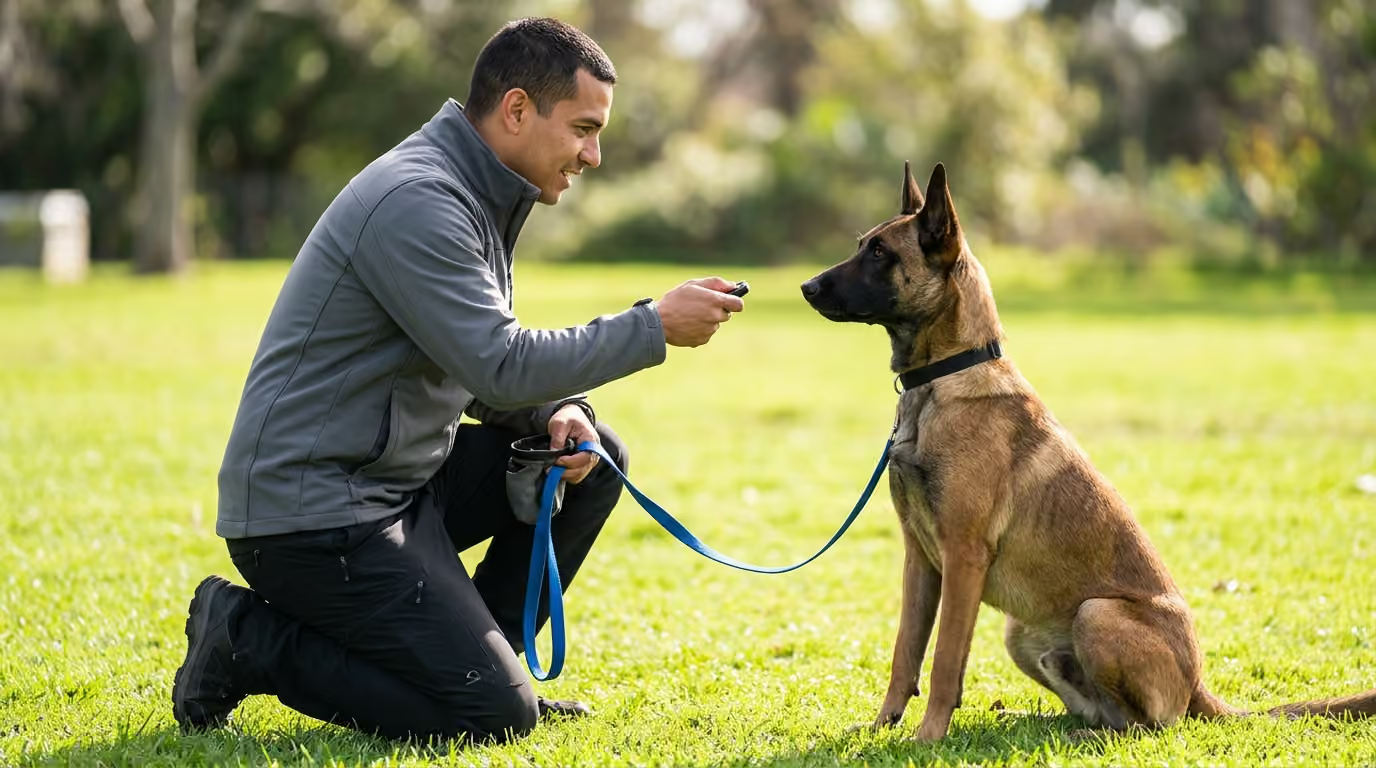
Lesson 1 • Clicker and Marker Training
Introduces the clicker as a precise event marker and covers conditioning, delivery, and fading. Marker training accelerates skill acquisition across all practical handling exercises.
Lesson 2 • Managing and Reducing Unwanted Behaviors
Covers extinction, differential reinforcement, and management strategies for problem behaviors. Handlers address jumping, pulling, and reactivity without aversive methods.
Lesson 3 • Training Plan Design and Evaluation
Guides handlers through goal setting, session structure, and progress measurement. Systematic plans ensure consistent improvement and allow objective evaluation of outcomes.
Lesson 4 • Shaping and Chaining Behaviors
Teaches successive approximation and behavior chains to build complex tasks from simple steps. These methods are applied directly to multi-step handling and search tasks.
Lesson 5 • Reinforcement Schedules and Timing
Explains continuous, fixed, and variable reinforcement schedules and their behavioral effects. Precise timing of reward delivery is the single most critical skill in shaping new behaviors.
Chapter 6HideHide detailsSee detailsSpecialized Handling Environments
Specialized Handling Environments
Lesson 1 • Outdoor and Field Handling
Prepares handlers for off-leash recall, terrain navigation, and environmental distraction management. Field competency is essential for search, patrol, and sporting dog roles.
Lesson 2 • Shelter and Kennel Operations
Addresses intake assessment, kennel enrichment, and safe dog movement in high-density facilities. Consistent protocols protect staff and maintain dog welfare under shelter conditions.
Lesson 3 • Public Access and Urban Environments
Develops handler skills for managing dogs in crowds, traffic, and unpredictable urban settings. Public access competency is required for service, therapy, and demonstration dogs.
Lesson 4 • Grooming and Husbandry Handling
Teaches restraint and positioning for bathing, nail trimming, ear cleaning, and coat care. Calm husbandry handling builds dog tolerance for routine maintenance throughout life.
Lesson 5 • Veterinary and Clinical Handling
Covers restraint for examination, injections, and diagnostic procedures in clinical settings. Cooperative care techniques reduce stress and improve procedural compliance.
Chapter 7HideHide detailsSee detailsWorking Dog Roles and Task Training
Working Dog Roles and Task Training
Lesson 1 • Search and Rescue Task Training
Covers area search, trailing, and victim indication for wilderness and urban rescue operations. Task training integrates field handling skills with systematic search methodology.
Lesson 2 • Patrol and Protection Work Basics
Introduces controlled aggression, out commands, and handler protection scenarios for patrol roles. Safety protocols govern every exercise to protect decoys, handlers, and dogs.
Lesson 3 • Therapy and Facility Dog Preparation
Prepares dogs and handlers for hospital, school, and crisis response visits through temperament and skill standards. Consistent calm behavior in novel environments is the primary certification criterion.
Lesson 4 • Service and Assistance Dog Tasks
Teaches task shaping for mobility assistance, medical alert, and psychiatric support roles. Precision and reliability standards for service tasks exceed those of general obedience.
Lesson 5 • Detection and Scent Work Fundamentals
Covers odor recognition, alert behavior shaping, and search pattern training for detection roles. Scent work builds on drive theory and reinforcement skills from earlier chapters.
Chapter 8HideHide detailsSee detailsAdvanced Handling and Problem Solving
Advanced Handling and Problem Solving
Lesson 1 • Continuing Development and Mentorship
Establishes a framework for post-certification skill maintenance, peer mentorship, and professional growth. Ongoing development sustains handler effectiveness as roles and environments evolve.
Lesson 2 • High-Stress and Emergency Scenarios
Simulates disaster response, escaped dog capture, and medical emergency handling under time pressure. Stress inoculation training builds handler composure and decision speed.
Lesson 3 • Behavior Modification for Aggression
Applies counter-conditioning and desensitization to dogs with established aggression histories. Modification plans are built on functional assessment and measurable behavioral baselines.
Lesson 4 • Multi-Dog Handling and Pack Management
Covers simultaneous control of multiple dogs, inter-dog conflict prevention, and group exercise facilitation. Multi-dog competency is required in shelter, kennel, and patrol team contexts.
Lesson 5 • Performance Assessment and Certification Prep
Reviews evaluation criteria, practical test formats, and common failure points across major certification standards. Targeted preparation ensures handlers meet competency benchmarks on assessment day.
Your valid completion certificate
This course is for you:
Aspiring handlers: seeking a structured path into professional canine work.
Veterinary technicians: needing safer, lower-stress restraint skills for clinical settings.
Animal shelter staff: managing high-volume, unpredictable dogs with limited formal training.
Law enforcement candidates: preparing for K9 unit roles or patrol dog handling.
Dog trainers: expanding their credentials into handling, welfare, and working dog disciplines.
Career changers: bringing passion for dogs into a skilled, in-demand profession.
What our students say
Your classes are perfect. I purchased the one-year package and finally have the opportunity to follow various topics of my interest without needing to change platforms... I thank you for everything you do, I've already recommended you to other people...

I like how the lessons are straight to the point and how I can switch chapters and skip content I don't need.

I like the content and the way videos are presented and transcribed, which speeds up the process!

The platform is fast, simple to use. The diversity of content and complementary videos really help with learning.

Top trainings



FAQs
Who is Dedika?
Is the certificate valid in the Philippines?
Are the courses free?
What is the course workload?
What are the courses like?
How do the courses work?
What is the duration of the courses?
What is the cost or price of the courses?
What is an EAD or online course and how does it work?
PDF Course