
Forensic Psychological Assessment Course
Master the full spectrum of forensic psychological assessment, from competency evaluations and violence risk analysis to civil litigation and expert testimony. This course equips mental health professionals with the technical skills, ethical grounding, and courtroom confidence needed to practice at the highest level. If you are ready to work at the intersection of psychology and the law, this is where your expertise gets built.
What your team will master:
You will develop a rigorous, evidence-based foundation in forensic psychological assessment covering criminal, civil, and juvenile legal contexts. The course trains you to administer and interpret validated psychological instruments, detect malingering, and formulate defensible clinical opinions. You will learn to write forensic reports that meet legal standards and to deliver expert testimony under cross-examination. Specialized modules address violence and threat risk assessment, trauma-informed evaluation, substance use analysis, and cross-cultural competence. You will also gain practical skills in professional development, ethical decision-making, and building a sustainable forensic practice.
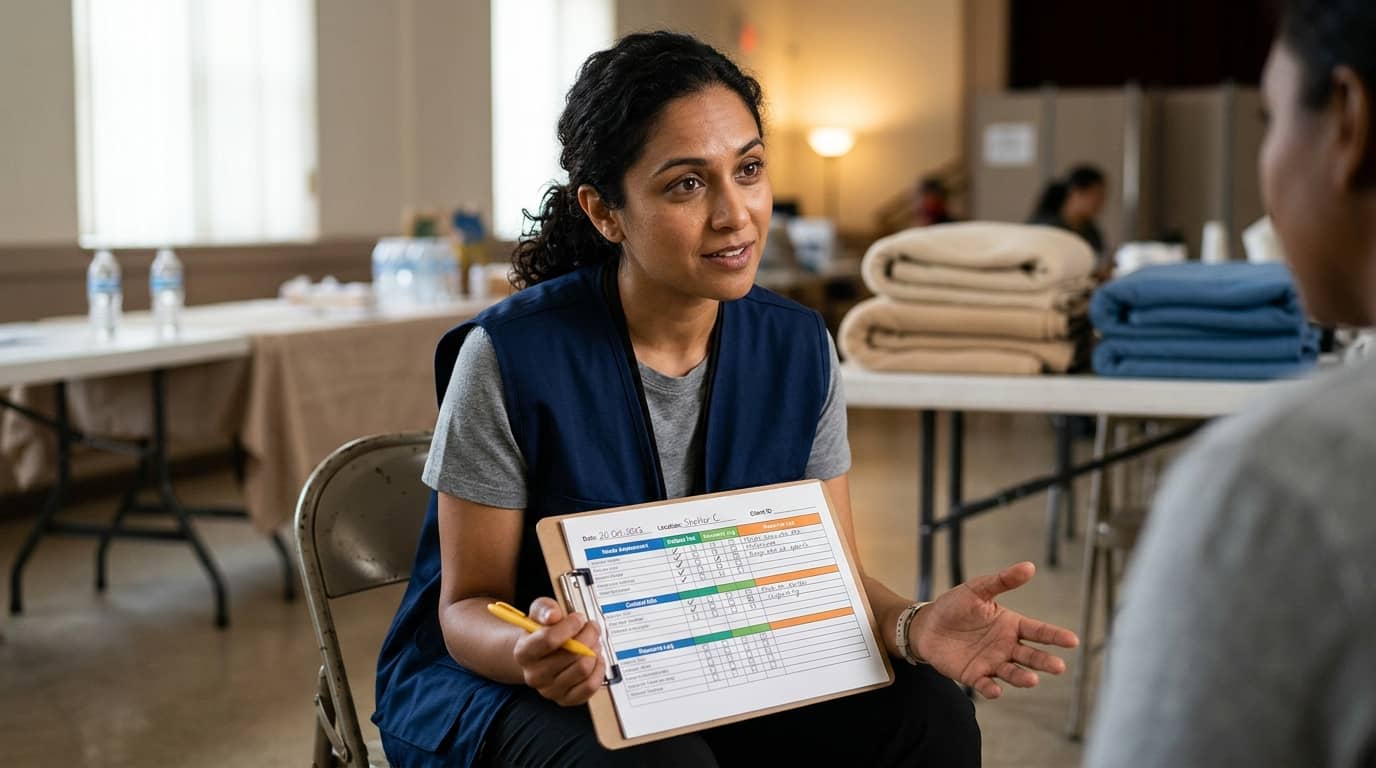
How your team studies in practice Forensic Psychological Assessment Course
How your team practices Forensic Psychological Assessment Course
Professionals from these companies study at Dedika



Course content
8 Chapters • 40 LessonsDuration between 4 and 360 hours (you decide)
Chapter 1HideHide detailsSee detailsFoundations of Forensic Psychology
Foundations of Forensic Psychology
Lesson 1 • Forensic vs. Clinical Assessment Roles
Contrasts therapeutic and forensic evaluator roles across purpose, relationship, and confidentiality. Prevents role confusion in applied practice.
Lesson 2 • Legal System Fundamentals for Psychologists
Introduces civil and criminal legal processes relevant to psychological evaluations. Enables practitioners to navigate court contexts competently.
Lesson 3 • Ethical Principles and Professional Standards
Applies professional ethics codes and specialty guidelines to forensic contexts. Establishes the ethical framework used throughout the course.
Lesson 4 • Cultural Competence in Forensic Assessment
Addresses bias, diversity, and cultural factors that affect assessment validity. Integrates cultural humility as a foundational professional value.
Lesson 5 • History and Scope of the Field
Traces the evolution of forensic psychology from early expert testimony to modern practice. Grounds subsequent chapters in disciplinary identity and scope.
Chapter 2HideHide detailsSee detailsPsychological Assessment Fundamentals
Psychological Assessment Fundamentals
Lesson 1 • Psychometric Principles and Test Theory
Covers reliability, validity, and standardization as the basis for instrument selection. Provides the technical vocabulary used in all subsequent assessment chapters.
Lesson 2 • Structured Clinical Interviews
Teaches administration of structured and semi-structured diagnostic interviews. Establishes diagnostic accuracy as a prerequisite for forensic opinion formation.
Lesson 3 • Personality and Psychopathology Measures
Reviews objective and projective personality instruments and their forensic applications. Prepares students to integrate personality data into forensic opinions.
Lesson 4 • Selecting Appropriate Assessment Instruments
Guides instrument selection based on referral question, population, and psychometric quality. Prevents misapplication of tools in forensic contexts.
Lesson 5 • Cognitive and Neuropsychological Testing
Introduces intelligence, memory, and executive function measures used in forensic evaluations. Connects cognitive data to legal questions such as competency.
Chapter 3HideHide detailsSee detailsCompetency and Criminal Responsibility Evaluations
Competency and Criminal Responsibility Evaluations
Lesson 1 • Conducting the Criminal Responsibility Evaluation
Applies structured methodology to retrospective mental state assessment. Integrates collateral records, interviews, and testing into a coherent opinion.
Lesson 2 • Criminal Responsibility and Insanity Standards
Examines legal insanity standards and the psychological constructs they invoke. Prepares students to evaluate mental state at the time of the offense.
Lesson 3 • Report Writing for Competency and Responsibility
Translates clinical findings into legally useful written opinions for these evaluations. Establishes report structure standards applied throughout the course.
Lesson 4 • Legal Standards for Competency to Stand Trial
Defines the functional legal criteria for adjudicative competency across jurisdictions. Anchors clinical assessment to legally relevant capacities.
Lesson 5 • Competency Assessment Instruments
Reviews validated tools designed specifically for competency evaluation. Enables structured, reliable data collection for competency opinions.
Chapter 4HideHide detailsSee detailsViolence and Threat Risk Assessment
Violence and Threat Risk Assessment
Lesson 1 • Violence Risk Assessment Instruments
Covers validated tools for general, domestic, and sexual violence risk. Enables evidence-based instrument selection matched to referral context.
Lesson 2 • Risk Management and Mitigation Planning
Develops actionable management plans based on risk formulation findings. Integrates supervision, treatment, and environmental strategies into recommendations.
Lesson 3 • Threat Assessment in Institutional Settings
Applies threat assessment frameworks to workplace, school, and correctional contexts. Connects risk evaluation to prevention-oriented management strategies.
Lesson 4 • Risk Formulation and Communication
Translates risk data into structured formulations that guide decision-makers. Addresses how to communicate risk level, nature, and imminence clearly.
Lesson 5 • Conceptual Models of Violence Risk
Reviews actuarial, structured professional judgment, and dynamic risk models. Establishes the theoretical basis for instrument selection and opinion formation.
Chapter 5HideHide detailsSee detailsCivil Forensic Evaluations
Civil Forensic Evaluations
Lesson 1 • Disability and Fitness-for-Duty Evaluations
Assesses occupational functioning and capacity to perform job-relevant tasks. Addresses employer referral questions within professional and ethical boundaries.
Lesson 2 • Civil Report Writing and Testimony
Adapts forensic report structure and testimony skills to civil legal contexts. Reinforces opinion clarity and defensibility under cross-examination.
Lesson 3 • Personal Injury and Psychological Damages
Evaluates psychological harm, causation, and functional impairment in civil litigation. Connects psychometric data to legal standards for damages.
Lesson 4 • Child Custody Evaluation Principles
Introduces best-interest-of-the-child standards and multi-informant assessment methods. Prepares students for the unique ethical demands of custody work.
Lesson 5 • Guardianship and Civil Competency Evaluations
Evaluates decision-making capacity for financial, medical, and personal domains. Applies functional assessment methods to civil competency legal standards.
Chapter 6HideHide detailsSee detailsMalingering and Response Style Assessment
Malingering and Response Style Assessment
Lesson 1 • Validity Scales in Personality Instruments
Interprets over-reporting and under-reporting scales within standard personality inventories. Integrates validity scale data with clinical scale interpretation.
Lesson 2 • Symptom Validity Testing
Covers performance validity tests and symptom validity measures for cognitive and psychiatric claims. Enables detection of feigned cognitive and emotional symptoms.
Lesson 3 • Conceptual Framework for Response Validity
Defines the spectrum of response styles from genuine to fully fabricated presentations. Establishes the classification system used throughout this chapter.
Lesson 4 • Integrating Validity Data into Opinions
Synthesizes multi-source validity evidence into a coherent response style conclusion. Addresses how invalid data affects the overall forensic opinion.
Lesson 5 • Communicating Validity Findings in Reports
Translates technical validity data into clear, legally defensible report language. Prepares students to defend validity conclusions under cross-examination.
Chapter 7HideHide detailsSee detailsJuvenile Forensic Assessment
Juvenile Forensic Assessment
Lesson 1 • Transfer and Disposition Evaluations
Evaluates amenability to treatment and rehabilitation for transfer and sentencing decisions. Integrates risk, needs, and developmental data into disposition opinions.
Lesson 2 • Juvenile Risk Assessment and Recidivism
Applies validated juvenile risk instruments to predict and manage reoffending. Distinguishes juvenile risk factors from adult risk constructs.
Lesson 3 • Ethical and Cultural Issues in Juvenile Work
Addresses consent, assent, confidentiality, and cultural factors unique to juvenile evaluations. Reinforces ethical practice in a vulnerable population context.
Lesson 4 • Adolescent Development and Legal Competence
Reviews neurodevelopmental and psychosocial maturity research relevant to juvenile adjudication. Grounds juvenile assessment in developmental science.
Lesson 5 • Juvenile Competency to Stand Trial
Adapts adult competency standards to juvenile developmental considerations. Covers juvenile-specific instruments and restoration approaches.
Chapter 8HideHide detailsSee detailsAdvanced Integration and Expert Testimony
Advanced Integration and Expert Testimony
Lesson 1 • Qualifying as an Expert Witness
Covers the process of qualifying as an expert and the standards courts apply to expert evidence. Prepares students for voir dire and admissibility challenges.
Lesson 2 • Multi-Method Data Integration
Applies convergent and discriminant validation logic to synthesize data across instruments. Produces coherent opinions when data sources conflict or diverge.
Lesson 3 • Direct Examination and Cross-Examination
Develops skills for presenting opinions clearly on direct and defending them under cross. Simulates adversarial testimony through structured practice exercises.
Lesson 4 • Case Consultation and Peer Review
Applies peer consultation models to complex or high-stakes forensic cases. Develops professional judgment through structured case review and feedback.
Lesson 5 • Advanced Forensic Report Writing
Refines report structure, opinion language, and legal relevance across evaluation types. Addresses common report deficiencies identified in peer review.
Your valid completion certificate
This course is for you:
Licensed psychologist: seeking to transition into forensic evaluation work.
Clinical social worker: wanting to expand into court-referred assessment roles.
Psychiatry resident: building foundational knowledge of psychology-law intersections.
Graduate psychology student: preparing for a forensic specialization after licensure.
Correctional mental health professional: aiming to formalize risk assessment competencies.
Private practice therapist: exploring civil litigation consulting as a new specialty.
Related Courses


















FAQs
Who is Dedika?
Is the certificate valid in the Philippines?
Are the courses free?
What is the course workload?
What are the courses like?
How do the courses work?
What is the duration of the courses?
What is the cost or price of the courses?
What is an EAD or online course and how does it work?
PDF Course