
Engine Mechanics Course
Master every system inside a running engine — from combustion fundamentals to full rebuilds. This course gives you the hands-on knowledge and diagnostic skills that shops actually hire for. Whether you're starting out or leveling up, you'll leave ready to tackle real engines with confidence.
What you will learn:
You'll start with engine components, classifications, and the physics behind combustion, then move into the four-stroke cycle, valve timing, and precision measurement techniques. From there, you'll cover fuel delivery systems, ignition and engine management, and both lubrication and cooling circuits. The course walks you through complete engine disassembly, inspection, and rebuild procedures using industry-standard tools and torque specs. You'll also get into advanced topics like forced induction, ECU tuning, diesel systems, and hybrid powertrain safety. By the end, you'll have the diagnostic process and mechanical skills to work on modern engines professionally.
How you study in practice Engine Mechanics Course
How you practice Engine Mechanics Course
For companies that want to train their team
With Dedika for Business, the course includes exercises and examples tailored to your own business and the way your company needs.

Course content
8 Chapters • 39 LessonsDuration between 4 and 360 hours (you decide)
Chapter 1HideHide detailsSee detailsFoundations of Engine Mechanics
Foundations of Engine Mechanics
Lesson 1 • Workshop Safety and Tool Basics
Establishes safe work practices, personal protective equipment, and proper tool handling. Safety compliance is a prerequisite for all hands-on lab sessions.
Lesson 2 • Major Engine Components Overview
Identifies and describes every primary engine part and its function. Builds the component vocabulary needed for all subsequent chapters.
Lesson 3 • History and Engine Classifications
Traces engine development from early combustion designs to modern variants. Provides context for understanding why specific configurations exist.
Lesson 4 • Core Mechanical Principles
Covers thermodynamics, force, torque, and energy conversion as applied to engines. Links physics concepts directly to engine behavior.
Chapter 2HideHide detailsSee detailsThe Four-Stroke Combustion Cycle
The Four-Stroke Combustion Cycle
Lesson 1 • Two-Stroke Cycle Comparison
Contrasts two-stroke port timing and power delivery with the four-stroke cycle. Clarifies trade-offs in power density, emissions, and lubrication.
Lesson 2 • Intake and Compression Strokes
Explains air-fuel mixture entry and compression mechanics in detail. Connects valve timing to mixture quality and compression ratio outcomes.
Lesson 3 • Power and Exhaust Strokes
Analyzes ignition timing, combustion expansion, and exhaust gas evacuation. Shows how power output is generated and waste gases are expelled.
Lesson 4 • Valve Timing and Camshaft Operation
Details how camshaft profiles control valve lift, duration, and timing events. Demonstrates the relationship between cam design and engine performance.
Chapter 3HideHide detailsSee detailsEngine Measurement and Diagnostic Tools
Engine Measurement and Diagnostic Tools
Lesson 1 • Compression and Leak-Down Testing
Teaches compression test procedures and leak-down analysis to locate internal faults. Results guide decisions on ring, valve, and gasket condition.
Lesson 2 • Precision Measurement Instruments
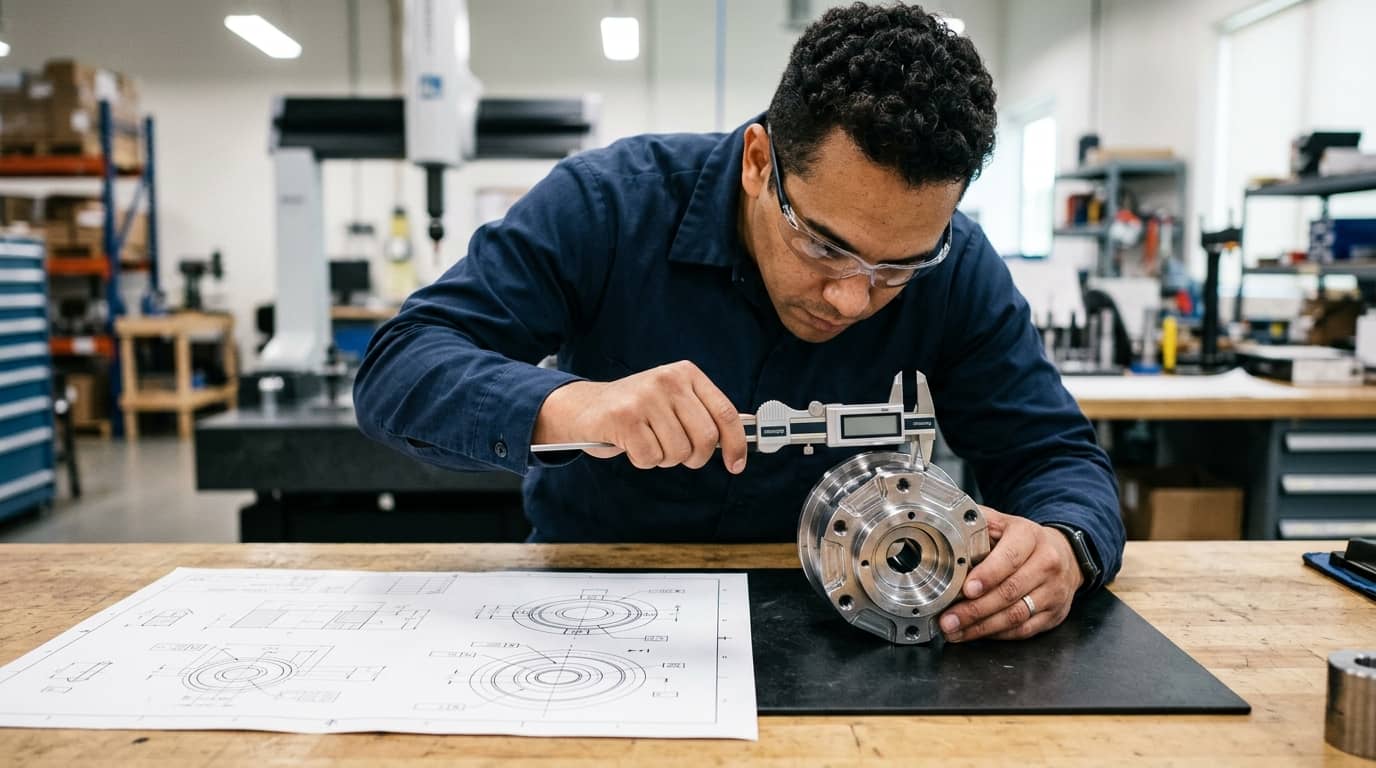
Covers micrometers, calipers, dial indicators, and bore gauges for engine work. Accurate measurement is the foundation of all machining and assembly decisions.
Lesson 3 • Oscilloscope Use for Engine Signals
Applies oscilloscope waveform analysis to ignition, sensor, and actuator signals. Waveform interpretation extends diagnostic capability beyond code readers.
Lesson 4 • Oil Analysis and Fluid Inspection
Explains how oil condition, viscosity, and contamination reveal internal wear. Fluid analysis complements mechanical testing for complete engine assessment.
Lesson 5 • Scan Tools and OBD Diagnostics
Introduces on-board diagnostic systems, fault codes, and live data streams. Links electronic data to mechanical root causes for efficient diagnosis.
Chapter 4HideHide detailsSee detailsLubrication and Cooling Systems
Lubrication and Cooling Systems
Lesson 1 • Oil Pressure Diagnosis and Service
Teaches mechanical oil pressure testing and interpretation of low-pressure causes. Connects bearing clearance, pump wear, and viscosity to pressure readings.
Lesson 2 • Overheating Diagnosis and Prevention
Identifies causes of overheating including air locks, head gasket failure, and blockage. Systematic diagnosis prevents repeat failures and engine damage.
Lesson 3 • Engine Lubrication System Design
Maps oil flow from sump through pump, galleries, and bearings back to the pan. Understanding flow paths is essential for diagnosing pressure and wear issues.
Lesson 4 • Cooling System Components and Flow
Describes coolant circulation through the water pump, radiator, thermostat, and passages. Proper flow understanding supports accurate overheating diagnosis.
Lesson 5 • Coolant Maintenance and Flush Procedures
Covers coolant types, mixing ratios, and complete flush-and-fill procedures. Proper maintenance prevents corrosion, scale, and freeze damage.
Chapter 5HideHide detailsSee detailsFuel and Air Induction Systems
Fuel and Air Induction Systems
Lesson 1 • Port Fuel Injection Systems
Details injector operation, fuel rail pressure, and ECU pulse-width control. Connects sensor inputs to injector timing and duration decisions.
Lesson 2 • Direct Injection System Mechanics
Examines high-pressure fuel pumps, injector placement, and spray strategies in GDI engines. Highlights carbon buildup risks unique to direct injection.
Lesson 3 • Fuel System Diagnosis and Testing
Applies pressure, volume, and electrical tests to isolate fuel delivery faults. Systematic testing reduces misdiagnosis and unnecessary parts replacement.
Lesson 4 • Air Filtration and Intake Design
Covers air filter types, intake manifold geometry, and airflow measurement sensors. Intake restriction and design directly affect volumetric efficiency.
Lesson 5 • Carburetor Operation and Service
Explains float, jet, and venturi operation in carbureted systems. Provides a baseline for understanding fuel metering before electronic injection.
Chapter 6HideHide detailsSee detailsIgnition Systems and Engine Management
Ignition Systems and Engine Management
Lesson 1 • Spark Plug Inspection and Service
Teaches reading plug condition as a diagnostic window into combustion quality. Proper gap setting and torque ensure reliable ignition performance.
Lesson 2 • Ignition System Fundamentals
Explains coil energy storage, primary triggering, and secondary voltage delivery to plugs. Establishes the electrical foundation for all ignition diagnostics.
Lesson 3 • Ignition Timing and Advance Systems
Covers base timing, centrifugal advance, and ECU-controlled spark timing strategies. Correct timing maximizes power while preventing detonation.
Lesson 4 • Engine Control Unit Inputs and Outputs
Maps ECU sensor inputs, actuator outputs, and control strategies for fuel and ignition. Understanding ECU logic enables accurate fault isolation.
Lesson 5 • Misfire Diagnosis and Resolution
Applies a structured diagnostic process to isolate misfire causes across ignition, fuel, and mechanical systems. Reduces comebacks through root-cause verification.
Chapter 7HideHide detailsSee detailsEngine Disassembly, Inspection, and Rebuild
Engine Disassembly, Inspection, and Rebuild
Lesson 1 • Piston, Ring, and Connecting Rod Service
Evaluates piston skirt clearance, ring end gap, and rod bearing clearance against specifications. Correct clearances ensure proper sealing and load distribution.
Lesson 2 • Engine Removal and Teardown Procedures
Covers safe engine removal, labeling, and systematic disassembly to prevent damage. Organized teardown preserves component identity for accurate inspection.
Lesson 3 • Crankshaft Inspection and Bearing Fitting
Measures journal diameter, taper, and surface finish to determine grind requirements. Proper bearing selection and crush ensure correct oil film thickness.
Lesson 4 • Cylinder Block and Bore Inspection
Measures bore diameter, taper, and out-of-round to determine machining requirements. Block integrity determines whether boring, honing, or replacement is needed.
Lesson 5 • Engine Assembly and Break-In Procedures
Sequences final assembly steps, torque specifications, and initial start-up protocols. Proper break-in establishes ring seal and bearing surfaces for long service life.
Lesson 6 • Cylinder Head Reconditioning
Covers valve seat grinding, guide replacement, and head surface resurfacing procedures. Head condition directly affects compression, sealing, and valve operation.
Chapter 8HideHide detailsSee detailsAdvanced Engine Performance and Optimization
Advanced Engine Performance and Optimization
Lesson 1 • Volumetric Efficiency and Airflow
Analyzes how port shape, valve size, and intake design affect cylinder filling. Volumetric efficiency is the primary lever for naturally aspirated power gains.
Lesson 2 • Engine Tuning and Calibration
Introduces ECU calibration tools, fuel and ignition map editing, and dyno verification. Data-driven tuning maximizes power while protecting engine reliability.
Lesson 3 • Emissions Compliance in Performance Builds
Addresses how performance modifications interact with emissions control requirements. Builds awareness of compliance obligations when modifying engines for road use.
Lesson 4 • Turbocharging and Supercharging Systems
Explains compressor maps, boost control, and intercooling for forced induction engines. Forced induction multiplies power output but requires supporting system upgrades.
Lesson 5 • Performance Camshaft Selection
Connects cam duration, lift, and LSA to power band characteristics and idle quality. Students match cam profiles to intended engine use and compression ratio.
Your valid completion certificate
This course is for you:
Aspiring technician: wants a structured path into professional automotive repair work.
Shade-tree mechanic: ready to move beyond guesswork and learn proper diagnostic methods.
Career changer: looking for a skilled trade with strong and steady job demand.
Vocational student: supplementing classroom training with deeper engine-specific technical content.
Performance enthusiast: wants to understand engine internals before modifying or building one.
Fleet maintenance worker: needs broader engine knowledge to handle more complex repair tasks.
What our students say
Your classes are perfect. I purchased the one-year package and finally have the opportunity to follow various topics of my interest without needing to switch platforms... I thank you for everything you do, I've already recommended you to other people...

I like how the lessons are straight to the point and how I can switch chapters and skip content I don't need.

I like the content and the presentation style and video transcription, which speeds up the process!

The platform is fast, simple to use. The diversity of content and complementary videos really help with learning.

Top trainings




FAQ
Who is Dedika?
Is the certificate valid in the United States?
Are the courses free?
What is the course workload?
What are the courses like?
How do the courses work?
What is the duration of the courses?
What is the cost or price of the courses?
What is an EAD or online course and how does it work?
PDF Course