
Gasoline Engine Course
Master every system inside a gasoline engine, from the four-stroke combustion cycle to advanced electronic engine management. This course gives you the hands-on knowledge to diagnose faults, service fuel and ignition systems, and rebuild engines with confidence. Whether you're entering the trade or leveling up your skills, this is the technical foundation you need.
What you will learn:
You'll gain a thorough understanding of how gasoline engines work, covering major components, combustion cycles, and performance metrics. You'll learn how fuel injection, ignition timing, and valvetrain systems interact to produce power. The course walks you through engine management electronics, OBD diagnostics, and emissions control systems. You'll also develop systematic troubleshooting skills for no-start conditions, misfires, and driveability complaints. Advanced topics include forced induction, performance tuning, flex-fuel operation, and hybrid powertrain integration. By the end, you'll be equipped to perform complete engine overhauls and apply professional shop safety standards.
How you study in practice Gasoline Engine Course
How you practice Gasoline Engine Course
For companies that want to train their team
With Dedika for Business, the course includes exercises and examples tailored to your own business and the way your company needs.

Course content
8 Chapters • 37 LessonsDuration between 4 and 360 hours (you decide)
Chapter 1HideHide detailsSee detailsGasoline Engine Fundamentals
Gasoline Engine Fundamentals
Lesson 1 • Engine Performance Metrics
Defines horsepower, torque, volumetric efficiency, and thermal efficiency. Students use these metrics to evaluate and compare engine designs.
Lesson 2 • Major Engine Components Overview
Identifies the block, head, pistons, crankshaft, and camshaft as primary structural parts. Connects each component's function to the combustion cycle.
Lesson 3 • History and Engine Classifications
Traces the evolution of gasoline engines from early designs to modern configurations. Provides context for understanding why current engine architectures exist.
Lesson 4 • The Four-Stroke Combustion Cycle
Explains intake, compression, power, and exhaust strokes in sequence. Links piston motion to crankshaft rotation and energy output.
Chapter 2HideHide detailsSee detailsFuel Systems and Air-Fuel Mixture
Fuel Systems and Air-Fuel Mixture
Lesson 1 • Carburetor Operation and Circuits
Details how carburetors meter fuel through idle, main, and power circuits. Provides the foundation for understanding fuel injection as its successor.
Lesson 2 • Fuel Storage and Delivery Components
Examines fuel tanks, pumps, filters, and lines that supply the engine. Establishes the pathway fuel travels before reaching the combustion chamber.
Lesson 3 • Port and Throttle Body Fuel Injection
Explains how injectors replace carburetors to deliver precise fuel quantities. Connects injector pulse width to air-fuel ratio control.
Lesson 4 • Direct Injection Systems
Covers high-pressure direct injection that sprays fuel directly into the cylinder. Highlights advantages in efficiency and the unique diagnostic challenges introduced.
Lesson 5 • Stoichiometry and Air-Fuel Ratios
Defines the 14.7:1 stoichiometric ratio and its role in emissions and efficiency. Students calculate rich and lean deviations and their combustion effects.
Chapter 3HideHide detailsSee detailsIgnition Systems
Ignition Systems
Lesson 1 • Ignition System Fundamentals
Introduces the purpose of ignition and the path from battery voltage to spark. Establishes why precise timing is critical to engine performance.
Lesson 2 • Distributor-Based Ignition Systems
Explains mechanical and electronic distributor systems that route high voltage. Provides historical context before transitioning to distributorless designs.
Lesson 3 • Ignition Timing and Knock Control
Explains how the ECU advances or retards timing based on load and knock sensor input. Links timing accuracy to power output, fuel economy, and engine longevity.
Lesson 4 • Distributorless and Coil-on-Plug Systems
Covers waste-spark and coil-on-plug designs that eliminate the distributor. Students identify wiring configurations and test individual coil packs.
Chapter 4HideHide detailsSee detailsValvetrain and Engine Breathing
Valvetrain and Engine Breathing
Lesson 1 • Intake Manifold Design and Airflow
Covers runner length, plenum volume, and variable intake geometry effects on torque. Students measure manifold vacuum and identify intake leaks.
Lesson 2 • Valve Timing and Variable Valve Systems
Explains how cam phasing and variable lift systems optimize power across the RPM range. Students interpret timing diagrams and identify variable valve timing faults.
Lesson 3 • Exhaust System Design and Backpressure
Explains how header design, pipe diameter, and muffler selection affect exhaust scavenging. Students identify restrictions that reduce power and increase emissions.
Lesson 4 • Valvetrain Components and Operation
Identifies camshafts, lifters, pushrods, rocker arms, and valves in overhead and pushrod designs. Connects component geometry to valve lift and duration.
Chapter 5HideHide detailsSee detailsEngine Lubrication and Cooling Systems
Engine Lubrication and Cooling Systems
Lesson 1 • Overheating Diagnosis and Prevention
Identifies causes of overheating including thermostat failure, air pockets, and head gasket leaks. Students follow a systematic diagnostic process to isolate the root cause.
Lesson 2 • Coolant Types and System Maintenance
Explains ethylene glycol, organic acid, and hybrid organic acid coolant formulations. Students flush, refill, and pressure-test the cooling system correctly.
Lesson 3 • Lubrication System Design and Components
Traces oil flow from the sump through the pump, filter, and galleries to bearings. Establishes how pressure and volume protect moving parts.
Lesson 4 • Cooling System Components and Coolant Flow
Identifies the radiator, water pump, thermostat, and hoses that regulate engine temperature. Maps coolant circulation from the engine block to the radiator and back.
Lesson 5 • Engine Oil Properties and Selection
Covers viscosity grades, additive packages, and synthetic vs. conventional oil. Students select the correct oil specification for a given engine and operating condition.
Chapter 6HideHide detailsSee detailsEngine Management and Electronic Controls
Engine Management and Electronic Controls
Lesson 1 • Emissions Control Systems
Covers EGR, EVAP, PCV, and catalytic converter systems that reduce harmful emissions. Students test each system for proper operation and diagnose related fault codes.
Lesson 2 • OBD Diagnostics and Fault Codes
Introduces on-board diagnostics monitors, readiness flags, and diagnostic trouble codes. Students retrieve, interpret, and clear codes using a scan tool.
Lesson 3 • ECU Architecture and Input Sensors
Describes ECU hardware, memory types, and the sensors that feed it real-time data. Establishes the signal chain from sensor to ECU decision.
Lesson 4 • Fuel Injection Control Strategies
Explains how the ECU calculates injector pulse width from load, RPM, and correction factors. Links fuel maps to real-world driving conditions.
Lesson 5 • Oxygen Sensors and Closed-Loop Control
Covers narrowband and wideband oxygen sensors that enable fuel trim feedback. Students read short-term and long-term fuel trim values to diagnose mixture faults.
Chapter 7HideHide detailsSee detailsEngine Diagnosis and Troubleshooting
Engine Diagnosis and Troubleshooting
Lesson 1 • No-Start and Hard-Start Diagnosis
Guides students through fuel, spark, and compression checks on a no-start engine. Builds a decision tree that narrows the fault to a single system quickly.
Lesson 2 • Performance and Driveability Complaints
Addresses hesitation, surging, stalling, and poor fuel economy complaints systematically. Links customer symptom descriptions to specific sensor or mechanical faults.
Lesson 3 • Misfire Diagnosis and Cylinder Balance
Identifies misfire causes including injector, coil, compression, and timing faults. Students use misfire counters and cylinder contribution tests to isolate the faulty cylinder.
Lesson 4 • Oil Consumption and Internal Engine Faults
Diagnoses excessive oil consumption, blue smoke, and internal wear using non-invasive tests. Students decide when engine repair or replacement is economically justified.
Lesson 5 • Diagnostic Process and Test Equipment
Introduces the six-step diagnostic process and the tools used at each stage. Prevents random-parts replacement by emphasizing evidence-based decision-making.
Chapter 8HideHide detailsSee detailsEngine Overhaul and Rebuild Procedures
Engine Overhaul and Rebuild Procedures
Lesson 1 • Short Block Assembly and Clearances
Guides students through piston fitting, ring installation, and crankshaft assembly with correct clearances. Proper torque sequences and sequences prevent premature failure.
Lesson 2 • Final Assembly and Engine Break-In
Covers head gasket selection, torque-to-yield bolt procedures, and timing component installation. Students follow a break-in protocol to seat rings and verify oil pressure.
Lesson 3 • Engine Removal and Disassembly
Details safe engine removal from the vehicle and systematic disassembly to prevent damage. Establishes documentation and parts organization practices for successful reassembly.
Lesson 4 • Cylinder Head Reconditioning
Covers valve grinding, seat cutting, guide replacement, and head surface resurfacing. Students assess head warpage and decide between resurfacing and replacement.
Lesson 5 • Engine Measurement and Inspection
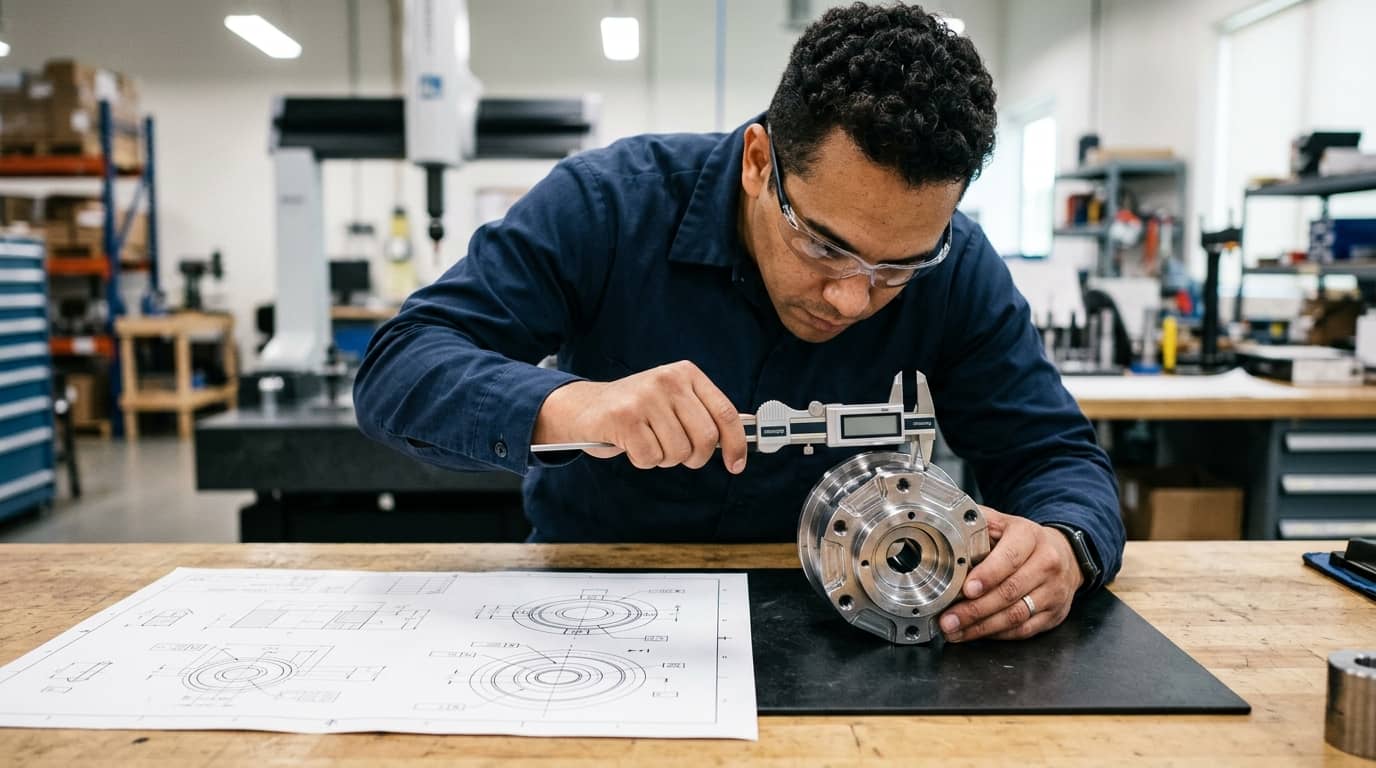
Teaches precision measurement of bores, crankshaft journals, and clearances using micrometers and gauges. Students compare measurements to specifications to determine serviceability.
Your valid completion certificate
This course is for you:
Aspiring auto technician: wants structured engine training before entering the trade.
Garage enthusiast: builds and modifies engines but lacks formal technical grounding.
Career changer: switching industries and targeting automotive service as a new path.
Vocational student: supplements classroom instruction with deeper engine system coverage.
Working mechanic: handles general repairs but wants to specialize in engine diagnostics.
Performance tuner: tunes cars for power but needs stronger fundamentals to go further.
What our students say
Your classes are perfect. I purchased the one-year package and finally have the opportunity to follow various topics of my interest without needing to switch platforms... I thank you for everything you do, I've already recommended you to other people...

I like how the lessons are straight to the point and how I can switch chapters and skip content I don't need.

I like the content and the presentation style and video transcription, which speeds up the process!

The platform is fast, simple to use. The diversity of content and complementary videos really help with learning.

Top trainings




FAQ
Who is Dedika?
Is the certificate valid in the United States?
Are the courses free?
What is the course workload?
What are the courses like?
How do the courses work?
What is the duration of the courses?
What is the cost or price of the courses?
What is an EAD or online course and how does it work?
PDF Course