
Speech Language Pathologist Course
This Speech Language Pathology course gives you the clinical knowledge and practical frameworks to assess and treat communication and swallowing disorders across the entire lifespan. From neurological foundations to AAC implementation, every module is built around evidence-based practice and real-world clinical application. Whether you're entering the field or expanding your expertise, this course prepares you to deliver competent, ethical, and effective SLP care.
What you will learn:
You will build a thorough understanding of normal communication development and use those milestones to identify and diagnose disorders in children and adults. The course covers speech sound disorders, language disorders, voice and fluency conditions, and dysphagia management using current evidence-based methods. You will learn to conduct standardised and dynamic assessments, write professional diagnostic reports, and design targeted intervention plans. Specialised content addresses school-based practice, medical settings, multicultural considerations, and augmentative and alternative communication. You will also develop skills in clinical supervision, research literacy, and professional advocacy to support long-term career growth.
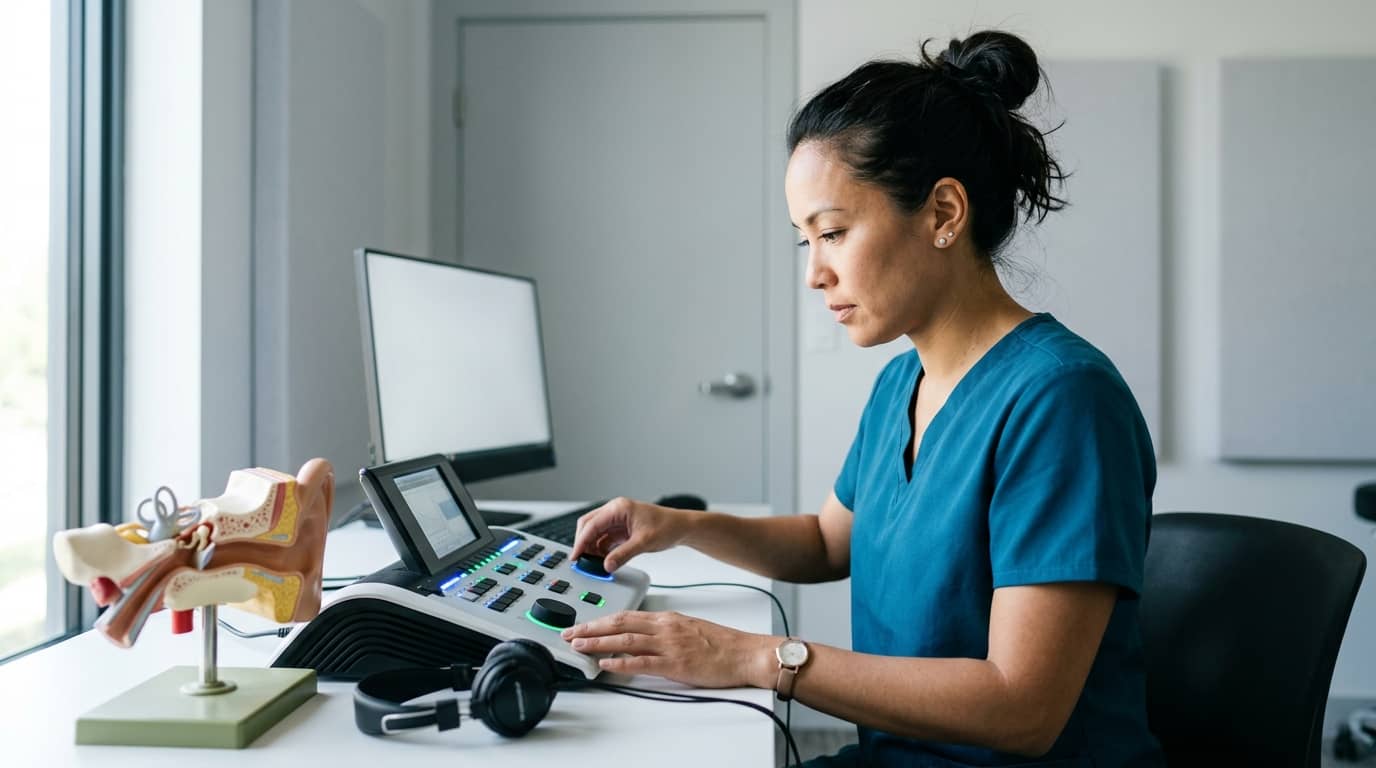
How you study in practice Speech Language Pathologist Course
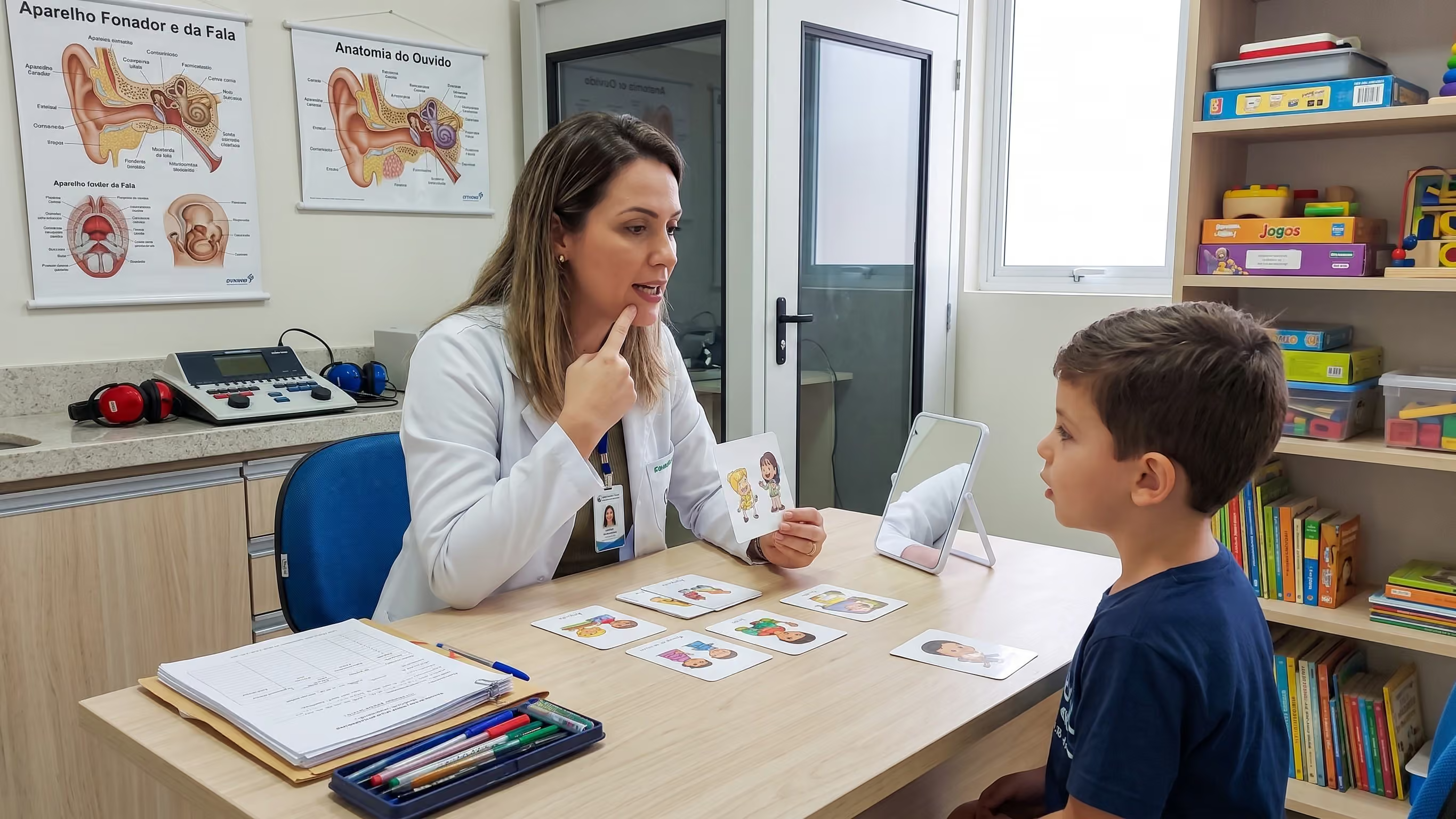
How you practise Speech Language Pathologist Course
For companies looking to train their teams
With Dedika for businesses, the course includes exercises and examples tailored to your company and its specific needs.

Course content
8 Chapters • 40 LessonsDuration between 4 and 360 hours (you decide)
Chapter 1HideHide detailsSee detailsFoundations of Speech-Language Pathology
Foundations of Speech-Language Pathology
Lesson 1 • Neurological Bases of Communication
Examines brain regions and neural pathways governing speech and language. Prepares students to link neurological damage to specific communication disorders.
Lesson 2 • Anatomy of the Speech Mechanism
Covers respiratory, phonatory, resonatory, and articulatory structures. Provides the anatomical foundation required for understanding all subsequent disorder content.
Lesson 3 • The SLP Profession and Scope of Practice
Defines the SLP role across settings and populations served. Grounds students in professional identity before clinical skill development begins.
Lesson 4 • Evidence-Based Practice in SLP
Introduces the three-component model of evidence-based practice for clinical decisions. Students learn to locate, evaluate, and integrate research evidence.
Lesson 5 • Ethics and Professional Standards
Presents the ethical code governing SLP practice and decision-making frameworks. Students apply ethical reasoning to clinical scenarios throughout the course.
Chapter 2HideHide detailsSee detailsNormal Communication Development
Normal Communication Development
Lesson 1 • Lexical and Semantic Development
Examines vocabulary growth, word-learning strategies, and semantic organisation. Students connect lexical milestones to later language disorder identification.
Lesson 2 • Morphosyntactic and Pragmatic Growth
Covers grammatical morpheme acquisition, sentence complexity, and social language use. Builds the framework for assessing language form and use disorders.
Lesson 3 • Phonological Development Across Ages
Details the sequence of sound acquisition and phonological process suppression. Provides norms used to distinguish typical variation from disorder.
Lesson 4 • Literacy and Academic Language Development
Links oral language foundations to reading, writing, and academic vocabulary. Prepares students to address school-age language and literacy disorders.
Lesson 5 • Prelinguistic Communication Milestones
Traces joint attention, gesture, and vocalisation from birth to first words. Establishes the communicative precursors that underpin language acquisition.
Chapter 3HideHide detailsSee detailsAssessment Principles and Procedures
Assessment Principles and Procedures
Lesson 1 • Assessment Planning and Case History
Guides students through referral review, case history collection, and assessment design. Systematic planning ensures no domain is overlooked before testing begins.
Lesson 2 • Standardised Testing Principles
Explains psychometric concepts including reliability, validity, and normative comparison. Students interpret standard scores, percentiles, and confidence intervals correctly.
Lesson 3 • Oral Mechanism and Motor Speech Examination
Teaches structured examination of oral structures, function, and motor speech patterns. Findings directly inform differential diagnosis of motor speech disorders.
Lesson 4 • Diagnostic Report Writing
Structures the process of synthesising assessment data into a professional report. Students produce clear diagnoses, functional impact statements, and recommendations.
Lesson 5 • Dynamic and Criterion-Referenced Assessment
Introduces non-standardised methods that reveal learning potential and functional skills. Complements norm-referenced data for a complete clinical picture.
Chapter 4HideHide detailsSee detailsSpeech Sound Disorders
Speech Sound Disorders
Lesson 1 • Phonological and Complexity Approaches
Presents minimal pairs, cycles, and complexity-based approaches for phonological disorders. Students match approach to error pattern and severity level.
Lesson 2 • Phonological Assessment Tools and Analysis
Applies standardised tests and independent and relational analyses to speech samples. Students identify error patterns and prioritise treatment targets.
Lesson 3 • Childhood Apraxia of Speech
Identifies diagnostic features of childhood apraxia of speech and evidence-based treatments. Students distinguish CAS from phonological disorder and plan motor-based therapy.
Lesson 4 • Classification of Speech Sound Disorders
Distinguishes articulation disorders, phonological disorders, and motor speech subtypes. Accurate classification drives appropriate treatment selection.
Lesson 5 • Traditional and Motor-Based Intervention
Covers the traditional articulation approach and motor learning principles for treatment. Students sequence therapy from isolation to conversational generalisation.
Chapter 5HideHide detailsSee detailsLanguage Disorders Across the Lifespan
Language Disorders Across the Lifespan
Lesson 1 • Developmental Language Disorder in Children
Examines DLD characteristics, prevalence, and evidence-based identification methods. Students distinguish DLD from language difference and co-occurring conditions.
Lesson 2 • Acquired Language Disorders in Adults
Covers aphasia types, right hemisphere disorder, and traumatic brain injury language profiles. Students conduct differential diagnosis and select appropriate adult language treatments.
Lesson 3 • Language Intervention for Children
Presents naturalistic, structured, and hybrid intervention models for child language. Students select and implement approaches matched to child profile and goals.
Lesson 4 • Autism Spectrum Disorder and Social Communication
Addresses communication profiles in ASD and evidence-based social communication intervention. Students design goals targeting joint attention, pragmatics, and AAC needs.
Lesson 5 • Language Intervention for Adults
Applies treatment approaches including CILT, semantic feature analysis, and script training. Students set measurable goals and monitor progress toward functional communication.
Chapter 6HideHide detailsSee detailsVoice, Resonance, and Fluency Disorders
Voice, Resonance, and Fluency Disorders
Lesson 1 • Resonance Disorders and Velopharyngeal Function
Examines hypernasality, hyponasality, and velopharyngeal insufficiency assessment and management. Students interpret nasometry data and coordinate with surgical teams.
Lesson 2 • Voice Disorders: Assessment and Classification
Covers perceptual, acoustic, and aerodynamic voice evaluation methods and disorder taxonomy. Students use the CAPE-V and acoustic measures to classify voice disorders.
Lesson 3 • Fluency Intervention Across the Lifespan
Applies stuttering modification, fluency shaping, and integrated approaches across age groups. Students design treatment plans addressing speech, attitude, and participation.
Lesson 4 • Fluency Disorders: Stuttering Assessment
Teaches comprehensive stuttering evaluation including frequency, type, and impact measures. Students administer the SSI-4 and assess avoidance and emotional reactions.
Lesson 5 • Voice Therapy Approaches
Presents hygienic, symptomatic, physiologic, and psychogenic voice therapy frameworks. Students match therapy approach to disorder etiology and patient profile.
Chapter 7HideHide detailsSee detailsSwallowing and Dysphagia Management
Swallowing and Dysphagia Management
Lesson 1 • Instrumental Swallowing Assessment
Covers videofluoroscopic swallowing study and fibreoptic endoscopic evaluation procedures. Students interpret imaging findings and apply standardised rating scales.
Lesson 2 • Clinical Swallowing Evaluation
Teaches bedside swallowing evaluation procedures, screening tools, and clinical signs of aspiration. Students integrate medical history and observation into a clinical impression.
Lesson 3 • Normal Swallowing Physiology
Details the oral, pharyngeal, and oesophageal phases of normal swallowing. Provides the physiological baseline required for identifying and treating dysphagia.
Lesson 4 • Paediatric Feeding and Swallowing Disorders
Addresses feeding difficulties in infants, toddlers, and children with medical complexity. Students assess oral-motor function and design family-centred feeding intervention.
Lesson 5 • Dysphagia Intervention Strategies
Presents compensatory, rehabilitative, and dietary modification approaches to dysphagia treatment. Students select strategies based on physiological impairment identified during assessment.
Chapter 8HideHide detailsSee detailsAugmentative and Alternative Communication
Augmentative and Alternative Communication
Lesson 1 • AAC Foundations and System Types
Introduces unaided and aided AAC systems, symbol types, and access methods. Establishes the conceptual framework for all subsequent AAC assessment and intervention.
Lesson 2 • AAC for Acquired and Progressive Conditions
Addresses AAC needs in ALS, Parkinson's disease, and acquired neurological conditions. Students plan proactive AAC introduction and message banking strategies.
Lesson 3 • AAC Assessment and Feature Matching
Guides students through participation-based assessment and feature-matching to select AAC systems. Students evaluate motor, sensory, cognitive, and linguistic factors.
Lesson 4 • AAC Intervention and Communication Partner Training
Applies aided language stimulation and partner training to build AAC competence. Students design intervention plans targeting operational, linguistic, and social skills.
Lesson 5 • Vocabulary Selection and Organisation
Covers core and fringe vocabulary principles and layout design for AAC systems. Students build robust vocabulary sets that support generative communication.
Your valid completion certificate
This course is for you:
Undergraduate student: exploring SLP as a graduate school pathway to pursue.
Graduate SLP student: seeking structured clinical knowledge to complement fieldwork placements.
Special education teacher: wanting deeper understanding of communication disorders in students.
Occupational therapist: expanding competency in feeding and swallowing for paediatric clients.
Career changer: transitioning into healthcare with a focus on communication sciences.
International clinician: building U.S.-aligned SLP knowledge before pursuing domestic licensure.
What our students say
Your lessons are perfect. I purchased the one-year package and finally have the opportunity to follow various topics of interest without needing to change platforms... I'm grateful for everything you do, I've already recommended you to other people...

I like how the lessons are straight to the point and how I can change chapters and skip content I don't need.

I like the content and the way videos are presented and transcribed, which speeds up the process!

The platform is fast, simple to use. The diversity of content and complementary videos really help with learning.

Top qualifications









FAQ
Who is Dedika?
Is the certificate valid in South Africa?
Are the courses free?
What is the course workload?
What are the courses like?
How do the courses work?
What is the duration of the courses?
What is the cost or price of the courses?
What is an EAD or online course and how does it work?
PDF Course