
Marriage Counseling Course
Master the full spectrum of couples therapy with a comprehensive curriculum grounded in EFT, Gottman Method, and Cognitive-Behavioral approaches. Learn to assess relationship dynamics, resolve entrenched conflict, and rebuild trust across diverse couple populations. This course equips mental health professionals with the clinical tools and ethical frameworks needed to deliver effective, evidence-based marriage counseling.
What you will learn:
This course covers foundational theoretical models, ethical standards, and culturally responsive practices essential for competent couples therapy. You will learn to conduct thorough relationship assessments, build strong therapeutic alliances, and design individualized treatment plans. Core evidence-based modalities — including Emotionally Focused Therapy, Cognitive-Behavioral Couples Therapy, and the Gottman Method — are taught in clinical depth. You will also develop skills for handling high-stakes presentations such as infidelity, intimate partner violence, and substance use. The curriculum includes premarital counseling, teletherapy adaptation, and professional self-care strategies to support a sustainable practice.
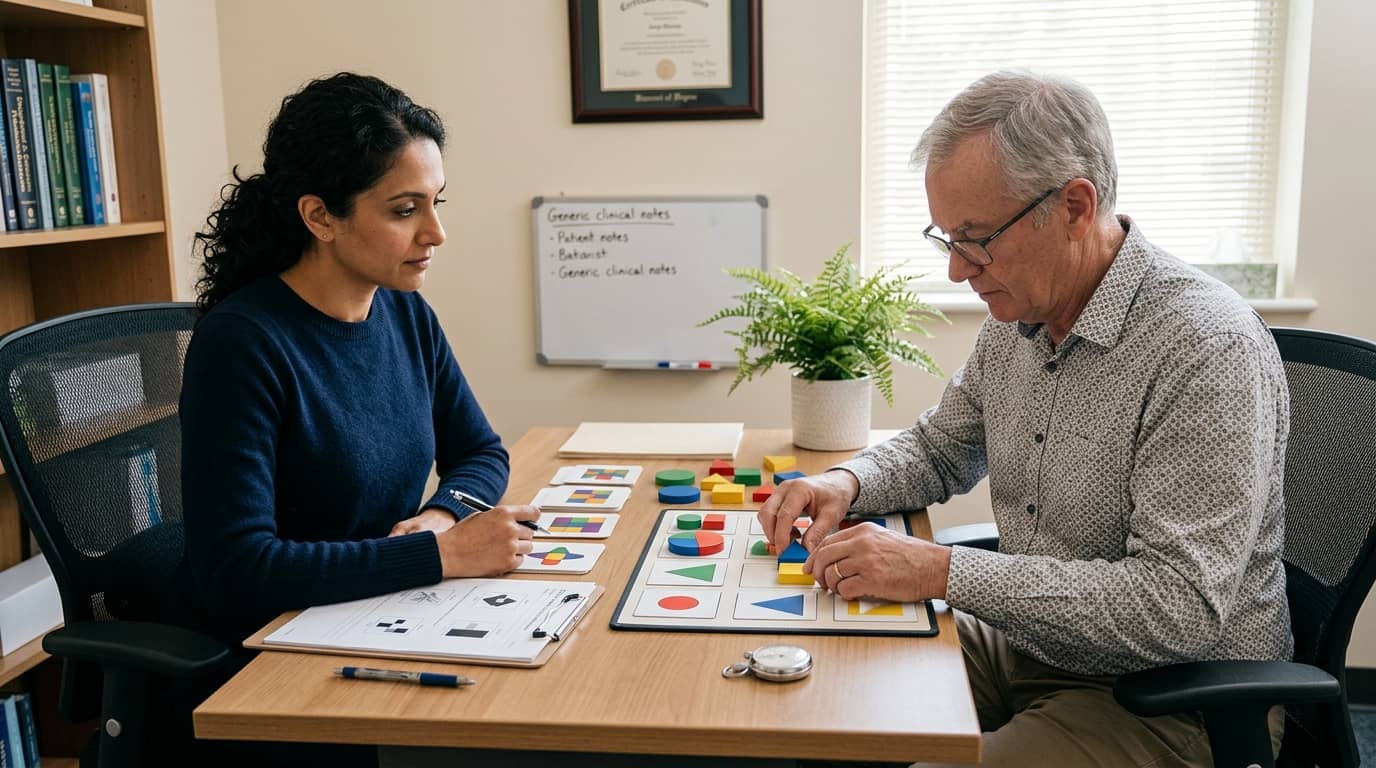
How you study in practice Marriage Counseling Course
How you practice Marriage Counseling Course
For companies looking to train their teams
With Dedika for businesses, the course includes exercises and examples tailored to your own business and the way your company needs.

Course Content
8 Chapters • 38 LessonsDuration between 4 and 360 hours (you decide)
Chapter 1HideHide detailsSee detailsFoundations of Marriage and Couples Therapy
Foundations of Marriage and Couples Therapy
Lesson 1 • Ethics and Professional Standards
Covers informed consent, confidentiality, dual relationships, and mandatory reporting in couples work. Grounds all subsequent clinical decisions in ethical reasoning.
Lesson 2 • Therapist Self-Awareness and Bias
Examines how personal values, cultural background, and countertransference shape clinical judgment. Builds reflective practice as a professional habit.
Lesson 3 • Core Theoretical Models Overview
Introduces attachment, systems, and cognitive-behavioral frameworks as lenses for understanding couples. Provides a comparative map for selecting interventions.
Lesson 4 • History and Evolution of Couples Therapy
Traces couples therapy from early marital guidance to evidence-based practice. Contextualizes modern approaches within historical shifts in relationship science.
Chapter 2HideHide detailsSee detailsBuilding the Therapeutic Alliance with Couples
Building the Therapeutic Alliance with Couples
Lesson 1 • Joining and Validation Techniques
Teaches empathic joining, normalization, and validation to build safety with each partner. Demonstrates how validation reduces defensiveness and opens dialogue.
Lesson 2 • Managing Therapist Neutrality and Impartiality
Addresses the challenge of remaining impartial when partners present conflicting narratives. Provides tools for redirecting blame and maintaining systemic focus.
Lesson 3 • Alliance Theory in Couples Work
Explains how alliance operates at individual, dyadic, and therapist-couple levels. Distinguishes couples alliance from individual therapy alliance research.
Lesson 4 • Repairing Alliance Ruptures
Identifies markers of alliance rupture and teaches structured repair strategies. Rupture repair strengthens trust and models healthy conflict resolution for couples.
Chapter 3HideHide detailsSee detailsRelationship Assessment and Case Conceptualization
Relationship Assessment and Case Conceptualization
Lesson 1 • Identifying Relationship Patterns and Cycles
Teaches recognition of demand-withdraw, pursue-distance, and escalation cycles. Links observable patterns to underlying emotional and attachment needs.
Lesson 2 • Intake and Initial Interview Techniques
Structures the first session to gather relational history, presenting concerns, and goals. Sets the tone for a collaborative therapeutic alliance from the outset.
Lesson 3 • Building a Couples Case Conceptualization
Integrates assessment data into a coherent narrative explaining couple distress. Connects conceptualization directly to measurable treatment goals.
Lesson 4 • Standardized Assessment Instruments
Introduces validated questionnaires measuring satisfaction, communication, and conflict patterns. Teaches scoring, interpretation, and integration into case notes.
Lesson 5 • Goal Setting and Treatment Planning
Guides couples in defining specific, measurable, and mutually agreed-upon therapy goals. Aligns therapist and couple expectations to improve engagement and outcomes.
Chapter 4HideHide detailsSee detailsCommunication Skills Training for Couples
Communication Skills Training for Couples
Lesson 1 • Active Listening and Empathic Responding
Trains couples in reflective listening, paraphrasing, and empathic validation. Reduces misattunement and increases felt understanding between partners.
Lesson 2 • Nonverbal Communication and Attunement
Examines tone, body language, and micro-expressions as relational signals. Teaches couples to read and respond to nonverbal cues more accurately.
Lesson 3 • Homework and Skill Generalization
Designs between-session communication exercises that reinforce in-session learning. Addresses barriers to homework completion and tracks skill transfer.
Lesson 4 • Speaker-Listener and Structured Dialogue
Introduces structured formats that slow communication and reduce reactivity. Teaches therapists to coach couples through the speaker-listener technique in session.
Lesson 5 • Assertiveness and Expressing Needs Clearly
Teaches partners to express needs, feelings, and requests without blame or criticism. Builds assertive communication as an alternative to passive or aggressive styles.
Chapter 5HideHide detailsSee detailsConflict Resolution and Emotion Regulation
Conflict Resolution and Emotion Regulation
Lesson 1 • Physiological Arousal and Flooding
Explains how physiological flooding impairs rational communication during conflict. Teaches self-monitoring and time-out protocols to restore regulated dialogue.
Lesson 2 • Repair Attempts and Forgiveness
Identifies repair attempts that interrupt negative cycles and teaches couples to recognize them. Introduces forgiveness as a process that reduces resentment and restores connection.
Lesson 3 • Understanding Conflict in Relationships
Distinguishes solvable problems from perpetual issues rooted in personality differences. Frames conflict as a normal relational process rather than a sign of incompatibility.
Lesson 4 • Emotion Regulation Techniques
Introduces mindfulness, grounding, and cognitive reappraisal to manage intense emotions. Builds individual regulation capacity as a prerequisite for productive couple dialogue.
Lesson 5 • Structured Problem-Solving for Couples
Teaches a step-by-step problem-solving protocol for solvable conflicts. Guides couples from problem definition through solution implementation and review.
Chapter 6HideHide detailsSee detailsEmotionally Focused Therapy for Couples
Emotionally Focused Therapy for Couples
Lesson 1 • EFT Theory and Attachment Science
Grounds EFT in adult attachment theory and explains how insecure bonds drive relational distress. Links attachment styles to specific negative interaction cycles.
Lesson 2 • Stage Two: Restructuring Attachment Bonds
Guides therapists through withdrawer re-engagement and blamer softening events. These pivotal events shift attachment positions and create new bonding experiences.
Lesson 3 • Stage Three: Consolidation and Integration
Helps couples narrate their change story and apply new interaction patterns to old problems. Prepares couples for termination with a secure relational foundation.
Lesson 4 • Stage One: Cycle De-escalation
Teaches assessment, alliance building, and cycle identification in EFT Stage One. Couples externalize the negative cycle as the shared enemy rather than each other.
Lesson 5 • EFT Interventions and Techniques
Covers RISSSC, evocative responding, empathic conjecture, and enactments as core EFT tools. Provides practice frameworks for each technique with clinical examples.
Chapter 7HideHide detailsSee detailsCognitive-Behavioral Couples Therapy
Cognitive-Behavioral Couples Therapy
Lesson 1 • Identifying and Restructuring Cognitive Distortions
Teaches identification of mind-reading, catastrophizing, and attribution errors in couples. Guides Socratic questioning and thought records adapted for relational contexts.
Lesson 2 • Integrating Acceptance Strategies in CBCT
Incorporates acceptance-based techniques from IBCT to address unchangeable differences. Balances change-focused and acceptance-focused interventions within CBCT.
Lesson 3 • Schema-Focused Work with Couples
Addresses deep-seated schemas from family of origin that drive relational conflict. Integrates schema identification with behavioral experiments in couples sessions.
Lesson 4 • Behavioral Activation and Positive Exchange
Uses behavioral activation to increase positive interactions and reduce negative reciprocity. Teaches caring behaviors and love map exercises to rebuild goodwill.
Lesson 5 • CBCT Theoretical Framework
Explains how cognitions, behaviors, and emotions interact to maintain couple distress. Distinguishes CBCT from individual CBT by emphasizing reciprocal influence.
Chapter 8HideHide detailsSee detailsSpecialized Issues in Couples Counseling
Specialized Issues in Couples Counseling
Lesson 1 • Substance Use and Couples Therapy
Examines how substance use disorders disrupt relational functioning and treatment engagement. Integrates behavioral couples therapy for addiction into standard couples work.
Lesson 2 • Intimate Partner Violence Screening and Safety
Teaches differentiated assessment of situational couple violence vs. coercive control. Establishes safety planning as a non-negotiable clinical priority before any intervention.
Lesson 3 • Mental Health Comorbidities in Couples Work
Addresses depression, anxiety, trauma, and personality disorders as they affect couples therapy. Teaches collaborative case management with individual therapists and prescribers.
Lesson 4 • Sexual Concerns and Intimacy Issues
Addresses desire discrepancy, sexual dysfunction, and intimacy avoidance within couples therapy. Teaches sensate focus and psychoeducation as first-line interventions.
Lesson 5 • Treating Infidelity and Betrayal Trauma
Guides therapists through disclosure, impact processing, and trust rebuilding after infidelity. Applies a trauma-informed lens to the betrayed partner's acute distress.
Your valid completion certificate
This course is for you:
Licensed counselors or therapists: ready to add couples work to their practice.
Graduate students in counseling programs: building clinical skills before licensure.
Social workers in family services: seeking structured couples intervention training.
Psychologists in private practice: expanding scope to include relationship-focused care.
Career changers entering mental health: drawn specifically to relational and couples work.
Coaches or educators in relationship fields: seeking a rigorous clinical knowledge base.
What our students say
Your classes are perfect. I purchased the one-year package and finally have the opportunity to follow various topics of interest without needing to switch platforms... I thank you for everything you do, I've already recommended you to other people...

I like how the lessons are straight to the point and how I can switch chapters and skip content I don't need.

I like the content and the presentation style and video transcription, which speeds up the process!

The platform is fast, simple to use. The diversity of content and complementary videos really help with learning.

Top trainings













FAQ
Who is Dedika?
Is the certificate valid in United States?
Are the courses free?
What is the course workload?
What are the courses like?
How do the courses work?
What is the duration of the courses?
What is the cost or price of the courses?
What is an EAD or online course and how does it work?
PDF Course