
Child and Adolescent Psychology Course
Gain a thorough, research-grounded understanding of how children and adolescents develop — cognitively, emotionally, and socially — from birth through late adolescence. This course equips you with the clinical knowledge and practical tools to assess, support, and advocate for young people effectively. Whether you work in education, mental health, or family services, this is the foundation your practice needs.
What you will learn:
You will build a comprehensive understanding of child and adolescent development, from prenatal stages through the transition to adulthood. The course covers major theoretical frameworks, brain development, attachment, identity formation, and peer relationships. You will learn to recognize and contextualize common psychological disorders in youth, including ADHD, anxiety, depression, and trauma-related conditions. You will also explore evidence-based therapeutic approaches, school-based mental health services, and prevention program design. Cultural diversity, neuroscience applications, and professional ethics are integrated throughout to prepare you for real-world practice.
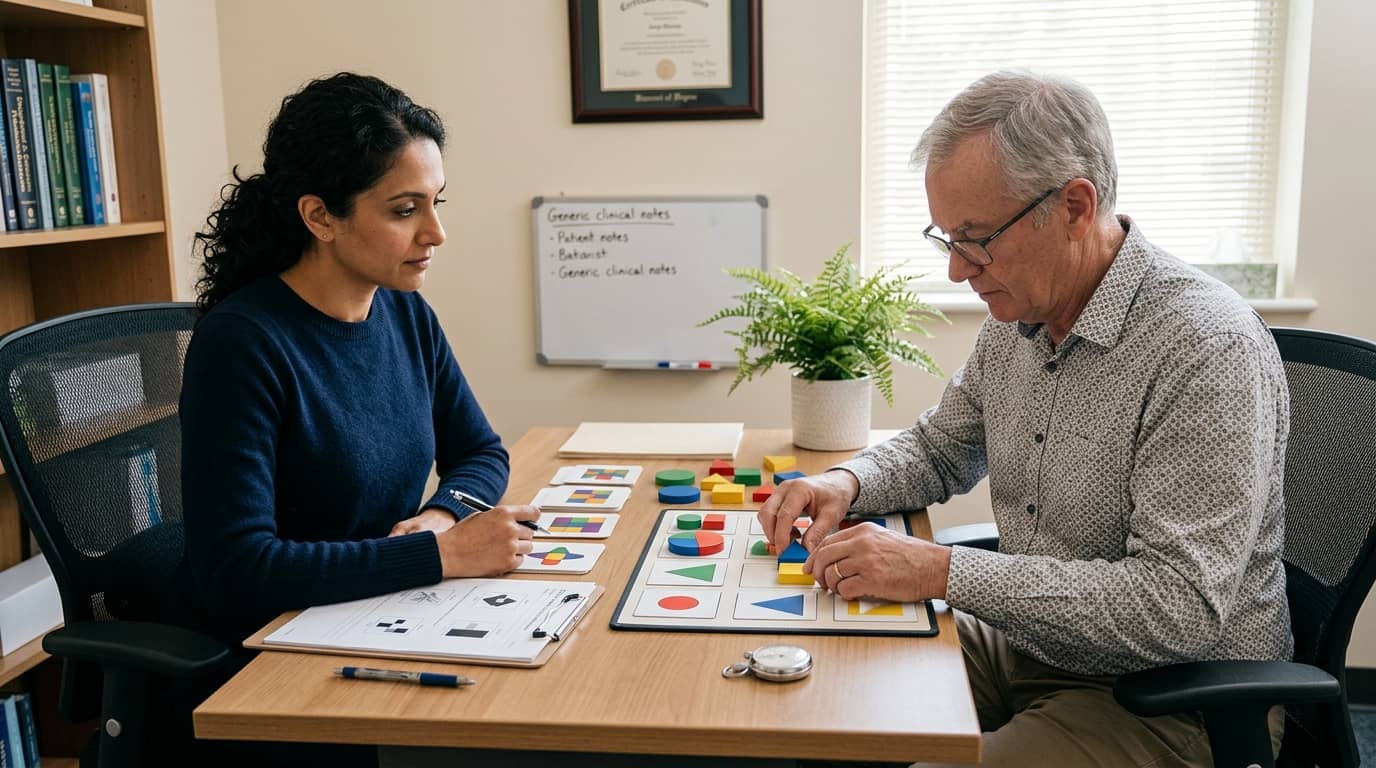
How you study in practice Child and Adolescent Psychology Course
How you practice Child and Adolescent Psychology Course
For companies looking to train their teams
With Dedika for businesses, the course includes exercises and examples tailored to your own business and the way your company needs.

Course Content
8 Chapters • 37 LessonsDuration between 4 and 360 hours (you decide)
Chapter 1HideHide detailsSee detailsFoundations of Child and Adolescent Psychology
Foundations of Child and Adolescent Psychology
Lesson 1 • Major Theoretical Perspectives
Surveys psychoanalytic, behavioral, cognitive, and ecological theories. Students learn to compare frameworks and identify their practical applications.
Lesson 2 • Research Methods in Developmental Psychology
Introduces quantitative, qualitative, and mixed-methods designs used with child populations. Grounds students in evidence evaluation skills used throughout the course.
Lesson 3 • History and Scope of the Field
Traces the field from early philosophical views to modern empirical science. Provides context for why current theories and methods exist.
Lesson 4 • Nature, Nurture, and Developmental Contexts
Examines gene-environment interaction and the role of family, culture, and socioeconomic context. Sets the stage for understanding individual differences across all chapters.
Chapter 2HideHide detailsSee detailsPrenatal Development and Infancy
Prenatal Development and Infancy
Lesson 1 • Prenatal Stages and Influences
Details germinal, embryonic, and fetal periods and key teratogenic risks. Connects prenatal health to postnatal developmental outcomes.
Lesson 2 • Attachment Theory and Early Relationships
Presents Bowlby and Ainsworth's attachment models and their empirical support. Students learn how early bonds predict social and emotional outcomes.
Lesson 3 • Neonatal Capacities and Brain Development
Examines newborn sensory, motor, and reflexive abilities alongside early brain growth. Establishes the biological baseline for cognitive and social development.
Lesson 4 • Cognitive and Language Beginnings
Covers Piaget's sensorimotor stage and early language acquisition processes. Links infant cognition to later learning and communication development.
Chapter 3HideHide detailsSee detailsEarly Childhood Development
Early Childhood Development
Lesson 1 • Social and Emotional Development
Examines self-concept, emotion regulation, and peer relationships in preschool years. Connects early social skills to school readiness and long-term adjustment.
Lesson 2 • Parenting Styles and Family Influence
Reviews Baumrind's parenting typology and its effects on child outcomes. Situates family dynamics within cultural and socioeconomic contexts.
Lesson 3 • Language Acquisition in Early Childhood
Covers rapid vocabulary growth, grammar acquisition, and pragmatic development. Highlights how language supports cognitive and social competence.
Lesson 4 • Preoperational Thinking and Cognitive Growth
Analyzes Piaget's preoperational stage, symbolic thought, and egocentrism. Prepares students to recognize cognitive limitations and strengths in young children.
Lesson 5 • Physical and Motor Development in Early Childhood
Describes gross and fine motor skill progression and brain maturation in preschool years. Connects physical growth to readiness for learning and self-care.
Chapter 4HideHide detailsSee detailsMiddle Childhood: Cognitive and Social Growth
Middle Childhood: Cognitive and Social Growth
Lesson 1 • Peer Relationships and Social Competence
Analyzes friendship quality, peer acceptance, and social information processing. Establishes how peer context shapes identity and adjustment in middle childhood.
Lesson 2 • Concrete Operational Thinking
Details Piaget's concrete operational stage, including conservation and classification. Connects logical reasoning gains to academic learning demands.
Lesson 3 • Memory, Attention, and Executive Function
Examines working memory, selective attention, and self-regulation development. Links these processes to academic achievement and behavioral control.
Lesson 4 • Self-Concept and Industry vs. Inferiority
Applies Erikson's industry vs. inferiority stage to school-age self-evaluation. Connects academic and social experiences to emerging self-worth.
Lesson 5 • Academic Achievement and Learning
Covers reading, mathematics, and writing development alongside motivation theories. Prepares students to identify learning difficulties and support strategies.
Chapter 5HideHide detailsSee detailsAdolescent Physical and Cognitive Development
Adolescent Physical and Cognitive Development
Lesson 1 • Moral Reasoning in Adolescence
Applies Kohlberg's and Gilligan's moral development frameworks to adolescent behavior. Prepares students to interpret moral reasoning in clinical and educational settings.
Lesson 2 • Puberty: Biological Changes and Timing
Details hormonal, physical, and neurological changes of puberty and their timing variations. Connects early and late maturation to psychological and social outcomes.
Lesson 3 • Adolescent Brain Development
Covers prefrontal cortex maturation, limbic system activity, and myelination in teens. Explains the neurological basis of risk-taking and emotional reactivity.
Lesson 4 • Formal Operational Thinking
Presents Piaget's formal operational stage, hypothetical reasoning, and abstract thought. Links advanced cognition to academic performance and decision-making.
Chapter 6HideHide detailsSee detailsAdolescent Identity, Social, and Emotional Development
Adolescent Identity, Social, and Emotional Development
Lesson 1 • Peer Relationships and Romantic Development
Examines peer group structures, cliques, crowds, and emerging romantic relationships. Highlights peer influence on risk behavior and identity consolidation.
Lesson 2 • Risk Behavior and Protective Factors
Analyzes substance use, sexual risk, and delinquency alongside protective individual and social factors. Equips students to design prevention-oriented interventions.
Lesson 3 • Family Relationships During Adolescence
Covers autonomy negotiation, conflict patterns, and parental monitoring in teen years. Situates family dynamics within cultural expectations and adolescent individuation.
Lesson 4 • Identity Formation and Erikson's Framework
Applies Erikson's identity vs. role confusion stage and Marcia's identity statuses. Connects identity exploration to vocational, ideological, and relational commitments.
Lesson 5 • Emotional Regulation and Mental Health
Addresses emotion regulation strategies, stress responses, and prevalence of mood difficulties. Prepares students to recognize early signs of emotional disturbance.
Chapter 7HideHide detailsSee detailsPsychopathology in Children and Adolescents
Psychopathology in Children and Adolescents
Lesson 1 • Externalizing Disorders
Addresses oppositional defiant disorder, conduct disorder, and aggression patterns. Prepares students to distinguish normative defiance from clinical presentations.
Lesson 2 • Neurodevelopmental Disorders
Covers ADHD, autism spectrum disorder, intellectual disability, and learning disorders. Students learn diagnostic criteria, prevalence, and evidence-based support strategies.
Lesson 3 • Internalizing Disorders
Examines anxiety disorders, depression, and trauma-related conditions in youth. Connects symptom profiles to developmental stage and assessment approaches.
Lesson 4 • Assessment and Diagnosis in Youth
Reviews structured interviews, rating scales, and observational tools used in child assessment. Emphasizes multi-informant, multi-method approaches for accurate diagnosis.
Lesson 5 • Developmental Psychopathology Framework
Introduces multifinality, equifinality, and risk-resilience models for understanding disorder. Grounds clinical thinking in developmental context rather than static diagnosis.
Chapter 8HideHide detailsSee detailsIntervention, Prevention, and Applied Practice
Intervention, Prevention, and Applied Practice
Lesson 1 • Prevention Programs and Public Health Approaches
Examines universal, selective, and indicated prevention frameworks for child mental health. Prepares students to evaluate program effectiveness using outcome data.
Lesson 2 • Professional Ethics and Competency
Reviews ethical principles, confidentiality limits, and mandatory reporting obligations in child practice. Grounds professional conduct in developmental and cultural awareness.
Lesson 3 • School-Based Mental Health Services
Covers multi-tiered support systems, consultation models, and classroom-based interventions. Connects school settings to early identification and prevention efforts.
Lesson 4 • Working with Families and Caregivers
Addresses parent training, psychoeducation, and family engagement strategies. Equips students to involve caregivers as active partners in child treatment.
Lesson 5 • Evidence-Based Therapeutic Approaches
Surveys cognitive-behavioral, play, family, and trauma-focused therapies for youth. Students evaluate treatment fit based on age, disorder, and developmental level.
Your valid completion certificate
This course is for you:
Teachers: wanting to better understand the students they serve daily.
School counselors: seeking a stronger developmental foundation for their caseloads.
Social workers: supporting families and needing deeper child psychology knowledge.
Psychology students: building clinical competency before entering supervised practice.
Pediatric nurses: looking to connect medical care with behavioral and emotional context.
Career changers: transitioning into youth-focused mental health or education roles.
What our students say
Your classes are perfect. I purchased the one-year package and finally have the opportunity to follow various topics of interest without needing to switch platforms... I thank you for everything you do, I've already recommended you to other people...

I like how the lessons are straight to the point and how I can switch chapters and skip content I don't need.

I like the content and the presentation style and video transcription, which speeds up the process!

The platform is fast, simple to use. The diversity of content and complementary videos really help with learning.

Top trainings













FAQ
Who is Dedika?
Is the certificate valid in United States?
Are the courses free?
What is the course workload?
What are the courses like?
How do the courses work?
What is the duration of the courses?
What is the cost or price of the courses?
What is an EAD or online course and how does it work?
PDF Course