
DISC Assessment Course
Understand why people behave the way they do — and know exactly how to respond. This DISC course provides a proven behavioral framework used by leaders, coaches, and teams worldwide to communicate more effectively, reduce conflict, and drive results. Stop guessing and start connecting with precision.
What you will learn:
In this course, you will master the DISC behavioral model from the ground up, starting with its scientific foundations and moving through real-world applications. You will learn to read your own profile, identify others' styles in live interactions, and flex your communication to match any audience. You will apply DISC to team dynamics, leadership, conflict resolution, sales, and organizational change. By the end, you will have the tools to build stronger relationships, lead more effectively, and create measurable impact at every level of your organization.
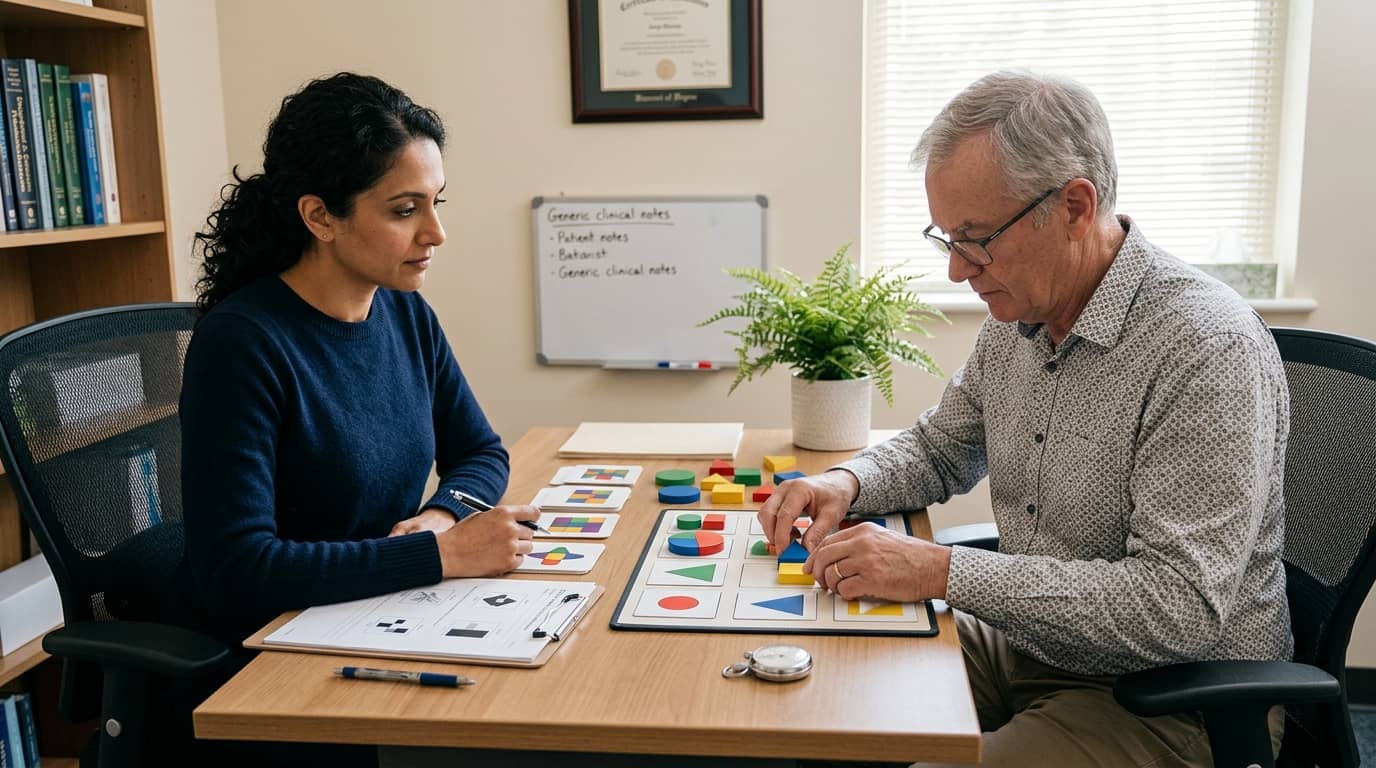
How you study in practice DISC Assessment Course
How you practice DISC Assessment Course
For companies looking to train their teams
With Dedika for businesses, the course includes exercises and examples tailored to your own business and the way your company needs.

Course Content
8 Chapters • 38 LessonsDuration between 4 and 360 hours (you decide)
Chapter 1HideHide detailsSee detailsFoundations of DISC Behavioral Theory
Foundations of DISC Behavioral Theory
Lesson 1 • Origins of DISC Psychology
Traces DISC back to William Moulton Marston's emotions theory and subsequent instrument development. Grounds learners in the model's credibility and scientific lineage.
Lesson 2 • The Four Core Behavioral Styles
Defines Dominance, Influence, Steadiness, and Conscientiousness as observable behavioral tendencies. Learners distinguish each style's primary drivers and visible traits.
Lesson 3 • Behavioral Style vs. Competence
Clarifies that DISC measures behavioral preference, not skill or intelligence. Prevents misapplication and sets ethical boundaries for assessment use.
Lesson 4 • The Two-Axis DISC Model
Explains the pace and task-versus-people axes that structure the DISC quadrant. Learners map each style to its quadrant position and understand axis interactions.
Chapter 2HideHide detailsSee detailsUnderstanding Your Own DISC Profile
Understanding Your Own DISC Profile
Lesson 1 • Reading Your DISC Graph
Decodes the three-graph report structure: natural style, adapted style, and perceived style. Learners interpret dot placement and elevation on each graph.
Lesson 2 • Natural vs. Adapted Style
Distinguishes instinctive behavior from environmentally adjusted behavior. Learners recognize where they expend energy adapting and why that matters for sustainability.
Lesson 3 • Completing a DISC Self-Assessment
Walks through the forced-choice assessment format and response best practices. Accurate self-reporting is essential for a valid profile baseline.
Lesson 4 • Strengths and Growth Areas by Style
Maps each style's characteristic strengths and potential overuse tendencies. Learners identify personal growth edges without framing them as deficiencies.
Lesson 5 • Personal Action Planning from Profile
Converts profile insights into concrete behavioral goals. Learners draft a self-development plan anchored in their DISC data.
Chapter 3HideHide detailsSee detailsReading and Identifying Others' Styles
Reading and Identifying Others' Styles
Lesson 1 • Style Blends and Combinations
Addresses multi-style profiles and how blended styles appear in behavior. Learners avoid oversimplification by recognizing nuanced style combinations.
Lesson 2 • Practicing Style Identification
Applies cue knowledge through structured observation exercises and case scenarios. Learners calibrate accuracy and reduce confirmation bias in style reading.
Lesson 3 • Observable Behavioral Cues
Catalogs verbal, vocal, and nonverbal signals associated with each DISC style. Learners build a practical cue library for rapid style recognition.
Lesson 4 • Pace and Priority Signals
Focuses on the two DISC axes as the fastest observable differentiators. Learners use pace and priority signals to narrow style identification quickly.
Chapter 4HideHide detailsSee detailsAdapting Communication for Each Style
Adapting Communication for Each Style
Lesson 1 • Communicating with D-Style Individuals
Provides specific language, pacing, and structure strategies for Dominance-style communicators. Learners practice direct, results-focused messaging.
Lesson 2 • Communicating with C-Style Individuals
Details accuracy, logic, and evidence-based approaches for Conscientiousness-style communicators. Learners structure data-rich, well-organized messages.
Lesson 3 • The Concept of Style Flexing
Defines style flexing as intentional, temporary behavioral adjustment for better connection. Distinguishes flexing from inauthenticity or manipulation.
Lesson 4 • Communicating with I-Style Individuals
Covers enthusiasm, storytelling, and social connection strategies for Influence-style communicators. Learners balance engagement with focus on outcomes.
Lesson 5 • Communicating with S-Style Individuals
Addresses patience, sincerity, and stability cues valued by Steadiness-style communicators. Learners practice creating psychological safety in dialogue.
Chapter 5HideHide detailsSee detailsDISC in Team Dynamics and Collaboration
DISC in Team Dynamics and Collaboration
Lesson 1 • Building Team Working Agreements
Facilitates style-informed norms that honor diverse behavioral preferences. Learners co-create agreements that reduce friction and increase psychological safety.
Lesson 2 • Mapping Team Style Composition
Uses aggregate DISC data to visualize a team's collective behavioral profile. Learners identify style gaps, concentrations, and their operational implications.
Lesson 3 • Style-Based Role Alignment
Connects DISC tendencies to task types and role responsibilities for better fit. Learners match team members to tasks that leverage their natural strengths.
Lesson 4 • Sources of Style-Based Friction
Identifies predictable tension points between contrasting DISC styles on teams. Learners anticipate friction before it escalates into interpersonal conflict.
Lesson 5 • Leveraging Style Diversity for Innovation
Reframes style differences as complementary assets rather than obstacles. Learners design team processes that harness the full DISC spectrum for better outcomes.
Chapter 6HideHide detailsSee detailsDISC in Leadership and Management
DISC in Leadership and Management
Lesson 1 • Delivering Feedback Across Styles
Adapts feedback delivery—tone, timing, and structure—to each DISC style's receptivity. Learners practice feedback conversations that are heard and acted upon.
Lesson 2 • Motivating Each DISC Style
Maps intrinsic motivators and demotivators to each DISC style for targeted engagement. Learners design individualized motivation strategies for direct reports.
Lesson 3 • Coaching for Style-Based Development
Applies DISC to individualized coaching conversations that target each person's growth edge. Learners use style data to set meaningful, achievable development goals.
Lesson 4 • Delegating Tasks by DISC Style
Provides a style-sensitive delegation framework that matches task type to behavioral preference. Learners increase delegation success rates by adjusting briefing and follow-up.
Lesson 5 • Leadership Style Through a DISC Lens
Examines how each DISC style naturally leads and where blind spots emerge. Learners audit their own leadership tendencies against team needs.
Chapter 7HideHide detailsSee detailsDISC in Conflict Resolution and Negotiation
DISC in Conflict Resolution and Negotiation
Lesson 1 • De-escalation Strategies by Style
Provides style-matched de-escalation language and approaches for each DISC type. Learners reduce emotional intensity before moving to problem-solving.
Lesson 2 • Facilitating Style-Aware Mediation
Equips learners to mediate disputes between parties with contrasting DISC styles. Structured mediation steps ensure all styles feel heard and respected.
Lesson 3 • How DISC Styles Approach Conflict
Describes each style's default conflict response—fight, flight, freeze, or appease. Learners recognize their own conflict pattern and its impact on resolution.
Lesson 4 • Negotiating Across DISC Styles
Adapts negotiation framing, pacing, and evidence to each style's decision criteria. Learners increase agreement rates by aligning proposals to style-based priorities.
Lesson 5 • Diagnosing Style-Based Conflict Root Causes
Distinguishes style-driven misunderstandings from substantive disagreements. Learners apply a diagnostic framework to identify the behavioral source of friction.
Chapter 8HideHide detailsSee detailsStrategic DISC Application and Organizational Impact
Strategic DISC Application and Organizational Impact
Lesson 1 • Building a DISC-Informed Culture
Defines the conditions and leadership behaviors that embed DISC into daily organizational practice. Learners identify culture levers that sustain behavioral awareness long-term.
Lesson 2 • DISC for Organizational Change Management
Uses DISC to anticipate style-based resistance and tailor change communication. Learners design change rollout plans that address each style's concerns proactively.
Lesson 3 • Measuring DISC Program Effectiveness
Establishes metrics and evaluation methods to assess DISC initiative impact. Learners connect behavioral change data to business performance indicators.
Lesson 4 • DISC in Talent Acquisition and Onboarding
Applies DISC to role design, interview structuring, and onboarding personalization. Learners avoid discriminatory misuse while leveraging style data for fit assessment.
Lesson 5 • Designing a DISC Learning Ecosystem
Integrates DISC into a multi-modal, sustained learning architecture across the organization. Learners build a roadmap that moves beyond single-event training.
Your valid completion certificate
This course is for you:
Managers: wanting to tailor their approach to each team member's style.
HR professionals: building people programs grounded in behavioral science.
Sales professionals: seeking to match their pitch to each buyer's mindset.
Executive coaches: adding a structured behavioral framework to their practice.
Team leads: navigating friction between colleagues with clashing work styles.
Career changers: entering people-focused roles and needing a credibility edge.
What our students say
Your classes are perfect. I purchased the one-year package and finally have the opportunity to follow various topics of interest without needing to switch platforms... I thank you for everything you do, I've already recommended you to other people...

I like how the lessons are straight to the point and how I can switch chapters and skip content I don't need.

I like the content and the presentation style and video transcription, which speeds up the process!

The platform is fast, simple to use. The diversity of content and complementary videos really help with learning.

Top trainings













FAQ
Who is Dedika?
Is the certificate valid in United States?
Are the courses free?
What is the course workload?
What are the courses like?
How do the courses work?
What is the duration of the courses?
What is the cost or price of the courses?
What is an EAD or online course and how does it work?
PDF Course